• Why Cats?

    I get why dogs are man’s best friend. Back 30,000 years ago, when we were a shaggy but sharp biped with an uncertain future, dogs saw something in us and made a bet on our promise. They’d be our biggest boosters, slavishly drooling at our side, and ride our coattails to a better life. It paid off spectacularly. They are so well off they’ve completely forgotten how to fend for themselves, trusting that we’ll spend billions each year to feed them, come hell or high water. And let’s not even get into how codependent they are around bodily functions. You can’t leave!!! they bark anxiously when you approach the door. How will I take a dump without you!!?!?!?

    People love feeling important, and dogs make us feel great. I get it.

    Why, though, are cats #2?

    They are obviously not fans. In fact, they’re the opposite. They disdain us. Not to argue with a great science fiction movie, but the animal most naturally oriented to stab humanity in the back is not a primate. We’re family. It’s a cat. They’d do it cruelly, almost casually, pawing us around till jumping on our collective faces while we sleep, then scratching our eyes out.

    The stranger thing is how we fawn over them despite their obvious antipathy for us. It’s your girlfriend from sophomore year in college, the one who mocked your musical tastes and your major and told you she would be sleeping around on you, and yet you begged her to stay together. At least then, you learned your lesson by Thanksgiving of junior year. Like Maya Angelou said, When someone tells you who they are, believe themEven if they occasionally purr.

    So why is it? Maybe it’s a size thing? Horses are more generally approving of us, and they’re actually useful in some instances, but they’re hard to keep in the house. Same for pigs, the feral sort excepted. And deer, except they’re a little spooked by us—for good reason, I’d add. And what about snakes? A little cool, but generally they like to wrap around your hand when you pick them up. A little creepy, but unlikely to actually hurt you. Can’t say the same for a baby tabby.

    And maybe that’s it: The only thing people like as much as feeling important is feeling hurt and worthless. And cats deliver that in spades.

    Anyway, cats. Humanity’s true foe, Joker to our Batman, hiding their contempt for us in plain sight. And yet, somehow, against all odds, humanity’s #2 favorite species.

    #3? People, for most of the same reasons.

  • Some Oscar Predictions 2022

    I’ve seen most of the Best Picture nominees this year (no Nightmare Alley, Drive My Car or West Side Story) and wanted to drop a quick post on who I think should win this Sunday.

    Best Picture

    Power of the Dog

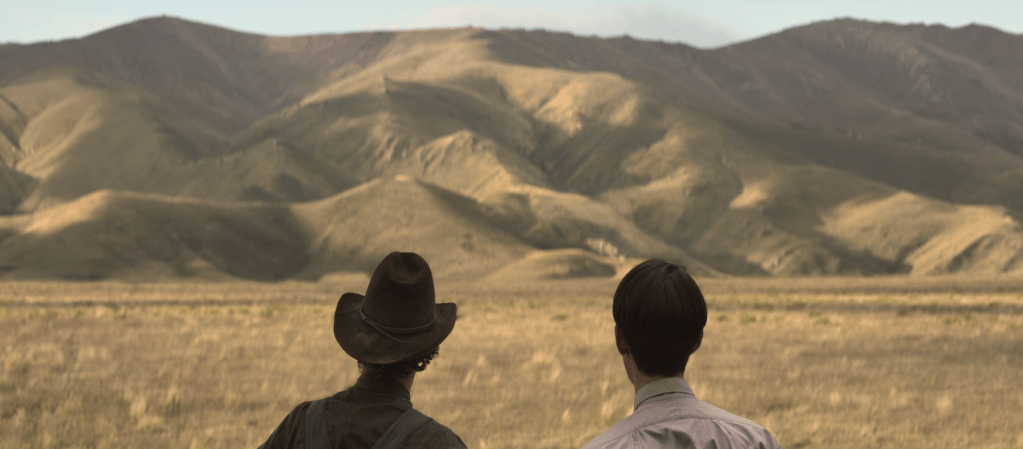
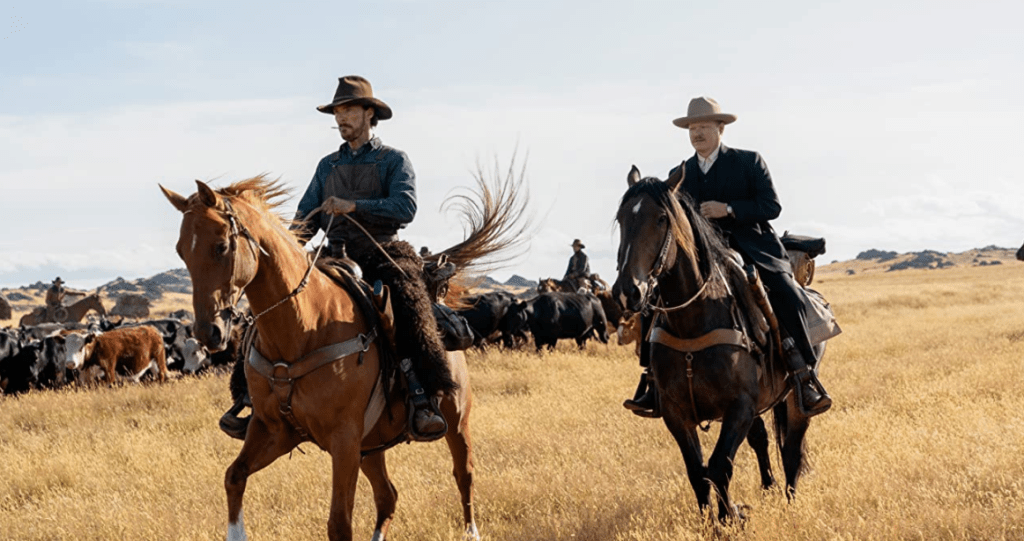
    There’s a point early in the movie, where Montana simply swallows you as a viewer, and I thought how much I had missed Jane Campion’s directorial eye. Add in the great performances from Benedict Cumberbatch and Kodi Smit-McPhee (Kirsten Dunst is fine, Jess Plemmons is a placeholder) and the patience of the second half of the film, and its understated conclusion, and it was very satisfying. I get those kidding about Power of the Nap, but in pandemic times, I had time to savor the unfolding. To that point, I saw this in my family room, but this would have worked so much better in a movie theater, where it would have been projected 50 feet across and I would have given it uninterrupted time. It felt like a movie movie, whereas many of the others felt like TV movies, if that makes sense.

    As there’s ranked choice voting, my ballot would go:

    1. Power of the Dog
    2. West Side Story – Spielberg still has it. (I didn’t see it all, but saw enough when Virginia was watching to think it fits here.)
    3. King Richard – Will Smith was great. One disconnect was the movie portrayed the sisters as just regular ol’ girls who somehow won tennis matches when they were like Marvel characters. Serena (power) and Venus (power plus her long-limbed, rangy speed) were obvious superheroes from the first time we saw them. That isn’t to say they didn’t put in the work — obviously, they did. But the movie really downplays their physical gifts. And as executive producers, they made sure the movie took it very easy on their dad.
    4. Dune – So ambitious, really well-done, but it was one of those movies where every important utterance is done in a hushed voice with a sandstorm of noise rising around it. The point of movies is not to hide the point of the movie. And it took nearly three hours to get through half of the book.
    5. Licorice Pizza – More of a collection of scenes than a plot, and Gary was, hands-down, the most annoying character of 2021. His charm had largely dried up and blown away about 20 minutes into the movie. Bradley Cooper had a great turn. We’ll be seeing more of Alana Haim. This may sound nuts, but I think she deserves a better movie.
    6. Belfast – The movie did its best to rehabilitate Van Morrison. The little boy (Jude Hill) was a treasure, as were Judy Dench and Ciaran Hinds.
    7. Coda – I get folks loved this movie, but it felt very Lifetime-esque in how it resolved. That said, what parent could watch the last third without a lump in their throat? Troy Kotsur (Ruby’s dad) is a serious runner-up in Supporting Actor. I see sentimentally how he might win, but Smit-McPhee was better, in a better movie.
    8. Don’t Look Up – Funny opener, but it mostly lost me when it shifted into serious territory — or maybe I’m just in denial on some of its most dire implications. On the great side, Cate Blanchette did a dead-on Mika Brzezinski. Adam McKay (The Big Short, Vice) has done this kinda movie better before.

    Didn’t see:

    1. Drive My Car
    2. Nightmare Alley

    I understand that Drive My Car is a sleeper. I hope to see it soon.

    Some other categories:

    Best Actor

    Will Smith has to win, right? He was great as Richard Williams, and he’s due a lifetime achievement award. Cumberbatch has an argument for the Oscar, too.

    Best Actress

    I saw everyone but Penelope Cruz, and I’m hearing that Jessica Chastain might squeak in for Eyes of Tammy Fay, but I think Olivia Colman deserves it for The Lost Daughter, which I didn’t like much. She’s simply at the top of her game and shouldn’t be penalized because she has been there for a while. Shades of Giannis Antetokounmpo …

    A final note on Best Actor/Actress. Being the Ricardos wasn’t a bad movie, but Nicole Kidman and Javier Bardem actually held it back. Kidman was not funny even once in 2 hours, while playing the funniest woman on TV, and Bardem very much felt like a throw-away performance.
    Supporting Actor

    Kodi Smit-McPhee, see above.

    Supporting Actress

    Judy Dench. Belfast has to get something.

    Director

    Jane Campion. She has such a great eye and trusts the audience. The first third of Dog had me wanting to go re-watch The Piano.

    Some last thoughts

    Dune should get all the technical awards. Campion should win best adapted screenplay for Dog and Zach Baylin should win original screenplay for King Richard. I could see Paul Thomas Anderson winning for Licorice Pizza, because some of the scenes are wonderful, but it barely holds together as a movie.

  • The Most Amazing Person I’ve Ever Known Has Died

    My family moved one town over, from Hazlet to Matawan, in 1973, when I was in first grade. It was a move up — from a modest home, where the dormer walls of my room slanted inward, to the model home in a newly built neighborhood. We had a sliver of woods behind our house. To me, it felt like Sherwood Forest.

    Our new neighbors, Mina and Herman Brenman, had arrived a month or so before. They had two kids who were older than me and my brother and sister. And they were exotic. They were both Jewish, from Poland.

    The Jewish-ness was not that unique. A lot of our neighbors in Matawan, and my friends in the years to come — Andy Goldstein, Stephen Carver — were Jewish, but Mina and Herman were from Poland, from Europe. They had accents. Their home was decorated differently from ours. They were a little farther along in life. Their daughter, Sandy, had a talent for art and her work, even then, hung on the walls.

    They were pretty traditional suburbanites. Herman loved his lawn, and worked it with the energy of a fanatic. Mina cooked and baked, making cookies that were unlike anything my mom made.

    As I grew up, we learned more about their past. One night, at a neighbor’s Christmas party, I heard more of their story than I ever had before. They had grown up in the same town in Poland before World War II. They were acquainted if not all that interested in each other. When the Nazis arrived, they ended up in work camps. Both lost much of their families there. Mina told of risking a trip to a barbed wire fence to hand bread to a relative. Herman said he once tried to escape on a winter’s night, and thought he was clear till he was recaptured. When he was caught, he looked at his coat and realized there was a hole in the coat, and that the bullet that made it had somehow missed him.

    Somehow, they survived.

    Fast forward to New York City, after the war. Mina has emigrated to the United States. She is walking down the street, and who appears, headed in the other direction, but Herman. You survived? Who did not? When did you get here? What are you doing tomorrow night?

    They married, had two kids, Herman worked as a property manager for an apartment complex. They moved to the suburbs in New Jersey. Settled in. In 1973, this Irish-American family moved in next door. Herman worked his lawn. My dad tried unsuccessfully to turn his brown thumb green. Mina and my mom called each other often. Who bought milk last for whom? These were good problems to have , and good times.

    Time picked up speed. The kids grew up and moved away. The men slowed and declined. My dad died a little over a decade ago, and Herman soon after. Mina and my mom remained neighbors. Somewhere along the way, Mina took to calling mom “my Irish sister.” When my mom’s sister Betty died early in 2011, Mina was the sister my mom had left.

    They’ve had their struggles over the years. Mina has battled cancer multiple times, she lost her mobility, bit by bit. My mom had her own health issues. When one was struggling, the other fretted and checked on the other — who resented it. (Hey, strong women!)

    Mina has been homebound for much of the past two years. Her cookie-baking days have been long past. My mom had warned us before the holidays, This might be it.

    And yet, two weekends ago, my mom took Virginia and me over to visit when we were home for the holidays. Mina was lying on her couch. The shamrock we gave her several years ago, and that she always makes a point of noting when we’re there, was not far from her. Her aide let us in, and you could see Mina perk up when we entered the room. She grabbed the holiday card we had sent her, with photos of our family, including my sons and granddaughter on the front, and started to read my hard-to-decipher handwriting … just to show us that she could.

    We didn’t stay long. Before we left, I took her hand and she looked me in the eye. She’ll beat this thing, I thought. She always does.

    Mina died this evening, after 97 years. She survived three bouts of cancer, she survived the Holocaust, she survived losing the love of her life.

    Mina died because people die. Eventually. She might be the most amazing person I’ve really known in this world. Unremarkably remarkable. She scoffed at the idea that she was special. That is sitting heavily, and lightly, on my heart tonight.

    In the midst of this time that has pushed so many to their limits and beyond, I want to hang Mina’s life around my neck as a talisman and a reminder: This life is hard, but we can persevere. More than that, we can live — with acceptance, with purpose and with joy.

    Shalom, Mina.

  • Where Are We in the Pandemic?

    With omicron burning through Americans, vaccinated and unvaccinated (though, sadly, with very different outcomes), it feels like a total vertigo moment.

    It’s as if we’re either:

    • In a Chutes and Ladders moment, in which we slide back to April 2020 and start all over again. Or …
    • On one of those people movers at the airport, and omicron’s lesser severity and crazy transmissibility accelerates us toward the end of this dread time.

    I know we are not sliding back to vaccine-less 2020, but right now we’re in the middle of Little O’s spread and it’s depressing to see so many people who have avoided covid this far into the pandemic getting sick, and dealing with all the dislocation, frustration and postponement that comes with a country full of sick people (many mild, some deathly) all at once. Hospitals are delaying elective surgeries again, not because they are full of seriously ill patients, but because they can’t staff an OR. Schools are closing not because all the kids are sick, but because too many teachers and aides are. Same for restaurants and thrift shops and corporate offices.

    The next 6-8 weeks are gonna be this twilight period. Maybe it’s the coming dawn. Maybe it’s a terrible dusk. My hope and best guess is dawn. Regardless, right now, we lack light and sight. I simply want this to end, and I know I’m not alone. Yet it feels so darn lonely. I’m grateful for my wife and for friends and family, AND I realize that I’ve got some level of PTSD from this time. That we all do.

    I wish I could Rip Van Winkle this and wake up in April.

    Into this jumble of feelings, this article from the New York Times Magazine landed like a dose of Dramamine for a seasick traveler, introduced a new term (“ambiguous loss”) and gave me another person in this world to be thankful for, researcher Pauline Boss.

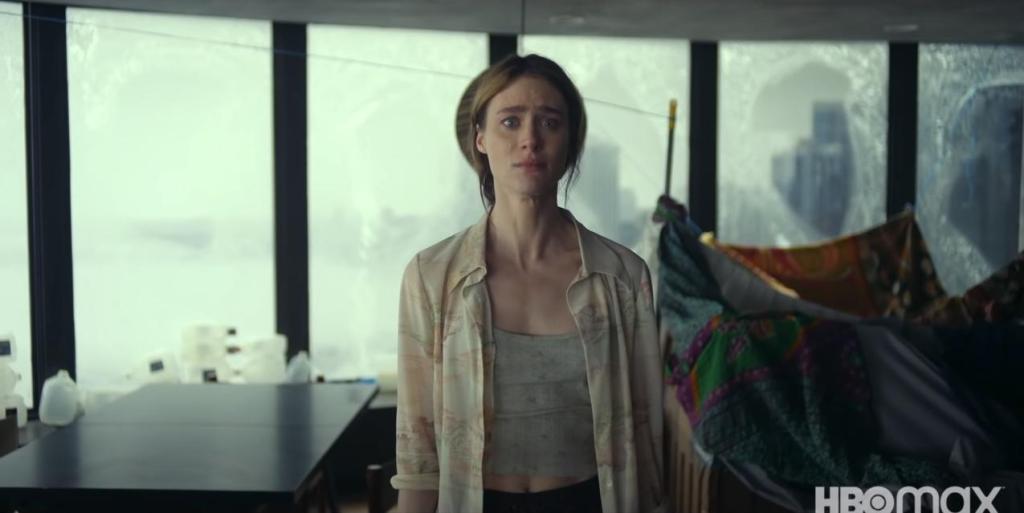
    And Virginia and I started to watch Station Eleven, on HBO Max. The opening episode felt a lot like the opening to Stephen King’s The Stand, though it then goes in a much different direction. It reminded me that the world closes and opens, though rarely for all of us at the same time and in the same ways, and a realization comes to me: Things can always be worse. That reminder — and an always fledgling mindfulness practice — is a way to keep my head above water these days.

    And walk, or ruck, or run, when I can.

  • 6 Thoughts on Jerry Maguire, 26 Years Later

    Virginia and I continued on a torrid pace of movie-watching, this time watching Jerry Maguire with friends on New Year’s Night. One couple had never seen it. I hadn’t seen it in more than a decade, maybe closer to two. Anyway, I reacted to it a little differently than I did back in 1996. Some thoughts — and, spoiler alert, I’m giving it all away. The movie is 26 gosh-darn years old …

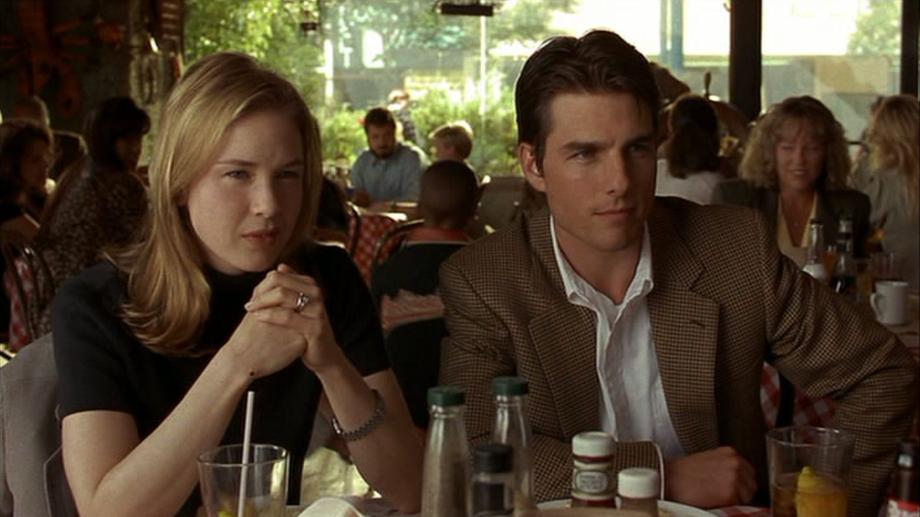
    1. Let’s start with the biggest one. Jerry never changes. The movie’s big emotional payoff comes at the end, after this NFL agent’s only player/client provides a miraculous performance that forces the ownership’s hand and results in a new, big, deserved contract. Jerry comes home from a road trip he didn’t need to make, and then gets credit for returning. He interrupts the divorced women’s support group held at the home Dorothy (Renee Zellweger) shares with her sister to let her know he’d thought of her during this professional success and that “you complete me.” It’s presented as a seismic (and lasting) shift, but I’m not so sure.

    1. Dorothy gave him the line
    2. He had nowhere else to go, and
    3. Jerry never acknowledged, thanked or appeared to learn anything from the people around him.

    At best, Jerry is a glib cad with a killer smile, well versed in a caffeinated, bro version of commitment. He’ll kill for you, as he and every one of his competitors claims, but will he listen to you? Even when he has nothing else to do but listen?

    At worst, he’s a relational black hole. Late in the movie, when he and Dorothy are struggling to communicate, her son Ray shows up in their bedroom, jumps into bed, and Jerry places Ray between them and pulls the boy toward him. It registers on Dorothy’s face, and in my head, as “drop that kid. He’s not yours.”

    Zellweger and Cruise. Did they learn anything?

    2. Cuba Gooding and Regina King are prophets. Or Cassandras. Rod Tidwell is a talented football player looking to be compensated fairly for his efforts. The movie keeps making the point that somehow he has an attitude problem. However, we spend a fair amount of time with Rod on the field and around the locker room, and we never see him do anything that could put off his coaches or teammates. He challenges Jerry, but nobody else. It’s as if a black man demanding a modicum of respect is problematic. Marcee and Rod are a couple we’ve seen plenty in the past quarter-century, people of color supporting each other when nobody else will. Jerry’s climactic scene, the one that I think we’re supposed to see as transformative (for Rod), is when he levels with Rod and tells him to stop complaining and perform. But when hasn’t Rod delivered?!? There’s zero evidence in the film for why he shouldn’t deck Jerry for the comment. But he takes it. 

    3. The movie punches down on the women’s support group in a pretty awful way. The group is portrayed as a brood of spinster harpies.  Surely they must be ready to poison the water for Dorothy and Jerry at the first opportunity. But quite the contrary — the women never say a bad thing about Jerry, despite the fact that any observant human beings (including the movie audience) are aware he is not living up to his end of his professed commitment. They would be completely justified to murder him behind his back — and to his face. But they never do. Instead, they’re wholly supportive of Dorothy. Also, why in the world are they present in the final scene? They are framed in the scene as if a jury, there to adjudicate the romantic life of Dolores and Jerry. But they know their place, and they stay the heck out of what they probably see as another drama king move by Jerry. They say nothing, they don’t clap, they don’t boo, they just look awkward — until Jerry moves along and  they can get back to their true business of supporting own another. And the woman who speaks up next is right! It is the best women’s support group they’ve ever been a part of.  

    4. The gravity of a child. One thing the movie gets right is that a child can birth a family. Ray certainly does in this movie, providing the relational gravity to keep everything together until the adults can create a sustainable ecosystem. This isn’t just a movie thing. I’ve seen it in real life. That said, again, Jerry is pretty creepy in the way he leans into Ray’s affections. Jerry doesn’t seem to get that Ray loves EVERYBODY. The kid makes friends in the baggage claim at the airport, for Christ’s sake. But Jerry, who mistakes attention for affection, immediately takes a shine to him. And like I said about that scene late in the movie, there is certainly a threatening sense that Jerry might try to win Ray over from his mom if push comes to shove.

    5. The precarious perch of professional athletes. The movie comes along after North Dallas Forty and Brian’s Song and other films, but one thing the movie adds to the discussion of the vulnerability of pro athletes is that it’s very clear-headed that the point of doing this is more about generational wealth (the life-changing contract) and less about love of the game. That Rod’s hold-your-breath moment is a head injury, given all we’ve learned in the past decade about concussions and CTE, was prescient, as was the hockey-player’s son who gives Jerry the bird for not looking our for his dad. 

    6. One question I’m left with is, if the movie didn’t end where it did, how would things be two months later? Did Rod’s loyalty win Jerry new clients? Is he now flying hither and yon because business is booming? Is Ray asking why he hasn’t seen Jerry in three weeks? Has Bonnie Hunt hired somebody to break Jerry’s legs, or worse?

    Maybe I’m too cynical or pessimistic. Maybe Jerry has learned his lesson, THE lesson, and has made his young wife a true partner in their life together. But I’m not sure.

    What I am sure is that Dorothy is right when she tells Jerry “you had me at hello.” The movie plays that as a good thing. And it’s right — for Jerry. For everyone else, we could use a sequel, or maybe just a YouTube short.

  • And another movie …  ‘Don’t Look Up’

    We continued our movie-watching last night and caught Don’t Look Up, directed by Adam McKay. It is ostensibly about what happens when two scientists (Leo DiCaprio, Jennifer Lawrence) discover a comet heading straight at earth. The movie starts out playing it for laughs, then downshifts into an increasingly frustrated, incredulous satire and pretty dispiriting critique of media, politics and humanity. Which isn’t hard these days, right? (After this and Power of the Dog in the past few days, I’m ready for a hah-hah or romantic comedy. Do these get made anymore?)

    That said, neither take seems exactly right for this movie. It is high-strung throughout, and its first hour IS funny, but it’s really working hard for the laughs, and the focus on the media world obscures the film’s ability to hone in on  our common failure to address climate change, which I think is what the movie is really about. The media/political critique calls out all the pertinent bugaboos: our inability to agree on a common set of facts, the politicization of and profiting from everything, our inexhaustible talent for putting off any worthy thing. Eventually, there comes a time in Don’t Look Up when the piper plays and bills must be paid, relationships repaired, etc. But by then, it’s pretty late. I’ll say this: at least the film has the courage of its (lack of) convictions.

    A few other things:

    • It has an amazing cast — DiCaprio, Lawrence, Meryl Streep, Mark Rylance, Timothee Chalamet, Jonah Hill, Tyler Perry and Cate Blanchett, even Ariana Grande shows up … and a lot of ridiculous hair.  
    • Between this movie and Apple’s Morning Show, I have never missed not watching morning TV any less. Is The Daily Rip supposed to be Morning Joe, or is it a mashup of all morning TV? If the former, how good was Blanchett’s Mika Brezwhatshername imitation? Can someone compare it to Kate McKinnon’s SNL version? (And kudos to Blanchett, who is a real chameleon. Took me an hour to realize that was her. And I knew she was in the movie.)
    • McKay directed Vice and The Big Short, so he knows how to make these movies. No doubt BS is the best of the bunch. He really nailed the tone in that one (as M.G. Siegler points out here). Not so much Don’t Look Up, which I think could have used one of those Xanax’s Lawrence keeps stealing from DiCaprio.
    • Too, too long. Easily could have lost half of the movie’s second half.
  • ‘Dog’ Days of Winter

    Virginia and I kicked off our quarantine (a nephew we saw over the Christmas weekend tested positive Sunday for covid, so we’re sitting and waiting to see what arises, like so many others) by watching an actual movie, The Power of the Dog, on Netflix. It’s set in mid-1920s Montana, where two brothers (Benedict Cumberbatch, Jesse Plemons) share a prosperous ranch.

    Shortest version of the plot is, on a cattle drive, George Burbank (Plemons) meets a woman, Rose (Kirsten Dunst), and falls for her, provoking the ire of brother Phil (Cumberbatch), for reasons (choose any) familial, nostalgic, economic, erotic … it’s complicated. Or it isn’t. And something needs to give. Until it doesn’t. It’s a good watch.

    Cumberbatch is getting a lot of buzz as the year ends, and he is good here, but I thought Kodi Smit-McPhee, as Dunst’s son Peter, is even better. It’s a fun game trying to figure out what Peter’s up to. And director Jane Campion churns out a beautifully filmed, patient, and palpably menacing movie that saves a nice little twist for the end — one subtle and ambiguous enough that it gives you something to chew on and discuss afterward.

    (To that end, the movie’s title comes from Psalm 22, ostensibly spoken by King David. Worth a read after seeing the movie, if not before.)

    One last thing on the ending: It brought to mind Cormac McCarthy’s novel Blood Meridian, I guess because they are both western as a genre and a lot goes unsaid as both close. That said, BM goes all in on all the violence that Dog only threatens, and has one of the greatest ambiguous endings ever in American literature. It’s also proven impervious to attempts to film it.

  • A Successful Launch in Utah

    I was a pretty independent teenager. When I graduated college, I moved away from home — to Delaware, Maine and Pennsylvania. Never all that far away, but out of New Jersey. As a parent, my hopes for my boys meant “launching” them, about making sure they had the skills and mindset to move ably through a world by turns big and small. I always want to be connected to them, but my desire was that they be able to make a home for themselves wherever their lives took them.

    So it’s with relief and gratitude that Virginia and I returned on Monday from a trip to see our younger son Kelly in Utah. Kelly, 24, moved to Salt Lake City about nine months ago after a period of time spent adventuring (cross-country trips, Appalachian Trail) and discerning where he wanted to stay for a bit.

    We went out last week, picked up him and his girlfriend, Gabby, whom he met in Utah, and headed four hours southeast for a few days of hiking through the nearby parks (Arches, Canyonlands, Dead Horse). A few of Kelly’s friends joined us. We spent three long, fruitful days hiking, cooked up a second Thanksgiving at our Airbnb, got to know each other and generally had a blast. Virginia and I came home feeling that Kelly had found a home — a girlfriend who got him, work that engaged and frustrated him (which is pretty par for the course), and a community that supported and knew him.

    He’s 24, there’s a long way to go, and it seems he’s launched. It was a nice, early Christmas gift.

  • The Greatest Albums of All-Time, 2021 Edition

    Our local public radio station, WXPN, is a treasure, and their reader poll to determine the greatest albums of all time was a lot of fun. In the end, it became a bit of a Classic Rock Fest and a little hard to listen to, as the Top 10 albums were played in their entirety. Until then, though, it was just about perfect as the first 1,900 or so albums were one-song-and-done, which gave the whole thing a rollicking speed and serendipity. For this Gen X’er who appreciates Classic Rock but cut my teeth on the music of the ’80s and ’90s before taking a twangy turn in later years, it was a lot of fun.

    Take this run from a recent morning (you have to read bottom-to-top to get the sequencing):

    #220 – SONGS FROM THE BIG CHAIR by TEARS FOR FEARS

    #221 – VAMPIRE WEEKEND by VAMPIRE WEEKEND

    #222 – KATY LIED by STEELY DAN

    #223 – LADIES OF THE CANYON by JONI MITCHELL

    #224 – ILLMATIC by NAS

    #225 – KICK by INXS

    #226 – MORRISON HOTEL by THE DOORS

    #227 – EVERY PICTURE TELLS A STORY by ROD STEWART

    #228 – VAN HALEN by VAN HALEN

    #229 – LIEGE & LIEF by FAIRPORT CONVENTION

    #230 – FEAR OF MUSIC by TALKING HEADS

    #231 – PETER GABRIEL by PETER GABRIEL

    #232 – TALKING BOOK by STEVIE WONDER

    #233 – BRINGING IT ALL BACK HOME by BOB DYLAN

    #234 – MIDNIGHT MARAUDERS by A TRIBE CALLED QUEST

    #235 – BLOND by FRANK OCEAN

    #236 – INDIGO GIRLS by INDIGO GIRLS

    #237 – TURNSTILES by BILLY JOEL

    #238 – BEFORE THESE CROWDED STREETS by DAVE MATTHEWS BAND

    #239 – DESIRE by BOB DYLAN

    #240 – TIME (THE REVELATOR) by GILLIAN WELCH

    #241 – SURREALISTIC PILLOW by JEFFERSON AIRPLANE

    #242 – MEDDLE by PINK FLOYD

    #243 – THE CRANE WIFE by THE DECEMBERISTS

    #244 – BOXER by THE NATIONAL

    #245 – COME AWAY WITH ME by NORAH JONES

    #246 – GOLDEN HOUR by KACEY MUSGRAVES

    Twenty-seven songs, over 2-plus hours, that had you singing along, enjoying memories, and marveling at the different ways to make music.

    The top of the survey is a bit of a Classic Rockfest — the Beatles will be at #1, Bruce will be #2 or #3 with Born to Run, and the Stones will fill the other spot (editor’s note: I wrote this before the countdown ended and was mostly correct, but it was Pink Floyd, Dark Side of the Moon, not the Stones, at #2), but it’s still been a great week to listen and enjoy our public radio station, even with the fan’s frustrations. (Isbell’s top-ranked album, Southeastern, checked in at #128, between the Pixies’ Doolittle and Led Zeppelin’s Houses of the Holy. I’m OK with that, but kinda pissed that John Hyatt’s Bring the Family ended up at #431. A travesty!)

    And just because all this talk has got me thinking, here are the favorite albums of my adult life, in no particular order:

    Bring the Family, John Hyatt

    Living with Ghosts, Patty Griffin

    Making Movies, Dire Straits

    The Rising, Bruce Springsteen

    I and Love and You, The Avett Brothers

    Southeastern, Jason Isbell

    American Band, Drive-By Truckers

    Indigo Girls, Indigo Girls

    Nevermind, Nirvana

    Traveller, Chris Stapleton

    Ten, Pearl Jam

    Come Away with Me, Norah Jones

  • Some ‘Mountain-Climbing’ Advice from Writer George Saunders

    Listened to George Saunders’ first collection of short stories, Civilwarland in Bad Decline, this summer and all the things I enjoy about Saunders’ writing were there. But the real treat was his writer’s note at the end, where he shared his experience as a not-so-young writer who pursued writing as he pursued a middle class existence with his wife and two precious daughters.

    One of the things he writes about is how, as he matured as a person and a writer, he stopped trying to be the writers he revered and started to do the things that were unequivocally and uniquely him—the dark humor, the glints of meanness, the unrelenting pacing. Being himself made writing less burdensome, and the more he enjoyed writing, the more others enjoyed it, too. Lessons for everything we do, especially the creative stuff.

    One way he described this was that initially he thought the task was to summit the mountains that were his idols—Mount Hemingway, Mount Didion, et al. But he realized he needed to reverse course, climb back down and stake out his own plot of land, knowing it would be meager but also that it would be his. And then to keep working it and working it. Saunders might not be Mount Hemingway, but he warrants a scenic overlook or two.

    If you’re looking for some good places to start with Saunders, the above is a good start, as it is the start. Also you could try:

  • A First Novel About Love, Loss and Redemption

    Can a couple’s marriage survive a life-changing loss when one of them is responsible for the tragedy?

    That’s the question off the back cover of Peter Friedrichs’ first novel, And The Stars Kept Watch. Friedrichs, a former lawyer and longtime minister of the Unitarian Universalist Church of Delaware County, delivers a deeply empathetic story about Nathan and Catherine, a young couple with a growing family and idyllic life — until one of them makes a choice with terrible consequences. It’s a rough opening that had me wondering if I wanted to see the story through. I’m glad I did. The book — a meditation, of sorts, on the limits and possibilities of resilience, forgiveness and hope — rewarded me for sticking with it.

    One of the strengths of the book is its patience. The story doesn’t lack for twists and turns, but it doesn’t rush, it hews to reality, and it saves some of its best moments till the end.

    Peter and a friend, a therapist whose namesake is a therapist in the book, engaged in a short discussion of the book and its themes earlier this evening at Swarthmore College (the two did something similar online recently). We spent part of our time considering the nature of hope:

    • Where does it come from?
    • Are we born with it or do we generate it over our lifetimes?
    • Do some families, either naturally or intentionally, instill hope as a foundational orientation in their members?
    • Can you hope to hope even if your family is not so hopeful?

    My answers are pretty hopeful, but I grew up in a family that, I think, overindexes for hope formation, so hopefulness is rarely a heavy lift for me.

    The discussion also turned to how, as COVID continues to impact and disconnect our lives as we head into a third calendar year, all couples are grieving couples, in some ways. One of the joys of relationship is the parting and coming together, bringing back what we’ve seen and learned. In a world where nobody goes much anywhere, stagnation (and a bit of interpersonal chafing) is built into the equation. And it can get much worse than that. My favorite songwriter, Jason Isbell, has a song, Flagship, where he sings:

    And there’s a couple in the corner of the bar
    Who traveled light and clearly traveled far
    And she’s got nothing left to learn about his heart
    And they’re sitting there a thousand miles apart

    Sounds like a common trap in month 20 of covid times.

    Anyway, I heartily recommend the book if you’re looking for a serious but nourishing gift for the right friend or family member this holiday season — someone willing to read about tragedy, and what comes after.

    Peter’s a friend, but I’d feel the same way about the book if I only met him tonight. And I look forward to whatever he writes next. He brings his intelligence and humanity to everything he does. You can find out more about his writing here.

  • Happy birthday — to me.

    I’ve reached 56. Not a milestone. I did 55 last year. Lots of people told me the ol’ double-nickel was a bit of a trap birthday, that the half-decade hit them in a way the odometer turning to a “5” didn’t. Not my experience, but I get it. There is a certain settling into late middle age/old guy status at 55, and I am 3-plus years into grandparenthood, which drives home the passing of time and march of generations. Honestly, though, I’m currently feeling a bit out of time.

    Some of that might be a result of what has grown into the Covid Years. Time has somehow pancaked into irrelevance — or, at least, insufficiency. It’s just not very useful in understanding where and who you or I am. I’m not feeling alone, either, seeing how we are all behind on doctor’s appointments, behind on school, behind on car maintenance, just plain ol’ behind. And it’s not just people. The supply chain. Behind. The fall that didn’t show up till early November. Behind. My wife’s long-awaited Wes Anderson movie. Way, way behind.

    So I’m not sweating behind. As I get older, I think less about whether I’m ahead or behind on career arc or accomplishments and more about whether I am simply moving. Do I know more than I used to? Have I forgotten things not worth remembering? Am I a little more skillful at bringing people together? Do I understand that sometimes people need to go?

    And that has me thinking about 56 a little differently. I even wrote a haiku:

    Fifty-six, it’s one

    click over the speed limit,

    but not quite speeding.

    56 is an adult speed, maybe even a touch of grandpa speed. It’s not passing lane speed. But you can get where you want and enjoy a conversation with your travel partner and the view out the window. At 56, you can brake and pull over to do a little exploring, maybe grab a lobster roll at the place with the hopping parking lot that you blow by at 85 mph.

    This is not a resignation to inertia, to stagnation. I can still be impactful and effective, can still pick up and sustain a hard pace if I need to, believe I could for a few years if there was a project that required it. But being in motion, not winning the race, is the goal today, because there’s a lot to see and a lot to learn at 56. Of that I’m convinced.

    And I think there’s a lot to share. In fact, I’m planning to blog about this and that as close to daily as I can manage in my 56th year. We’ll see where that takes us.

    For now, though, I’m headed off to ask my granddaughter to help me blow out my birthday candles. Not because I can’t do it by myself, but because it’s more fun with others.

    ==

    There are lots of ways to 56. I’m reminded of my dad when I remember this guy, who arrived as if from a different planet. As a kid who grew up on New York sports, the only other guy who arrived similarly was probably Doc Gooden (with whom he later shared some recreational problems). They were unblockable/unhittable. For a while it seemed they were playing a different game than the others. My years in Philadelphia have moved me a long way from those days, but, even at 56, I can remember watching them and realizing you were seeing something special.