• It’s no secret that it’s been a tough school year for Kelly, who has been struggling with migraines since October.

    So it was nice last week when he completed a grueling week of midterms without missing a day of school. And on Friday, he got some more good news: he was accepted at Temple University.

    Pete is already at Temple; I don’t know if that’s a plus or minus for Kelly. And he’s still waiting to hear from his favorite school, Syracuse. But it was a relief to know that he could go to a good school that offers a strong program in his stated field of interest (video storytelling). His mom and I like the idea that it is also in the city where his medical care is based. There is obviously much to get discussed and decided, but there are also a couple months to work it out.

    That’s a long way of saying that we went out Sunday night to celebrate Kelly’s good news (and his 18th birthday, which is a couple weeks off) at Smith & Wollensky’s, on Rittenhouse Square in Philadelphia. My mom joined us, which was great, and Pete had a chance to show her Temple’s campus. She was impressed by all the new buildings.

    It was Restaurant Week in Philly, so we ordered off a limited menu, but that didn’t stop anyone from eating a lot. Then we dropped off Pete and headed home ahead of what was supposed to be a big ol’ snowstorm (not quite, it turned out).

    Regardless, we had a great time.

    IMG_6218

  • Sunset at the Stieg Pond Party
  • Stephen Hawking’s Birthday, and Why Geniuses Can Be Idiots Like the Rest of Us

    Noted physicist Stephen Hawking turns 73 on Thursday. He’s lived with something very similar to Lou Gehrig’s Disease for 41 years; the average victim is dead within 14 months. It is a cruel and relentless malady. And yet, here he is, mind still sharp, world famous despite all he’s had to overcome. He’s written a best seller. Someone made a movie about him—and people went to see it. He has a Brainyquotes page. That’s him, above, in a “zero-gravity” plane, courtesy of NASA and a sponsor or three.

    If you saw the movie about his life, The Theory of Everything, it’s funny—and this might be the triumph of the film—that at the end I didn’t feel awe at his amazing intelligence, grit, and perseverance, but anger at the way he tosses off his dutiful and mostly-kinda-apparently-faithful wife for his in-home nurse, brought in when said dutiful wife, after three-plus decades of caring for him, puts her hand up for some help. I know movies telescope complicated things into simple scenes, I get that I don’t know the full story, but, my gosh, he looked to be a galaxy-sized cad.

    So thanks, Professor Hawking, for reminding me of this: we’re all just people, good at some things and not very good at others. You can be the smartest guy since Sir Isaac Newton and still not get when you should and shouldn’t keep it in your pants.

    We’re an unpredictable lot, made of equal parts amazement and need—stars and black holes, which, thanks to scientists like Hawking, we now know are pretty much the same thing, at different times in their lifespan.

    Speaking of … if you want something that’s pure amazement, check out this image of the far-away Eagle Nebula, taken by the Hubble Telescope. The Pillars of Creation, as they’re called, are 5 light years top to bottom. The scale, the clarity, the sheer breathtakingness of this image has danced in my imagination all day. Somehow, this photograph exists. Score one for the universe, and one for the collective reach of our vision. We make for a compelling combination.

    eagle-nebula-image-high-rez

  • Life Isn’t Won or Lost. It’s Lived

    Stuart Scott is dead. That is sad, and everything I’ve seen and read about him is that he was a talented broadcaster, a demanding colleague, a loving father. And having spent his professional life chronicling sports, it’s not surprising that the metaphors that came most easily to those reporting on his longtime struggle with cancer became one of battles, of wins and losses.

    But cancer isn’t sport. And Stuart neither won nor lost to cancer. He lived with it until he couldn’t anymore. I’m a former professional Sports Guy. I know how easily it is to slip into the framework of sport. But, at 49—the same age as Scott when he died this morning—I recoil from it.

    Scott used this kind of oppositional lens in explaining his relationship with the C-word, when speaking to a colleague of mine for a 2013 profile:

    You’re trying to invade my body. You’re trying to take me away from my daughters, but I’m stronger than you. And I’m going to hit harder than you. I know you’re going to hit back just as hard, and I know sometimes you’re going to knock me down. But I’m going to get up, and I’m going to kick your ass.

    I understand that living with cancer means, in many ways, living against cancer, and competitive people will leverage their competitive instincts to maintain their quality of life and even life itself. But here’s the truth. If the win/loss is life/death, we all eventually lose. And you don’t kick cancer’s ass in the same way it can kick yours. You learn to live with the pain and the compromises of treating it. You learn, or re-learn, to love life through the challenges, despite the challenges, because of the challenges. The loss isn’t in dying someday; it’s not living as well as you can today.

    And sometimes illness can serve as a call to that. I met a woman over the weekend who mentioned having MS, then said that managing it had deepened her in a way that nothing else had or could. I would say the same thing about my teenage son who lives with colitis and persistent migraines. It’s not cancer, but it’s no picnic, and it’s matured him. He understands suffering in a way that you only get first-hand.

    So, I’m not saying illness is good. I’m saying the amazing, jaw-dropping thing is that people can take things that truly suck and make beautiful, powerful, affirming meaning from them. That somehow, we can live richly despite illness. What an audacious and hopeful gift.

    From all accounts, Stuart managed to live richly through his treatment. This is what he said after a particularly tough stretch in his treatment, at last July’s ESPY awards:

    When you die, that does not mean you lose to cancer. You beat cancer by how you live, why you live, and the manner in which you live.

    And while you could say that Stuart was changing the game when cancer was clearly “winning,” I prefer to think that he was getting at the larger truth: we “win” by living and loving for as long as we’re here.

    Well-lived, Stuart. Rest in peace.

  • 8 Things I Learned about Mongolia (from People Who Live There)

    One of the great things about my job is the completely out-of-leftfield meetings we have with international franchisees.

    Last month, I met two people (a female publisher and male editor) for the Mongolian edition of Men’s Health, which launches early in 2015. I learned a bunch of things—much of it related to the country’s digital footprint:

    • Half of Mongolia’s population lives in a single city, Ulan Bator (that’s a photo of it above, on a -22 degrees C day).
    • “Everybody” has a smartphone and government-subsidized computers.
    • You pay for Internet, but it’s subsidized and low-cost. Facebook traffic is not charged for.
    • The city is young and urban and geeky.
    • Mongolians travel a lot to Beijing. When they want to go someplace warm, it’s Thailand.
    • Mongolia is feeling the effects of the western diet, and obesity is a rising problem. When a KFC opened, the line wrapped around the building.
    • Mongolians’ traditional diet is protein-heavy. The nutritional motto: “Meat is for men, grass [all plants, including vegetables] are for goats.”
    • Mongolia has the usual social media players, but a different take on who is where. Facebook is for young people, Twitter is more general, and Instagram is upscale. The publisher said: “Facebook is where you post if you want to look pretty. Twitter is where you post if you want something to be seen. Instagram is where you post if you want to seem rich.”CAM02326Bolor (publisher), me, Monk (editor), and Men’s Health (U.S.) editor Peter Moore
  • On the Loss of a Son

    It starts with a call.
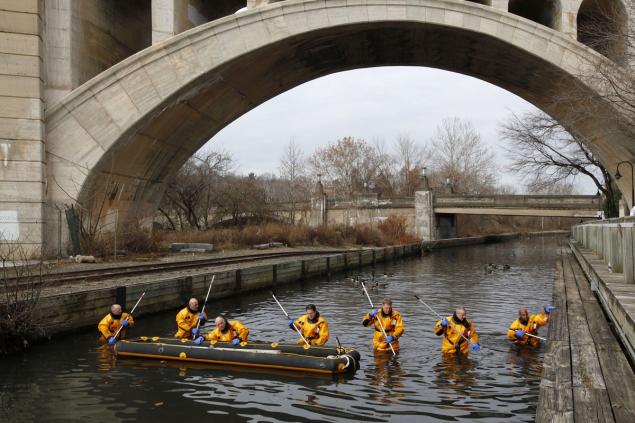
    The frogmen in their
    frogmen suits. One lifts
    his head from the water
    to say, “Got something.”

    You birth him, raise him,
    praise him, berate him.
    You place inside him
    your hope and dreams,

    And then, one day you
    awake to find he’s not
    in his bed after a night
    out at the bar. He refuses
    to arrive home that day.

    And while people look
    for him, high and low,
    you know. He is gone.

    With some sons, it’s not
    the morning when you
    realize he is not there.
    It’s the every day he is,
    suffering, battling, losing.

    It’s the middle of the day
    when you realize that he
    will not make it to the Ivies,
    That he might not make it
    out of your home.

    There are worse things
    in this world. Like knowing
    that he is gone from you.

    A son is a funny thing.
    You birth him, raise him,
    praise him, deflate him.
    You place inside him
    your hopes and dreams.

    And one day, the phone
    rings in your home. One day,
    you get your answer.

    This is a parent’s lot:
    the phone rings, and you
    are the only one home to answer.

    *-in memory of Shane Montgomery

  • ‘Foxcatcher’ Lost Me

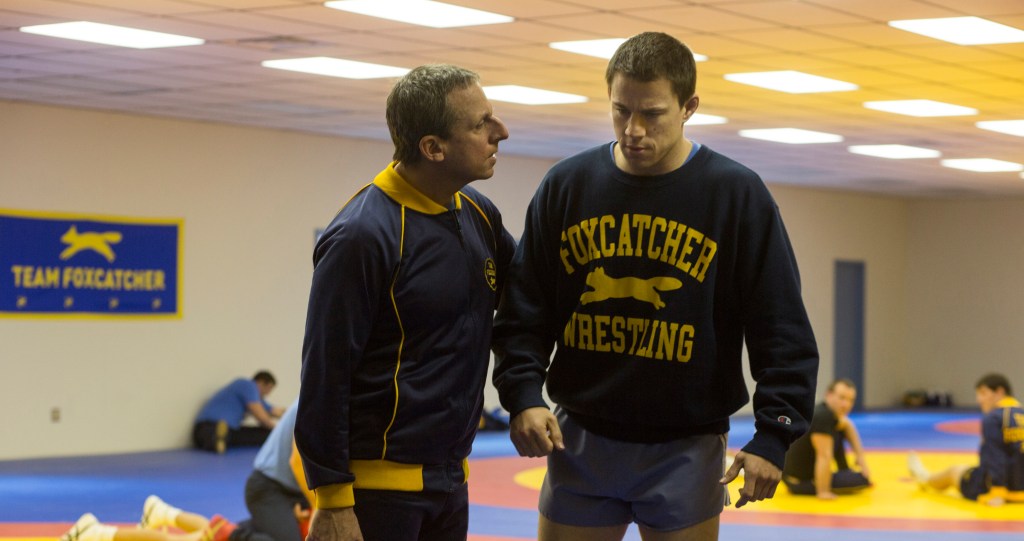
    I saw Foxcatcher last night and, I have to say, it left me feeling confused and unsatisfied.

    I remember the events that the film depicts. Heck, I was working for the local city tabloid, the Philadelphia Daily News, at the time and we covered the story in all its tragic, inglorious loopiness, from start to finish and then some. And the end of this movie felt wrong.

    So I checked, and now I know why. I don’t think it’s a spoiler to say that director Bennett Miller takes some pretty serious liberties with the timeline at the end of the film, when more than 6 years take place between scenes.

    I get that the film is a true crime story about an audacious, mysterious murder, and it’s laying out its argument for why the killing happened; I just don’t buy the argument. And the idea that the film is, in some ways, about the battle for Mark Schultz’s soul feels a little self-serving to Mark Schultz, who is the only surviving principal in the case, wrote a book about it that served as source material for the film, and I think it’s fairly obvious suffers from some serious cognitive issues—and I wrote that before finding out his violent reaction to the film.

    Summing up, the whole movie was long, dark, and overwrought. It would have benefited from 30 fewer movies—which I say about almost all 2 hour, 20 minute movies.

    The performers were very good. Steve Carell did a nice, unfunny turn as John duPont, though let’s be honest: his job was to be daffy and inscrutable, and there was a lot of makeup to hide behind. Channing Tatum was really good at shoulder-acting as the aforementioned Mark Schultz, and Mark Ruffalo was a godsend as the only functioning human being, Mark’s brother Dave, in a claustrophobic tale. It was a great, unexpected performance from him.

    If I watched a lot of movies, I wouldn’t put Foxcatcher on any sort of short list of “best of 2014.” But I didn’t see a lot of movies. Here are super-truncated reviews of those I did see, and a recommendation or lack thereof.
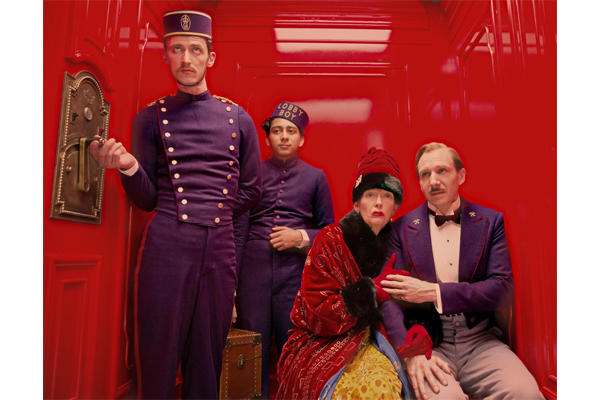
    grand-budapest-elevator

    The Grand Budapest Hotel. There’s good Wes Anderson and not-so-good Wes Anderson. This was pretty heavenly stuff, though I liked Moonrise Kingdom more. Ralph Fiennes was a comic revelation as M. Gustave, and any movie where Tilda Swinton exits early and irrevocably is a good movie. And that “Lobby Boy” hat! My favorite of the year and heartily recommended.

    A Most Wanted Man. Phillip Seymour Hoffman’s final film was pretty good, a John le Carre story of a mysterious Chechen Muslim who arrives illegally in Hamburg and becomes the rope in moral tug-of-war between various parts of the German security apparatus. It has a gut-wrenching ending that leaves you wondering how did Seymour Hoffman’s Gunther Bachmann not see the double-cross coming? And Rachel McAdams looked fabulous. Recommended.

    St. Vincent. A Bill Murray vehicle (if you somehow didn’t get that during the actual story, the closing credits drove it home, with a one-shot, 2½-minute wet kiss of the guy). Melissa McCarthy was funny for about 30 seconds, which made me realize how unfunny she was the rest of the movie. Saccharine. Pat. Save your money.

    Birdman. When Ed Norton exits stage left, about 2/3 of the way through this movie, it pretty much ended the fun—which, to that point, had been pretty fun—because it left Michael Keaton and Emma Stone to carry the movie home, and they weren’t helped by the scriptwriter (the nose bit, really??). But this thing vibrated when Norton was involved. Between this and his turn as the scout leader in Moonrise Kingdom, I’ve really enjoyed his recent work.

    The Theory of Everything. Poor Mrs. Hawking, who gives it her all, has a bunch of babies, and gets dumped for Hawking’s nurse. I haven’t seen the other tortured genius movie about Allen Turing, but I think I’d opt for it. I’d do this at home, if at all.

    bgi-big-eyes-movie-review

    Big Eyes. Christoph Waltz was a perfect jerk. Amy Adams looked great, in a ‘60s kind of way. And it ended when it should have ended, which is a lost art. 108 minutes. A little holiday (un)sweet to spark some discussion about the messy business of birthing a creative concept into big business. Well done, Tim Burton.

    That was it. Really. Hope to catch up on a lot more: Boyhood, Interstellar, the Edward Snowden documentary, and other stuff I read about from supersmart-kids-of-friends and equally sharp colleagues who watch more and know more and are far more articulate on the subject.

  • The Best Books I Listened to in 2014

    I tend to read in my car—audiobooks, that is, though my eyes are getting bad enough that it probably wouldn’t matter a whole lot if I actually read while driving. And I “read” a pretty fair amount, about a book each month. In fact, I consumed exactly 12 in 2014. Here’s what I thought of them:

    Fiction
    Gone Girl. Enjoyed it, haven’t seen the movie yet. Gosh, there wasn’t a likeable character in the whole darn story.

    Salem’s Lot. I generally don’t like scary things anymore, but listening on the road, in the summer, in bright sunlight, took away the creepiness. It wasn’t as creepy-crawly as actually reading it in my room late at night as a teen.

    World War Z. Maybe I do like scary stuff, because this was my other fiction audiobook last year. And I think I’m much happier reading zombie fiction than watching it. Yuck!

    Non-fiction

    Salt Sugar Fat. I found this very engaging, and I thought Michael Moss did a very good job of explaining the reasons why food scientists make the choices they do without harping every single minute on why it’s so bad for you. In fact, when I was reading the extensive section on Coca-Cola, I developed a huge craving for one. So I’ll blame him for the fact I made little progress on eliminating soft drinks from my diet this past year. Also, I have more of a “salt tooth” than a “sweet tooth,” so I found his section on that fascinating.

    The New Jim Crow. Really powerful, though I didn’t quite finish it. Like a lot of non-fiction books, I felt like, alright, I get the point, and chose to pull up before the finish. That said, it did connect some dots with the justice work my wife pursues through the Unitarian Unitarian Pennsylvania Legislative Advocacy Network, which she serves as board co-chair.

    The Everything Store. This book fascinated me, especially the details on how Jeff Bezos conceived of the company as so consumer-focused. The parts about how ruthlessly Amazon competes (treating its rivals and own employees badly) almost made me reconsider my Amazon Prime membership. But I couldn’t quite pull the trigger.

    Going ClearVirginia and I listened to some of Lawrence Wright’s opus on Scientology on our trip to Vermont, and she couldn’t take it. L. Ron Hubbard, as exhaustively researched as he is in this book, is just such a monstrous creep and flimflam artist—and the organization he left behind is proof that his imprint was lasting. Talk about an institution built on whim and ego—and formidable tenacity and grudge-keeping. It could have been an hour shorter.

    Hatching Twitter made me like Ev Williams, dislike Jack Dorsey, and not want to use the social media platform for about 4 months. I’ve gotten over it, though the idea that Twitter is for conversations is so patently untrue it makes you question your sanity. It’s a broadcast medium with a heavy dose of network effect.

    Spirit

    I don’t know how else to characterize these two books.

    Radical Acceptance. This is Tara Brach’s book on how cultivating acceptance can make you more fully alive. Frankly, I found it much less interesting than the teachings she posts as podcasts. Could be the book’s reader, who I think has done other books I’ve listened to—Gone Girl? Whatever it was about the product, it was one of those, “I get it. Is this over yet?” books.

    What We Talk About When We Talk About God. I really enjoy Rob Bell, the “universalist” Christian minister, but this book really felt, again, like he was stretching an essay into a book. I enjoyed it, but he could have used an editor. I liked Love Wins about 45 times better.

    WWTAWWTAGbanner41

    The 2014 Audible book list:

    Radical Acceptance
    Gone Girl
    Salt Sugar Fat
    The New Jim Crow 
    Going Clear
    What We Talk About When We Talk About God
    Zealot
    Creativity Inc 
    Hatching Twitter
    Salem’s Lot
    The Everything Store
    World War Z

  • Christmas Cookies Reviewed

    Virginia sent cookies and tea to Aunt Doris in Columbus, Ohio. This is the email we received today (minor editing):

    We just finished lunch and dessert. The Kenyon tea is delicious and the mango flavor is good. I sampled 4 of the collection.  Cinnamon were tops so far, close second were spice w/raisin frosting, unusual lemon frosting. Will test the others when I have more space.  Mary will have to give her tops later.  Thanks so much. I may share some of the others.

    If you’ve ever had Virginia’s cookies, what are your favorites? We’re curious.

  • Kelly's Senior Portrait
  • I Want to Be a Little Old Man

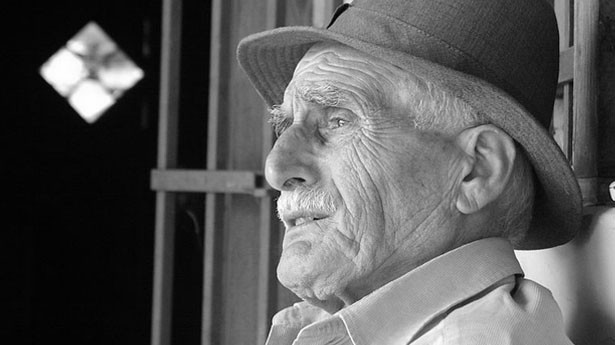
    I want to be a little old man.
    Concentrated, reduced,
    Like a sauce my wife cooks up on the kitchen stove.
    Many things go in, heat is applied,
    and what is left is less
    And more.

    There was a time in life when I was many things—
    Expansive and full of multitudes.
    I’m less than that now.
    Where once I wanted to be many things,
    I find myself becoming something sharper,
    Singular,
    In some ways softer.
    I find that I am whittling down to an essential me.

    There are people called to grow
    Through life, always bigger.
    I have attained my maximum size, I think,
    And I see me getting smaller,
    More focused, denser in my proportion of me.

    There is a loss in getting smaller,
    In taking up less space,
    But I imagine my electrons whirling closer to my center.
    I feel the gravity of a singular purpose,
    The mass that comes with knowing
    What I am
    And what I am not.

    For years I chased a whiff of something big and gamey,
    Always out of sight.
    It’s only now that I understand that what I couldn’t see
    Was not me, but something else—
    Something hunted, elusive, other.
    Because I will be a little old man.

    And being smaller, I will be able to go places
    I could not if bigger.

    And being whittled down, being reduced, being less
    Than I once was, or dreamed I was,
    I will find a richness and a litheness
    That I could not have imagined.

    I want to die a little old man,
    Reduced by life to my essential things:
    Eyes, hands, ears, intentions,
    And a sense that this little man,
    Born in abundance, concentrated by experience,
    Leavened by the love of others and that which springs from Deep Within,
    That he is enough.

  • The Rules of Rec Basketball

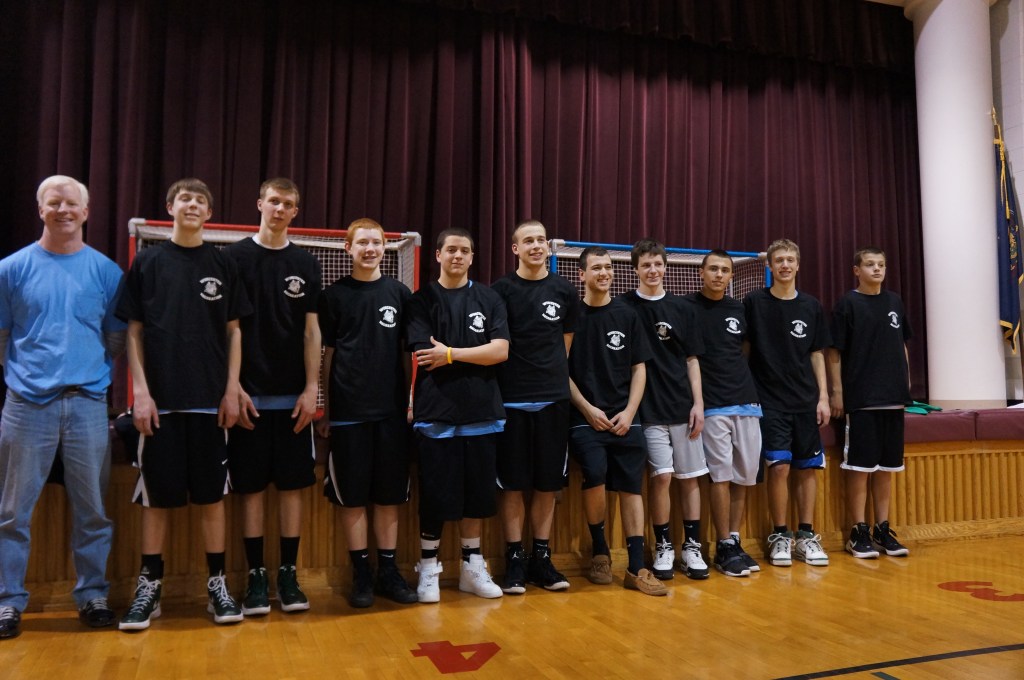
    My sons have played in a high school rec basketball league for the past 6 years or so, I guess—Pete played 2, Kelly has played 4 now. I coached Pete’s last season and all of Kelly’s.

    Coaching is a funny term, because there are no plays. The kids really don’t much listen to you.  With Pete’s team, all his friends were on it, so I’d say, “Let’s not take a ‘3’ till we’ve gone up and down the court 5 times or so.” Sure enough, first trip down, “3.”

    That said, I do consider myself a student of the game, and over time you come up with rules that help the kids. If they want to be helped.

    Last year’s team, for instance, actually listened, and even though we weren’t a classically talented basketball team (we couldn’t shoot and weren’t very interested in rebounding, for instance), we nearly won the league championship.

    Without further adieu, the keys to winning at rec hoops.

    Drive. Rec basketball is a man-to-man game, thank god. The team that gets to the hoops most wins in rec basketball. I can count on one hand the times a team has shot its way to a win. Pete’s last team was one of those; that team could bomb. But the most valuable player in this league is an athletic, mid-sized kid with good body control and an OK handle who can put defenders on their heels and help on defense.

    Defend. Because it can be hard to score in the halfcourt, transition baskets are huge. And turning the other team over above the free-throw line is even huger, because it gives your team the potential for an uncontested basket. I try to set the other team up so we get them passing the ball from the wings to the top of the key, then jump that passing lane and sprint for the easy bucket. It’s not as easy as it sounds—except when it is.

    Move your feet. Tons of kids stop running halfway through an 8-minute period. If your team keeps moving, it will get lots of late, easy points. This is especially true in the quarters played by reserves, who are generally less fit.

    Find a second team point guard. Your reserves almost universally lack ball skills, so you need someone you can trust to take care of the ball. If they can shoot a little, well, life’s good.

    Never pick the ball on offense. Rec players love to set picks. Unfortunately, none of them know how to roll or pop or do anything productive from the position. Instead, when they pick, they have brought a second defender and effectively double-teamed the ball, with no easy obvious place for the ball to go. I can’t tell you how many times I’ve seen a turnover and easy layup because a pick (or even better, two picks, both set for the ballhandler). All that traffic. Defensively, as soon as a team does that, I instruct both players to attack the ball.

    Work the refs with kindness. Angry and petulant doesn’t work in rec hoops. Be nice, laugh with the refs. It pays off late in games, when you need to mug the opposing point guard to get the ball back. Or you’re ahead and need your best shooter, who’s a little weak, to get the foul call before he gives up the ball. My oldest was a good shooter and the greatest recipient of this rule ever—he’d beat a path to the free throw line late in games and finish other teams off.

    Never, ever take a “3” if you can help it. As I tell the kids early in the season, the reason they’re here is because they can’t shoot. Why exacerbate it by shooting from far away? It also gets in the way of other important considerations (see “Drive“).