• Kelly’s a high school junior now, and we’re starting to get closer to some “lasts.” That’s what I was thinking about on Friday, when we took photos of Kelly and his friends before the annual homecoming dance. It isn’t the final lap, but we’re not that far from the final lap, so we better enjoy the ride.

    Kelly, Mike and Louis seemed to be enjoying the ride, as they were the only guys with 11 young ladies in va-va-voom dresses. I often think at work that somehow young women are so much more mature than young men as they enter the workforce, and I wonder when that happens. Clearly, it happens before junior year in high school, because the guys look like 16-year-olds and the girls look like supermodels. It’s a little jarring.

    Anyway, Kelly is doing well as a new driver, and Virginia and I are grateful to be (finally!) out of the chaffeur business, except for ourselves. Next for us is hammering out a college visit schedule for Kelly—and workign out the details on Pete’s transfer to Temple this winter break.


  • 20131009-231013.jpg

    We have another driver in the house. Kelly passed the driver’s test in his second try, this time in Bedford, Pa, which is almost certainly in Ohio. Why did we go 3 hours away for the second try? Was Kelly’s first attempt THAT disastrous?? No. But the next open slot for a drivers test in Eastern Pennsylvania was roughly in 2123, so we, as many great Americans before us, went west—though not so far west as to actually leave, you know, the Conmonwealth.

    Anyway, Kelly passed, and the idea that we no longer have to drive him places has everyone giddy. The only drama left is Pete’s return home in December and the competition between two drivers over one well-used, 11-year-old Rav-4 with 170k miles on it. Who will be our Katniss Everdeen? Let the Hunger Games begin!!

  • A Hero Every Day

    Contrary to what a cynical world tells you, we live in an age of heroes.

    They’re all around.

    Really. No bull—-.

    Sometimes it’s just an act of kindness, a guy who buys umbrellas and hands them out to rain-soaked New Yorkers. Sometimes it’s as serious as the teen who follows a suspicious car until the passenger door pops open, and the 5-year-old subject of an Amber Alert jumps out and runs over to him. Or something else. The fella who ran 110 miles to raise money for cancer research. The rumpled guy with one empty pants leg who came home from far-away to teach kids who need someone who cares.

    We’re swimming in heroes.

    It doesn’t always seem that way. Listen to the news and you’ll hear about athletes, politicians, and celebrities who aren’t within shouting distance of the struggles of you and me.

    But be quiet and listen for the sound of heroes in your midst. People who put others first. They’re whisper-close.

    That’s the premise of Every Day Heroes, a feature launched last week on MensHealth.com. Every day this month, we’ll profile a guy who helps others without an eye open for a camera or a pat on the back (though, please, pat away). We hope you find the profiles enlightening, empowering, inspiring. And that you walk away feeling like you can be a hero too. Because we’re convinced you can.

    P.S. And when you do, share. Tell our editor, Andrew Daniels (Andrew.Daniels@Rodale.com). Or go to social media and use the hashtag #everydayheroes. We’re less interested in counting the number of times the hashtag gets used and more wanting to see how far these ripples of connection can move beyond these individual stories.

  • When You Can’t Stop Listening

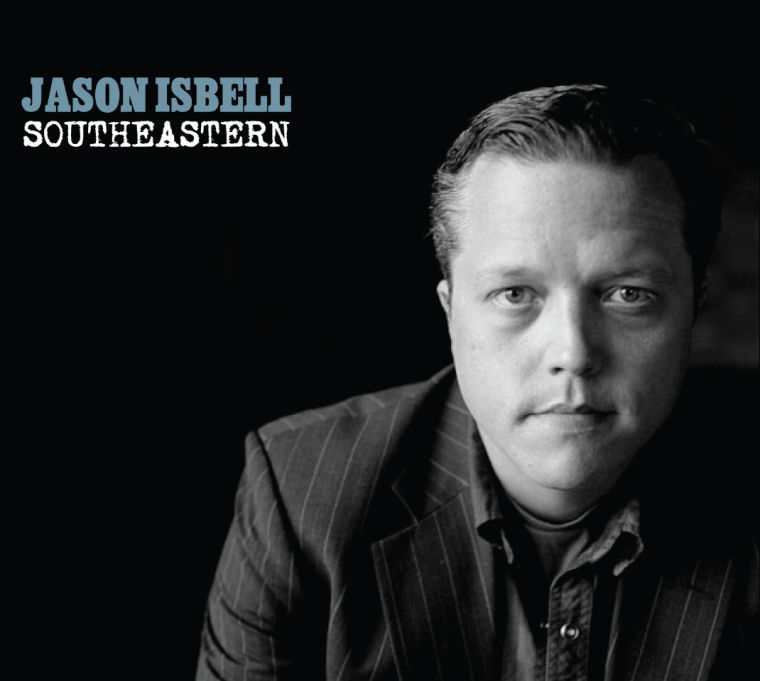
    I’ve been totally engrossed in Jason Isbell’s new album, Southeastern. This happens to me occasionally. Here are the albums I can think of that had the deepest hold on me at some point in my (now long) life:

    Eagles, Greatest Hits Vol 1. Back in the ’80s, I had a Sony portable CD player that I took with me whenever I drove the Datsun 710 wagon that had been my mom’s until she handed it off for the kids’ use (the kids, at that point, being me). It didn’t plug into anything; it just sat on the passenger’s seat and played through its tiny, tinny speakers. And the Eagles was what I played while driving around—all day, every day, for months. Take It Easy … Lyin’ Eyes, Desperado, all those Henley/Frey tunes. It ends with The Best of My Love. There was no shuffle back in those days, so it always ended with Best of My Love. Then I started over again. God, I loved the Eagles. There are few things in life like listening to Don Henley sing.

    Dire Straits, Making Movies. I’d always been kinda intrigued by Mark Knoppler’s group, but I was a bit of a miser and I didn’t like to, you know, part with my money. For anything. So it was a big step when I bought this—and fell helplessly, hopelessly in love. If it wasn’t for there being so few songs (7, and I didn’t like the last one, Les Boys), it was just about perfect. The first four are still 20 minutes of rock-n-roll heaven (Tunnel of Love, Skateaway, Romeo and Juliet, Espresso Love).

    Patty Griffin, Living With Ghosts. I still can’t tell you why I picked this up, in 1997, but from the first gangly guitar chords of Moses, I was hooked—and have been ever since by Griffin. This album is so spare—it  is essentially her demo tapes and just voice and guitar (which she strums into submission, basically)—that it hits you like a ton of bricks. Every Little Bit, Poor Man’s House, Sweet Lorraine are just the most beautiful, awful songs you can imagine. I’ve played this album, end to end, about 2,000 times. Virginia still finds Griffin’s warble a bit of a test, but she’s survived 17 years of it.

    The Doors, LA Woman. I was a huge Doors fan as a teen, and this was the most played of the bunch. Strongest, bluesiest, with lots of throwaways-with-great-hooks (The WASP, Been Down So Long, Crawling King Snake) plus two all-time greats, the title song and Riders on the Storm. The Doors haven’t held up particularly well over time, I don’t listen to this full-through like I do many of the others, but it reminds me of a time and a posture in my life (that I don’t really miss much).

    U2, Rattle and Hum. The Joshua Tree is about the start of my adult musical sensibility, but Rattle and Hum got even more playing time becauseit was about the best live album ever. You got all the Joshua faves, plus Desire, Angel of Harlem, All Along the Watchtower, When Love Comes to Town, and Helter Skelter. I still want to cry when the chorus pipes up in I Still Haven’t Found What I’m Looking For. Played for about 3 weeks straight in my Acura Integra while sports editor at the Del State News in Dover, Del., in 1988.

    John Hiatt, Bring the Family. Maybe my favorite album ever. Picked this up while working my first job, in Dover, Del., after reading a story on the AP wire about Hiatt. My tastes were not particularly twangy at that time, but the songwriting, Ry Cooder’s production and Hiatt’s voice wowed me in a way that I’ve never quite experienced again. Not a bad song in the bunch, with highlights being Have a Little Faith in Me (still regret this not being my first dance with Virginia at our wedding), Alone in the Dark, Thing Called Love, Your Dad Did, and Learning How to Love You. I really enjoyed the album after this, Slow Turning, but there’s something about Family, which hits my soft spot for redemptive efforts by talented, twangy storytellers (see next).

    Jason Isbell, Southeastern. I read a profile of Isbell in the New York Times Sunday Magazine, but I wasn’t expecting anything great when I found the album on Spotify. I knew Isbell remotely from his Drive-By Truckers work, but the Truckers were very  hit-and-miss for me. I listened to Relatively Easy and found it a jangly charmer. But nothing prepared me for my head-over-heels infatuation when I listened to the whole album. The songs unwind like Southern short stories. Elephant is a deft, unsparing account of a friend’s bout with cancer. Live Oak is a true-crime-story head-shrink classic. The rest are simply great. It’s a tour de force I haven’t yet been able to move past. As with Hiatt, Isbell’s newly sober and seems to sit on a ridgeline where he can clearly see the bad ol’ days and the sun rising on the horizon.

    What are your can’t-stop-listening favorite albums? Add in comments below. Or reply on Twitter/Facebook.

  • Debt Hiding as Savings

    Technical debt.

    It’s the idea that not keeping up with best technology practices, platforms, and talent carries a quantifiable cost.

    A cost in efficiencies and capabilities. A cost in opportunity. And a cost in, you know, money–both missed revenue and the inflated budgets required to nurse and manage outmoded technologies and structures.

    So technical debt is bad. Even worse, it’s often perceived as “savings.” Not spending money today is seen as a good thing, even if it means that the business objectives that would improve or transform your business move ever closer to the horizon.

    As in your personal finances, not all technical debt is bad. Companies can accept some debt in order to prioritize and manage risks and rewards. Seen for what it is and in what quantities, it can allow for a focusing on initiatives and ideas that are seen as most likely to move the company forward.

    But too much and you constrain agility. You limit your options. You mortgage your future.

    The question, then, is “how much technical debt does your business carry? And how can you pay it off?”


  • Nice job, Grace!

    Grace McKeone grabbed her camera, figured out how to set it for 10-second delay, and ran over in time to be in this photo of the whole gang from the Degeorges’ Waymart lake house.

  • One of the rites of late summer in recent years has been a trip to a friends’ lake house northeast of Scranton (in Waymart) for an overnight. Good food, good friends, lots of lake action—it’s always a blast.

    Below are some photos from this year’s fun.

    And we all decided that one night was so much fun that we’d like to do it for a whole week, together, in a house on the Outer Banks. The scouting, evaluating, and negotiating has begun. We’ll see if the fever breaks.

  • Ed. note: Posted by Virginia

    Just back from brief stay in Vermont at the invitation of our dear friends, Ken and Betsy. To make it even better, took Eileen Gilligan! We hiked, biked, did some yoga, kayaked and I even swam in the incredible Lake Willoughby in the Northeast Kingdom. Loved being with the Plume/Raineys and have decided to follow Betsy up any mountain she suggests, whatever way she wants to go. My new role model!IMG_0501 IMG_0505 IMG_0508 IMG_0514 IMG_0519 IMG_0522 IMG_0529 IMG_0532 IMG_0534 IMG_0539 IMG_0541 IMG_0542

  • You Get What You Need

    It’s been a long day. Up at 5 am to catch the bus to New York, a full session with plenty of business and catching up with colleagues after a month-plus of not visiting The City. A sunny late-afternoon walk across town brings the realization that your energy is about tapped out.

    Down into the bowels of the Port Authority Bus Terminal. The long lines waiting to board a bus to Long Island or some northern suburb. A middle-aged man sitting on a bench. You think why is he sitting alone until you hear why. “Ain’t nobody better fuck with me!”

    You jump on the bus plop down in the seat, close your eyes, and don’t even notice the row in front of you has been taken by a (very) young mom and her less-than-year-old daughter—until you hear the cries. The cries escort you through the Lincoln Tunnel and on to the Turnpike, headed south, past Newark.

    Great, two hours of this, you think.

    And then you notice the bus has quieted, and something else—a smile between the seats. The eyes crinkled and taking you in.

    And it’s you who’s taken in, mugging and bobbing and putting your index finger in her impossibly small hand. The crinkled face and liquid eyes.

    Thinking, please, two hours of this.

  • The Legacy of Lance

    Lance Armstrong is a jerk.

    Even in 1999, we knew that. As a journalist, I knew it. But when my boss at the Philadelphia Daily News, who knew of my love for cycling, assigned me to write a preview of the US pro championship race held there in June, I knew what I needed to write about and who I needed to speak with.

    Lance.

    He had been diagnosed with testicular cancer the summer before, had survived a grueling chemo and radiation regiment, and was back on his bike. His results were mediocre as he rode through the cold of early spring in Europe. But he was the best American cyclist of his generation, he was the most compelling story in the sport …

    And he was, all writers agreed, a jerk.

    Lance rode for the US Postal Service team at the time, and I called the team’s PR department. They weren’t sure when Lance would get back to me, but he would.

    I was at home when Lance called me while sitting between two fellow cyclists in the back seat of a car headed to Lancaster, Pa., for a minor race, a prelude to the much-larger one in Philly. His answers were perfunctory, short.

    There are few things I know about writing a profile, but one is that the subject himself or herself is often the least-capable person to comment on his/her life. Especially with hard-charging, willful types; they don’t monitor, inventory, and assess their feelings and motivations through the course of a week, or a month, or a year. They decide and then they go. So, and I learned this from the amazing sports writer Gary Smith, you’re looking for the observer, the person who watches the other with interest. Perspective is, in the end, a second-person experience, right?

    So I asked Lance if I could speak with his mom, whom had been his confidante and supporter for years; he said no.

    “But you could talk to my fiancee,” he said.

    I’d never even heard he HAD a fiancee. I completely felt as if I was being blown off.

    “Sure,” I said. “That’d be great.”

    I drove to the office downbeat. Arrived at my desk. The red light on my phone was on.

    I checked the message.

    “This is Kristen,” a female voice said. “Lance spoke with you, and asked me to give you a call.”

    We spoke the next day—for two hours. She offered insight after insight. She was into him, after all. Falling in love. She paid attention. She sent me a copy of a hand-written note that Lance sent to a boy, suffering from cancer, who, he had met on a hospital visit. It encapsulated both Armstrong’s singleminded drive and his desire to help others struggling to live with and through this dread disease.

    I got a great story. And Lance Armstrong had done what he said he’d do.

    Lance Armstrong started getting much better on his bike in the ensuing months, until suddenly he was winning bike races. Then big bike races. Then the biggest race in the world, the Tour de France—over and over. Seven times. And because of his recovery, and his work to help others, and the fact he’d shown me the kindness of doing what he said he would, I cheered him on, and dismissed those folks who claimed he cheated in doing so.

    Well, the folks who thought he cheated were right. I feel manipulated but not necessarily demeaned. And I think that he is simultaneously a cheater, the greatest cyclist of his era, and almost certainly the greatest athlete philanthropist in the history of the world.

    He’s also a bully, and a colossal jerk.

    But we knew that in 1999.

  • “True silence is the rest of the mind, and is to the spirit what sleep is to the body, nourishment and refreshment.”

    —  William Penn

  • Peace (with a Punch)

    Found this recently while dredging through some Google Docs folders. It’s from a church service I collaborated on during January 2009, the theme of which was “peace and quiet.” Somehow I ended up talking about the need to occasionally punch another person. If you’re interested, read on …

    When Yvon and I started wrestling with this service, I went looking for silence, and my searching took me (figuratively) to places like the One Square Inch of Silence, which is located in a rain forest in Washington State, or the anechoic chamber in Minneapolis, Minnesota, designated by the Guinness of Book of World Records as the quietest place on earth.

    But that felt wrong. What we’re talking about isn’t really silence—what we are looking for isn’t an absence of noise. It’s time and space in which we can hear ourselves, others, and the world, deeply and meaningfully.

    NPR’s This American Life recently had a sort of essay on the failings of silence as objective. Ten years ago, a bunch of commuters on the busy Boston-to-Washington DC route asked Amtrak for one car in which people would pipe down—no cell phones, no games, no yammering. Thus was born the quiet car. In the essay, a producer for the show explained her transformation from gleeful journeyer to self-righteous, mirthless protector of the quiet.

    Midway through the piece, she says, “Everything I need to know about the appeal of fascism I am learning from the quiet car.” Later: “I am quiet and good; other people are loud and rude. I am the beleaguered hero in my own world, as if my quiet car demeanor is a gift I give the world rather than a choice I make for my own reasons.”

    The lesson: quiet is a path, not a destination. What we are looking for is Deep Connection, Deep Meaning.

    And it isn’t easy. Modern Life is loud and distracted. Never have there been more ways to get bumped off or just plain avoid the task at hand. And we all know these two dread words: Too busy. Too busy to help. Too busy to take on additional responsibilities. Too busy to think straight. Too busy to feel deeply. Too busy.

    And I can only speak for my house, but this might ring true for you as well. We are at best unwitting collaborators in the cult of busy. At worst, active accomplices. We do lots of directed stuff, and expect our kids to do lots of directed stuff.  Just yesterday I was installing blinds in a bedroom and watched through the window as one of my boys tossed a football to himself in the backyard. He was obviously playing out something in his head. Virginia came by, watched and said, “What’s he doing?” I knew: the same thing I did with about one-third of my waking hours as a kid.

    I’m glad I was a kid when I was.

    When we over-fill our calendars, when we refuse to prioritize, when we don’t protect time for reflection and connection, we are losing something crucial to our spiritual health.

    Now, I know three people are going to come to me after service and give me a talking-to, how their obligations outstrip their time and energy. And granted, I’m making a point up here, and our circumstances are not completely of our own choosing. But I’ll tell you a quick story.

    One of my sons was feeling put upon by his schoolmates, one in particular who was saying hurtful things to him. He was being bullied, and he was crying to his mom a couple times a week.  And I told him this: I know you’ve had a hard time with a couple kids lately, and I want you to know this—you have my permission to do what it takes to end this. If you can talk to him and end this, fine. And if that means you have to kick someone’s butt, so be it. I then spent the next 10 minutes explaining in fantastic detail how one goes about winning a fight: How to telegraph one’s intentions. How to work up to an emotional crescendo. How to not wait for the opening bell. How to finish it. When the crying will come. My son sat transfixed—I don’t think he could believe what I was saying. But he listened the whole way through.

    Now, was I telling him to step off that school bus and fight? Not exactly. What concerned me was that he was feeling as if he had no control over the things happening to him. I wanted him to understand that he could negotiate the terms of his middle school life.

    And so I tell you a similar thing: You have to negotiate time in your life for deep reflection, deep connection, and deep understanding. Because if you don’t, no one else will. As you are all adults, I don’t think I need to explain that there are better ways to do this than punching somebody in the nose as they step off a school bus, but the charge is the same—you are the protector of your Personal Time. You create The Quiet. And you need to practice creating The Quiet and living, at least for a few moments, in The Quiet. 

    And you need to practice creating The Quiet, or it will wither. Well, what does that mean, to practice? To me, you practice meditation in the same way a quarterback practices football plays, that an actress practices her lines, so that when the situation is much more difficult, he or she can fall back upon that practice and accomplish what is intended—whether that is a touchdown pass, or a laugh line, or a fleeting shot at self-understanding.

    And so my quest for silence in the end becomes a quest instead for the practice of listening, of connection and listening—hearing myself, hearing you, hearing the world.

    And so, I invite you into a short period of silence, in this safe place, to relax into the moment, to feel your body, to feel the presence of others around you, to note the thoughts that fill your head when it’s been emptied … whatever it is that comes to you. Let the silence be our practice for this time.

    Blessed be.