• 4-month check-in, holiday greetings and new year wishes

    OK, so it’s been a while (4 months), but I changed jobs, got busy and looked up to realize the year was nearly over. So I hope your holidays have been joyful and maybe even occasionally restful.

    Here’s where we are in the story of us:

    I am four months into my job at Universal Health Services (UHS), based in King of Prussia, Pa., which manages hospitals and healthcare services. I direct story-telling, which is daunting, because we’re a Fortune 500 company with 87,000 employees, 2 million patients a year, and more than 300 facilities across the United States, Puerto Rico and England. We’re BIG — and hospitals are inherently home to human stories. There’s drama built into a hospital in a way that isn’t true when I go to the dollar store, or the gym, or even church. Turn on the TV — anytime since there have been TVs — for proof, in the form of hourlong hospital dramas. So there’s a lot to say. And yet, people are busy and reluctant to hand their stories to a huge company and sharing their stories can be problematic from a privacy standpoint. It’s a complicated gig, with nice people and the possibility to do some good. I’m enjoying it.

    Speaking of health, I had a health hiccup this fall, when a routine stress test pointed to a potential return of my heart issues. To cut to the chase, a surgeon did a cardiac catheterization in early November and, after taking a good look around, decided nothing needed to be done. The result didn’t surprise me; I hadn’t been feeling as I had the previous three times I’ve been “cathed,” so I was skeptical that anything was dramatically bad. But I’m not the doctor and the stress test result was concerning. Even so, I was heartened when the surgeon took my side and  pronounced my arteries OK, though he suggested I clean up some of my eating/lifestyle habits, which I agree is needed.

    As I said, the episode reminded me a bit of the events of 4 years ago, which makes me think about mortality, and that almost always takes me back to my dad, who died nearly a decade ago. That seems a long time and not so much, which reminds me of something the Rev. Ken Beldon, the founding minister at my church, said recently, “People die, love doesn’t.” I found it helpful in understanding this persistence of human presence long after the physical person is no longer among us, and drives home for me that we are far more than our physical being. 

    While I don’t enjoy having cardiovascular disease, its existence within me does unlock a vulnerability that I would have difficulty accessing if I was without it. And dealing with that discomfort provides a focus that helps me to cultivate a more mindful ease than I could imagine otherwise. As the late Rev. Forrest Church said, “Want what you have” (the opener of his three prescriptives, followed by “do what you can; be who you are”). It’s not easy, and I keep trying.

    In more family news:

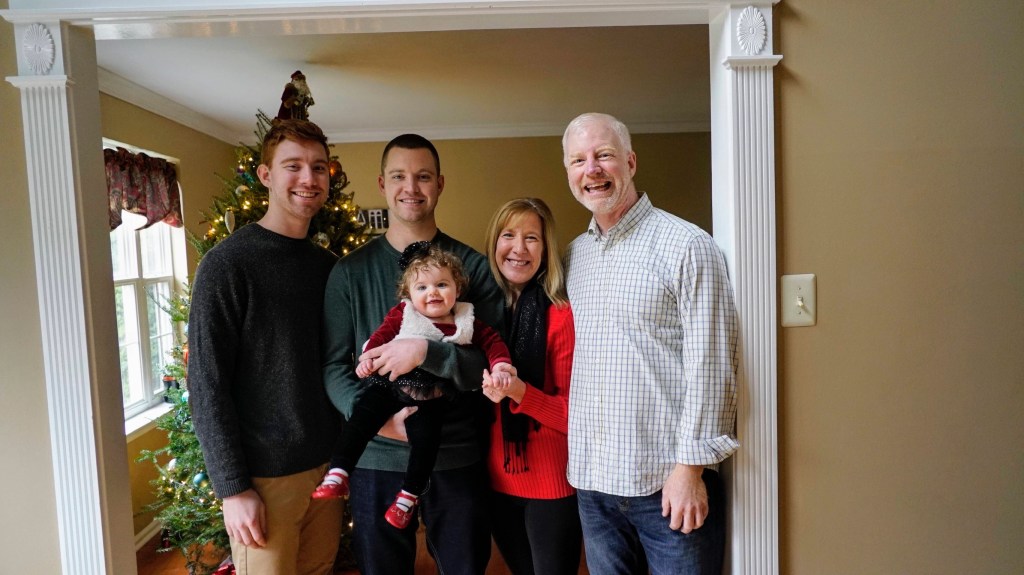
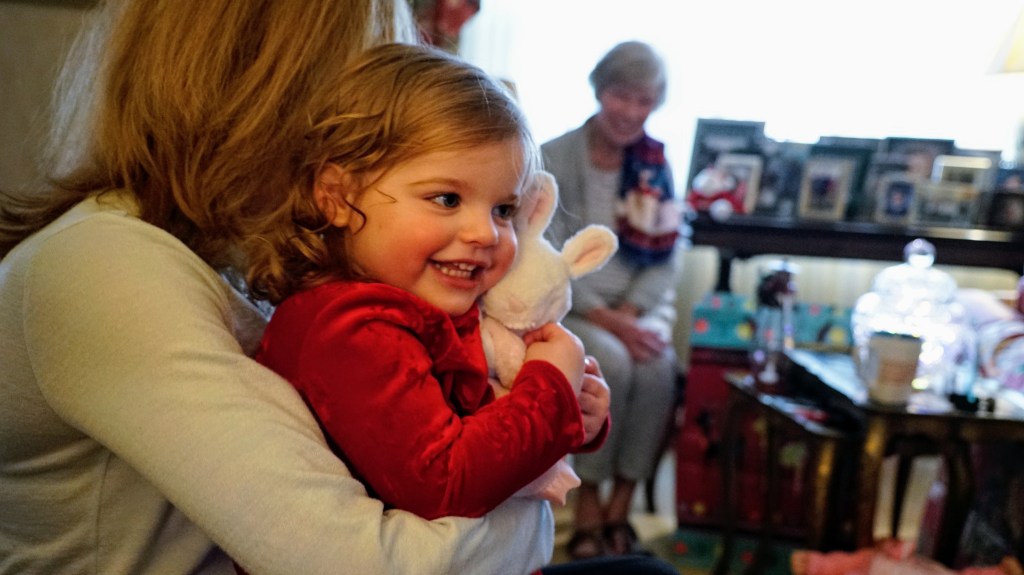
    • Pete, Marissa and now-20-month-old Mia have set up a household in Cherry Hill, N.J. Pete is working for Draft Kings, the online fantasy sports behemoth that recently moved into online sports gambling. Pete works in player development. Marissa continues to work as an IT recruiter in Philadelphia. Mia remains our favorite (and only) granddaughter and, at 20 months, she is a wonder to behold (above, from Christmas, in Gigi’s arms). 
    • Kelly is at a goat farm in Northern California, the third farm he has worked on since heading west at the end of the summer as a WOOF-er (WOOFing is Working On Organic Farms, details at wwoof.org). He’ll be traveling to Greece and hiking the Appalachian Trail before heading to Camp Unirondack again this summer. Kelly enjoys being outdoors and working with his hands, and has time to read and hike. He is healthy and happy.
    • Virginia was recently promoted at her job to supervisor of a group of service coordinators at her company, AmeriHealth Caritas. She now has to report to an office, just south of the Philadelphia International Airport and, for the first time maybe ever, she has a longer commute than me. I, at least, am enjoying it.

    Recommendations

    A couple recent things worth sharing.

    • Virginia and I saw the movie Parasite, and both recommend it. It reminded me a bit of Get Out, a movie that starts like a humorous critique of America and race its first half, then veered in a much scarier, violent direction in its second half. Parasite, which was made in Korea and is about class instead of race, isn’t THAT extreme, but it is very well done. Definitely worth a watch. And suddenly, there’s a lot we want to catch at the movies.
    • Philadelphia Eagles offensive lineman Brandon Brooks struggles with anxiety and he was unusually candid about his mental health issues last month after missing a game when he suffered a debilitating panic attack. His courage in talking about it was so very good and I’m sure led to a lot of talk and maybe even some understanding about a health condition still smothered in stigma.. And speaking of persistence and resilience, the Birds have painstakingly hung in there through a difficult season and increasingly look as if they could make, and be dangerous in, the NFL playoffs. It hasn’t been fun, but it might make for some exciting moments in January.
    • The headline pretty much gives away the bottom line – “I Worked for Alex Jones. I Regret It” — and it doesn’t do justice to what a great job the former employee does of putting in context just how frightening and dangerous Jones is. 
    • I’ll get itShe’s not here right now and It’s for you are all phrases on their way out of the American dictionary, in lockstep with the disappearance of the landline from American homes. And that, argues this article in The Atlantic, is a loss. If you gave up your landline in recent years (like we did), this set off some waves of remembering and nostalgia, and I agree with the writer that it does mark a loss in the Family Commons. That said, I’m not going back and I doubt many others are, either. 
    • This long article about a group of historians who wrote a letter taking to task the editors of the 1619 Project, a look at America through the lens of its relationship to slavery that was published in The New York Time Magazine earlier this year, was, I thought, a comprehensive and even-handed examination of the issue. I have read some, not all, of 1619P, and I was struck by its pessimism about the possibility of change — and I also get that such a conclusion is justified by a reading of the historical record. I am an American optimist, even in these difficult times; I believe this: we’ve come so far; we have so far to go. My hope is, despite those who wish us to hearken back, we step forward to the country the founders wrote into being, rather than the one they excluded from the document and thus allowed to persist. 
    • Finally, I just finished listening (via Audible) to A Gentleman in Moscow, Amor Towles’ novel about a Russian aristocrat who becomes an unperson and is confined to a cosmopolitan hotel in the capital, ostensibly for the rest of his life. The book is simply a triumph, and the audiobook even moreso, as the reader embodies it perfectly. I’ll say no more.

    Best wishes in the new year!

    – Kevin 
  • A new job, an old beach haunt, a new supergroup recommendation

    First off, an announcement: I’ve changed jobs — again.

    I started today at Universal Health Services as Director of Content and Publications. The job is good, plus I get to ditch the Philly wage tax (saving 3.5%) and the hour-and-a-half commute for one that’s less than 30 minutes (and as little as 15 on a good day).

    That is all very good, but I am pretty torn about leaving the Philadelphia Business Journal, which I really enjoyed. I liked the team of reporters, I liked the publisher, and I liked the work. It complicated things that the Editor in Chief left as I was negotiating with UHS, and there was a good chance that if I stayed I could have been the EiC there. That was very tempting, because there aren’t a lot of places where you can do good local journalism, and my short stint as managing editor had me convinced that we weren’t far from some major wins. My friend Adam heard that in my voice and got me excited about the opportunity. It almost won me over. In the end, I decided the UHS position was the bigger opportunity with the higher ceiling to have a positive impact, and most likely to provide a “third act” to my career after good runs at the newspapers in Philadelphia and Rodale’s magazines in the Lehigh Valley. We’ll see if I’m right.

    In the meantime, the Business Journal has a number of openings:

    (The ones that don’t have links will be waiting on the EiC to be hired, so that person has a say in filling the rest of the roles. These are good jobs. If you are interested, let me know and I can provide some guidance and a possible recommendation.)

    mascot panel

    Mascot madness

    While I’m talking Biz Journal, I should mention that one of my last acts there was hosting a panel at the annual Business of Sports event at SugarHouse Casino. I lucked out and got the mascots discussion. As you can see from the photo, several mascots including the Flyers’ Gritty and the Eagles’ Swoop were in attendance, as well as “best friend of the Phanatic,” Tom Burgoyne, who sat in the panel. The funniest bit was when I lauded the Phanatic as the best pro sports mascot ever, and the other mascots, sitting at tables, stood up, offended, and waved me off. The event also included more substantive panels on the state of online sports betting in Pa., the new rules of selling tickets, and retired athletes’ second acts in the business world. The event is one of the things that I think the Business Journal has going for it. Modern journalism outfits need to score points via all channels — print, digital, and events. PBJ has that mix in its DNA.

    Rehoboth was great

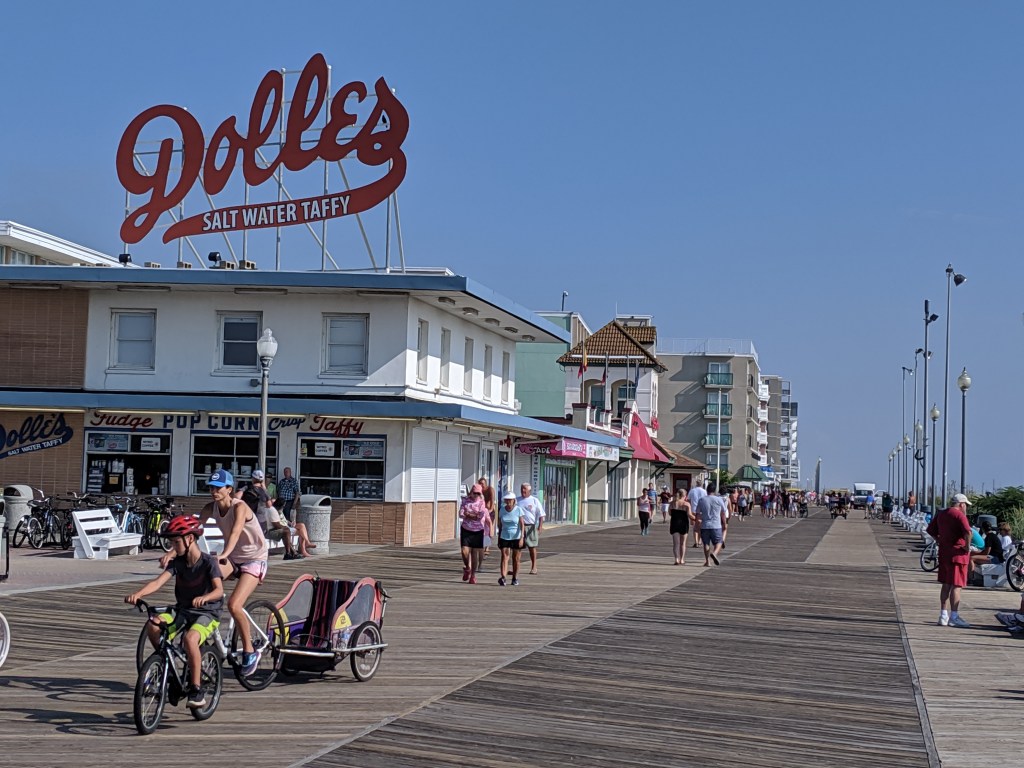
    Virginia and I went to Rehoboth Beach last week after my final day at ACBJ.  We hadn’t been down there in a several years, and it was surprisingly nostalgic as we drove over the canal that separated Northern and “Slower” Delaware on the way to the beach. In Rehoboth, a lot of memories rushed back, reminding us that we had been there A LOT over the years. Still my favorite beach town. We also met a couple from DC. The husband runs a company, funded by pharma, that helps patients lobby insurers to pay for expensive treatments. He mentioned that his company hires young people — like recent graduate Kelly. We’ve been in regular correspondence since then.

    25 years

    Our friends Sue and Chris McKeone celebrated their 25th anniversary by renewing their vows and asked me to serve as officiant. A quick Google search turned up that in the week preceding their marriage, Jeff Bezos founded Amazon, Forrest Gump opened with a rare midweek release and a preliminary trial set the stage for the O.J. Simpson trial. I also read through Sue and Chris’ original vows, which ended with a promise to share their burdens and successes. I closed with this:

    Spoiler alert: Sue and Chris have not made a lot of changes, but one word that is gone is success. And I’d suggest this: success is a young person’s word. As we grow older, and sometimes a little wiser, we might come to realize that the most important thing we can hope for in this world is to be seen, and understood, and because of that — and at times despite it — to know that we are loved. This does not require a partner, there are many people in our lives who can provide this crucial ingredient, but it is a great balm when you find a partner who provides it. That is what has always struck me about you two — the great affection and understanding between you. This is your great success. I am overjoyed to be here with you to celebrate it.

    It was also a great party, at the Ledges Hotel in Hawley, Pa. Here we are with our good friends Sue and Chris (left) as well as the Harts and DeGeorges.

    Other stuff

    • Even with a rash of training camp injuries, the Eagles look poised to have a great season. The offense looks as if it will be close to unstoppable. My prediction is 13-3 and the divisional title. I’ll wait and see how the season ends before I make postseason predictions.
    • The Phillies ended up being pretty top-heavy in a sport whose 162-game grind selects for teams with 25 productive big-leaguers all pitching in. I was OK with the Phils overpaying for Bryce Harper, but, as is painfully obvious, he’s merely an expensive piece and not an answer all by himself.
    • Virginia and I are 4 episodes into Stranger Things and enjoying it thoroughly. No spoilers, please. The show reminds me of how helicopter parent-less my childhood was.
    • A week after their debut at the Newport Folk Festival, I encourage everybody to give the country/Americana supergroup The Highwomen a listen. The group includes Brandi Carlile, Amanda Shires, Maren Morris and Natalie Hemby (with guitar help from Shires’ husband, Jason Isbell). I like Hemby’s contribution Crowded Table as well as their cover of Fleetwood Mac’s The ChainAccording to Rolling Stone, the album, out Sept. 6, will have songs written by Isbell and Ray Lamontangue as well as covering topics from motherhood to ambition to a country-flavored gay love song. I will be at Shoalsfest (Isbell, Sheryl Crow, Mavis Staples, others) with Virginia and our friends Majid and Mary Alsayegh in early October, Shires will be there and I’m hoping against hope that the rest of the Highwomen will make it there, too.

    That’s it for now. Hoping all is well with you and yours. Enjoy this last month of summer!

    – 30 –

  • Grandpahood, for Real

    Editor’s note: I tweaked my back last week and couldn’t sit for very long, throwing a wrench in my weekly newsletter schedule. So we’ll call this Week 3-4, and pick up on the regular schedule around Friday, Feb. 22.

    Also, this week’s is a little different, mostly a personal essay (And sorry about the subject line tease in the last newsletter. I planned to share this then, but decided the whole thing was too long and pulled it without updating the, you know, TITLE of the newsletter. Oops!). Hope it connects with you.

    //

    I’m a grandpa. Have been one for 10 months now. 

    If you have seen me in the physical world, you most likely know this. You might have even seen me with my granddaughter, Mia. If you haven’t, this is her, from last week.

    Baby Mia

    She’s got soft, porcelain skin, full cheeks, huge blue eyes and brownish curls. She is a very small person, a little over 21 pounds ― which is funny, because I experience her as large, probably because we spend much of our time together up close.

    She likes Cheerios and apple sauce, sure, but also blueberries, eggplant, salmon and her grandma’s red lentil soup. We haven’t found any food she dislikes (dairy’s a no-no for another few months). She gets serious food envy when she watches other people eat. As she crunches on a cracker with her eight teeth, I think about how someday we’ll sit together and make a mess of a bowl of spaghetti, or pull apart and share a still-warm pretzel, or eat ice cream from a paper cup with a little plastic spoon. 

    She is ever-curious and on the move. Her crawling is percussive and bouncy, like a four-wheel-drive vehicle on a washed-out road. She can cover a lot of ground quickly. Moving makes her smile. She wants so badly to walk. She stands, has mastered the three-points-of-contact version and is testing what happens when she gets down to just two. Sometimes she lets go with both hands, sometimes she lifts one foot as well as one hand. Her free-standing never lasts for long. But it will. Soon. Words aren’t that far away, either, I think, though my favorite sound she makes is a deep, friendly growl. She makes it when she is engaged in something she’s enjoying.

    A Mirror Facing Backward

    For this 53-year-old grandpa, Mia is a wayback machine. She reminds me of an earlier time and a less-creaky me and, second hand, of the challenges of parenting Little Ones. It had rewards, but also real compromises. I remember feeling this fierce love, but also exhaustion and distraction. I have great empathy for Year One parents.  

    Being a grandpa is simpler. Most importantly, I’m not primarily responsible for Mia. She is a part-time gig. (I am awed by grandparents who serve as full-time caretakers.) 

    Mia stays overnight at our house, usually twice a week, and it’s a highlight of the week for grandma and me. We play, we sing, we eat, she poops, she cries, she claps, she moves, she tires, she waves across the room, she sleeps. She bangs together blocks, I bang together blocks. She makes guttural sounds and excited sounds and unhappy sounds, I try to stick to the first two. As she develops, night time has many more smiles and far less inconsolable crying. 

    The part-timeness of grandpahood makes it easier to be patient and attentive. It also helps that I’m more self-assured than when I had my own little kids, and more cognizant of the moment I’m in and less anxious to be in some other time or place. (Score a bunch of points for having a spiritual practice.) I know that Mia is growing fast, that she will be this exact combination of skin/cheeks/eyes/curls/smiles/scowls for a constrained period, and to miss it now will be to miss it, with her, forever. That’s why I love to get close. To hear her growl. To catch her attention by clapping a plastic watermelon slice against a plastic cup from her plastic picnic basket.

    Grandpahood is also a second chance. Everyone has heard a friend say of their dad, “He’s not the guy that I grew up with.” That’s the extreme version, and sometimes that second chance can be a repudiation of the first cycle of caring for little people. A dramatic do-over. Other times, it’s a refinement. Sometimes ― similar to when the NFL announces it will officiate specific parts of a football game in a new way in the upcoming season ― it’s a “change in point of emphasis.”  I’d put myself somewhere in the “refinement” part of the spectrum.

    Whose Story Is it?

    One thing I am more sensitive to in this time with Mia is social media. If you have only connected with me through social media over the past 10 months, you probably don’t know Mia. She’s never appeared on my Facebook, Instagram or Twitter feeds. At first, this was a response to Mia’s arrival, which was unexpected and very much tied to her mom and dad’s story. I felt at the time, and do now, that the story of Mia, Marissa and Pete is for her parents to tell. It’s not mine. And once Virginia and I decided to avoid social media related to our time with Mia, the more sense it made to us. We didn’t need it to feel connected to her. In fact, I worried that introducing it might intrude on or complicate a good and special thing.

    This plays out against a larger issue I’ve reflected on from my time parenting small children. I am more sensitive now to whose story I’m telling. This gets into the “second chance” territory. 

    About a decade ago, our younger son Kelly, then about 10, was diagnosed with ulcerative colitis. We did our best to care for him, but it involved trips to hospital ERs and to weeklong stays at Children’s Hospital of Philadelphia. Throughout this time and afterward, I posted about our lives, including several times a photo of Kelly in a hospital bed or in the lobby at CHOP while recovering from a flare of his UC. I did it at the time because I thought I should ― that if I was going to share the fun parts of our lives on social media, then I should share the challenging parts too. 

    And I found that such posts got a lot of response. Way more than when I, say, shared a photo from a bike ride or an article I appreciated. Sometimes it made me feel connected to people at a time when I could use the support. I also think that the engagement on those posts ― the likes and comments ― spurred me to more posts.

    It nags at me today that Kelly should have had more of a say in how his story was told, especially as he grew into his teens. There is this tension that changes over time. As a parent, your kids are your kids; you are empowered to tell their stories. That power is absolute when they are little. Over time, that agency transfers, drip by drip, to them. These days, with 21- and 24-year-old sons (and a 10-month-old granddaughter), I find myself asking, what is the reason for telling their story and when does it become their decision about when and what and how. I’m less certain of that answer all the time and I respect all the answers parents and grandparents come to around the question. For me, I now try to ask if they are OK with sharing something before I do it. 

    I realize that my decisions might strike some as very alien. That’s OK. 

    For now, my intention is to maintain my social media boycott for Mia. That could change this year (and it’s fair to ask, Hey Kevin, what is different about a newsletter? For me, it has to do with a chance to add context, my ability to know who will read this, and the lack of a “like” button and an algorithm to pump up its distribution).

    Grand-Guy Hood

    And that’s grandpahood ― or Grand Guy-hood, as I’m hoping that’s what Mia will call me as she learns to speak and decides what she is going to say and do. I want to lather her, and her mom and dad, in care. I want to honor her story and bouncy spirit. I want to stay close, till she wants some room, which happens occasionally even now, when she wants to test her limits in this larger world and squirms to escape my protective grip. It’ll happen in more challenging ways as she gets bigger, and this tension will exist more for her parents than me, I know.

    But that’s not this day. Today she is very big because she is very close, like a Supermoon. Super Mia. It’s a good day to be a grandpa.

    What I’ve Been Reading

    I always thought the magnetic North Pole was the same as the geographic North Pole. I was wrong. Even worse, the magnetic has been moving all over the place ― as much in the past 20 years as in the preceding century, says The Verge. That’s not good news for GPS, which helps when you want to track a run or, more importantly, when that airplane you’re on attempts to land at the correct runway. The good news: “Don’t panic,” says an expert from the British Geologic Survey. It’s unlikely to substantially affect your GPS unless you are very near the North Pole ― you’re not flying to Iceland anytime soon, right?

    //

    One of the things I’ve thought as I get older, and people I love get older, too, is that one of the benefits of aging is simplicity. And that this simplicity is good, that it pulls us closer to our intentions. While speaking at a beloved uncle’s funeral, I said that I thought that in his later years he became more about the things that mattered to him: his family, his sense of whimsy and jokes, his little dog Mack. My trust in simplicity was challenged by this article from the digital, science-centered magazine Nautilus, which said simplicity is fragile, and that complexity is what makes youthful beings more resilient and robust. As the author points out, maybe we should turn our backs on Thoreau’s call and aim for complexity, complexity, complexity. And maybe, just maybe, this fragility in some ways drives the essentialism of older lives, that this vulnerability is what makes the experience both sparer and richer. (The article included tips on maintaining complexity, too.)

    Sports Bits

    • Seeing the Rams, especially their quarterback Jared Goff, come up very, very small in the biggest spot of all left me feeling pretty good about the Eagles. Schadenfreude isn’t a great look, but it feels so good in the moment.
    • Nick Foles remains the last QB to throw for a touchdown in the Super Bowl for another 11 1/2 monthsl!
    • J.T. Realmuto to the Phillies is a big move to me. I was not sold on Jorge Alfaro ― all the physical tools, but he never seemed to figure out how teams were pitching him, which was weird in a catcher. And with so many big names still not signed as Spring Training opens in Florida and Arizona, is baseball broke?
    • Kudos to Elton Brand on remaking a talented, deficient Sixers team in two short days. That starting lineup is a real juggernaut and the second team now appears capable of defending, if not quite shooting the lights out. The loss to the Celtics threw some cold water on the excitement of the previous week, but I think Brett Brown can come up with a Plan B that leans on Jimmy Butler and Tobias Harris when teams (ie, the Boston Celtics) gameplan against Ben Simmons and Joel Embiid.
    • I was hoping in my secret heart that the Sixers would reacquire Dario Saric, who was apparently on the block as a poor fit with the Minnesota Timberwolves. But alas, The Process runs in one direction.

    Thanks for reading and to those who have reached out with feedback, thoughts and invitations. I’m happy to pick up the conversation and available at 484-751-7795 and kevdonahue@gmail.com, and on Twitter as @kevdonahue. Let me know which parts you liked and which parts you didn’t.

    Till next week, stay warm and safe!

    – Kevin

  • A Premature Grandpahood

    (Editor’s note: My second newsletter, send on Feb. 2, 2019.)

    Welcome back! Hoping wherever you are, that you are safe and warm.

    What I’m Reading

    As a high school senior, my younger son Kelly started to suffer increasingly violent migraine headaches, first in conjunction with the ulcerative colitis that was diagnosed a decade ago, then scarily calving off to become their own awful thing, some stretching to 4 and 5 days’ duration. Their intensity was frightening. Kelly and I had a 1-to-10 pain ranking to help us understand what he was experiencing, and he often reporting being at 7 and above for entire days.

    It absolutely decimated his senior year of high school ― he missed more than 60 days of school, sometimes entire weeks at a time, and it never relented for more than 2 weeks between episodes. My wife Virginia and I are convinced the only reason he graduated was because the school administration didn’t want to deal with us again. (Despite all the disruption, he persevered and was accepted into several colleges.)

    We searched for help, and found surprisingly little that was effective. Eventually the headaches eased, due to some combination of diet (dropping a lot of sugar and dairy), medication and his physical maturation. He still gets some, but the occurrence is monthly, not weekly, and they no longer land with the oppressive violence of those high school ones.

    Which is a long way of saying that we’ve always thought that what goes on in the gut gets expressed and has consequences elsewhere in the body. And a recent New York Times story backs that up. One paragraph sums up the emerging work:

    Research continues to turn up remarkable links between the microbiome and the brain. Scientists are finding evidence that microbiome may play a role not just in Alzheimer’s disease, but Parkinson’s disease, depression, schizophrenia, autism and other conditions.

    There’s a lot of research aimed at how to resolve the damage caused by this raging microbiome. Some studies points to the efficacy of fecal transplants as a way to introduce “better” bacteria to the gut. It sounds gross, but apparently it’s effective. 

    //

    “There’s so much so in sorrow.”

    Those were among the last words of 77-year-old Felix Mort, and the introduction to The Atlantic’s fascinating piece on how people communicate as they die. (I know I promised a lighter Volume 2, but hang with me here.)

    The stories and images are fascinating. Among the insights: Experts say that dying people speak in metaphor ― which is scary for those of us who lean pretty heavily on metaphor currently (or maybe I’ve been aware that I’m dying for a very long time).

    Also, they share that exhausted people near death are likely to communicate without words or in very short word groups toward the end. And that, as their energy wanes, the last sense that remains is hearing, which rings true, and remains a lesson, for me.

    I had an aunt who slipped into a coma after surgery to remove a brain tumor. We’d gather around her in the hospital and talk. Sometimes there were conversations about what would happen if she didn’t recover. 

    When she did awake from the coma, she told us that even when she couldn’t act or react, she could hear, and she didn’t appreciate everything she heard.

    Gulp. 

    None of us from that room will ever make that mistake again.

    This also reminds me of a 2013 book, The Top 5 Regrets of the Dyingby Australian palliative care nurse Bronnie Ware. The most common regrets, Ware says, are:

    1. I wish I’d had the courage to live a life true to myself, not the life others expected of me.
    2. I wish I hadn’t worked so hard.
    3. I wish I’d had the courage to express my feelings.
    4. I wish I had stayed in touch with my friends.
    5. I wish that I had let myself be happier.

    Regarding the first one, she writes:

    This was the most common regret of all. When people realize that their life is almost over and look back clearly on it, it is easy to see how many dreams have gone unfulfilled. Most people had not honoured even a half of their dreams and had to die knowing that it was due to choices they had made, or not made.

    The ministers at my church spoke about these five regrets in a message series back in 2013. Here’s the first one, from Rev. Ken Beldon. They’re all great.

    //

    I’m far from the only person losing faith in Facebook’s interest in treating individual’s privacy with respect. Rather, the evidence of the last few years is that the company will do what it can to leverage access to people’s phones to collect as much information as is physically possible, even if it means disguising the depth of the collection and its own role in it.

    The latest case in point, from Techcrunch, explains Project Atlas. Facebook, acting through three proxies to hide its involvement, offered a monthly fee (up to $20, in the form of an egift card) to people between the ages of 13 and 35 to install software on their phones to report activity from their phones, ostensibly as social media research. Those who downloaded the app essentially handed over everything they did on their phones. As a security analyst who looked over the code said:

    “The fairly technical sounding ‘install our Root Certificate’ step is appalling. This hands Facebook continuous access to the most sensitive data about you, and most users are going to be unable to reasonably consent to this regardless of any agreement they sign, because there is no good way to articulate just how much power is handed to Facebook when you do this.”

    The day after the story broke, Facebook pulled the app while Apple said FB had misused a developer program to skirt Apple’s App Store guidelines and actually pulled Facebook’s ability to work around the App Store. Good for Apple, which had its own problem when a coding mistake allowed people to spy on others using Facetime on Macs, iPhones and iPads. Good grief! And in Forbes, a story about Facebook’s efforts to enable kids to spend their parents’ money without consent. This bullet point in a Facebook training memo sums it up well: “Friendly Fraud – what it is, why it’s challenging, and why you shouldn’t try to block it.” (Editor’s note: bold emphasis is mine.)

    //

    Some bulleted sports points for those interested.

    Super Bowl:

    • A prediction: Patriots over Rams, 34-28. 
    • How: Bill Belichick neutralizes Larry Donald and the rest of the Rams defense can’t take advantage. 
    • How 2: Tom Brady sits in the pocket late in the game and does that Tom Brady thing. 
    • Impact: Eagles fans appreciate just how pivotal the Brandon Graham strip sack was, as seemingly nobody ever puts Brady on the ground late in the game.
    • If you’re only interested in the commercials, you’ll apparently see a lot more women, says Ad Age. OK, maybe not “a lot,” but definitely “more.”

    Sixers:

    • If you can trade Ben Simmons for Anthony Davis, you do it. But that’s really unlikely. And Ben seems to be turning a corner around consistent effort and asserting his will.
    • I was really concerned the Sixers would end up in a first-round playoff matchup with Boston as the 4-5 playoff seeds. With Indiana looking fatally wounded by Victor Oladipo’s injury, that’s looking much less likely. Sigh.
    • I started a skeptic, but Landry Shamet is a legit rotation guy in the NBA. Brett Brown is figuring out how to use him. To me, Shamet should be the reserve combo guard, taking on point duties when Simmons leaves the games and getting the rest of his minutes as backup to J.J. Redick. T.J. McConnell should return to what he needs to be on a good team, an 8- to 10-minute change-of-pace/adrenaline shot when the team is in the doldrums. And you must avoid T.J.-Ben lineups; the team is a disaster offensively with those two on the court at the same time.
    • Truth is this is a four-player team, and the crazy thing is 36-year-old J.J. Redick is one of them. Even crazier, he may not be the least-important. His ability to draw defenders is about the only thing creating any space for this team in the halfcourt (Shamet’s hot streak has created a bit of this on the second team).
    • I want to see Zhaire Smith and Markelle Fultz back on the court before the team makes any decisions about trading them. They both conceivably could help with on-ball defense against wings, which is where the team is most glaringly thin (it’s Jimmy Butler and … well, Butler).
    • If the Pelicans trade Davis and go into tank mode, E’twaun Moore is an interesting guy to consider pursuing. I’m not up to move heaven and earth to add Jrue Holiday.
    • Thursday night’s win over the Warriors was a bit flukey, but a great directional signal for where the team is headed. 

    Phillies:

    • If Bryce Harper is really coming, announce it already.
    • If the over/under on total money is $290 million, I’ll take the under.
    • It’s a good signing whatever it costs. The outfield is a mess.
    • Who bats before whom between Harper and Rhys Hoskins? I’d try Harper-Hoskins first.
    • I recently have heard Harper called a five-tool guy. Other than the big bat, what are these other tools? A razor? He was an uninterested outfielder this past season, has stolen six or fewer bases in three of the past five seasons, and has finished two of the past three batting under .250. He’s an impactful bat hopefully heading into his prime, which is worth a lot of money, but he’s not Mike Trout.

    Thanks for reading and to those who reached out with feedback, thoughts and invitations. I’m happy to pick up the conversation and available at 484-751-7795 and kevdonahue@gmail.com, and on Twitter as @kevdonahue. Let me know which parts you liked and which parts you didn’t.

    Till next week, stay warm and safe!

  • Movie Talk, Ghana and Haiti, Good Reads and a Light IPA

    (Editor’s note: this is the text from my first newsletter, sent on Jan. 28, 2019.)

    Thanks for signing up to receive this newsletter. As I’ve become more uncomfortable about Facebook, and more guarded about whose stories I share and where I share them, I’ve thought about how to communicate with others without feeding the algorithmic beast. I’ll aim to send this weekly, with the expectation that it will be a collection of the things that interest me ― smart and moving stories, friends’ doings, some thoughts on the arts, media, journalism and anything else that speaks to me. And I expect it could shift a lot as I get down to the actual doing. Sound good? Let’s get started.

    Roma

    My Favorite Movies of 2018

    Go to my blog for fuller reactions to each film, but with 2018 behind us, I ranked the films released last year that I saw, from least- to best-liked. Go to the blog and leave your lists, please (even if your “list” is simply your favorite film; I’m curious). This isn’t an Oscars ranking, just how much enjoyment or thought the movie brought forth from me. 13. Mary Poppins Returns
    12. Vice
    11. Isle of Dogs
    10. The Notorious RBG
    9. Mary, Queen of Scots
    8. BlacKkKlansman
    7. First Man
    6. The Favourite
    5. The Ballad of Buster Scruggs
    4. Roma
    3. Free Solo
    2. Black Panther
    1. First Reformed


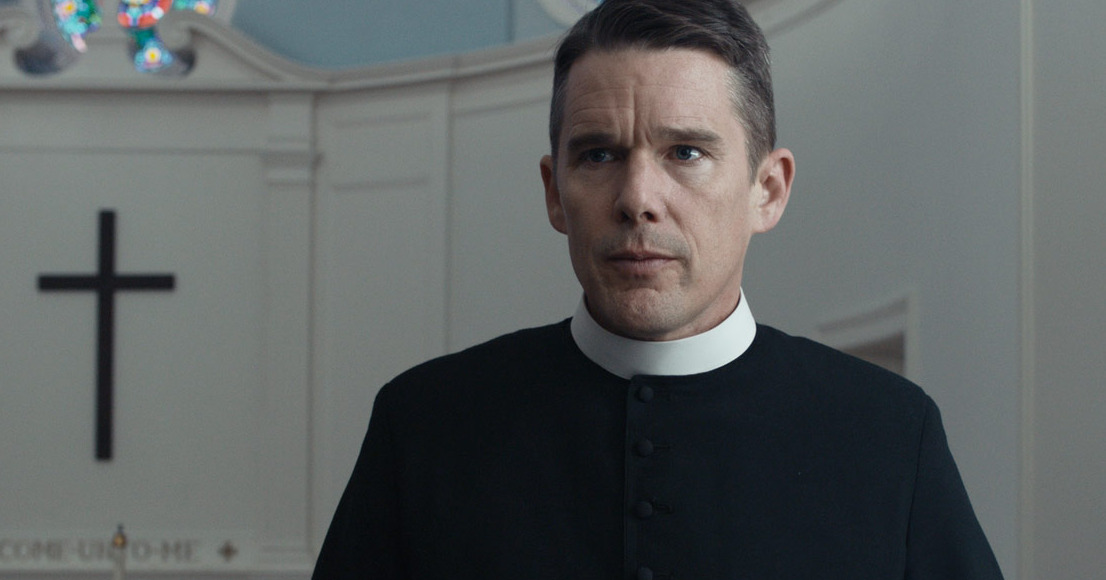
    A little more about First Reformed ― and despair:

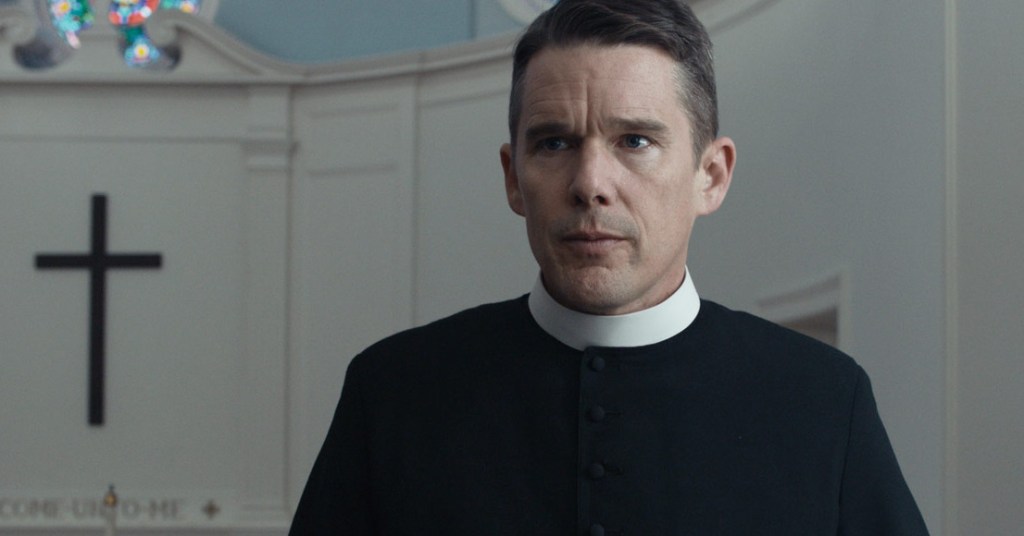
    Yeah, I know, this is nobody’s favorite movie, though it got an original screenplay nod (for Paul Schrader, who also directed it) from the Academy of Motion Pictures Arts and Sciences. This bleak film about a pastor (Ethan Hawke) who falls into despair over the state of the world is very, very good, and the wild, miraculous ending will leave you debating what happened with yourself and others who see it. But what I like best is that the movie served as the topic for one of my favorite church messages of the year, by Frank Zinni, who unblinkingly looked at despair with subtlety and courage. As someone who has had a very vulnerable-feeling year, it was a true gift. The line that stays with me, that Frank credits to the poet David Whyte: “Despair … is a season.” Here’s more  from his book Consolations: The Solace, Nourishment and Underlying Meaning of Everyday Words:

    Despair is strangely, the last bastion of hope; the wish being, that if we cannot be found in the old way we cannot ever be touched or hurt in that way again. Despair is the sweet but illusory abstraction of leaving the body while still inhabiting it, so we can stop the body from feeling anymore. Despair is the place we go when we no longer want to make a home in the world and where we feel, with a beautifully cruel form of satisfaction, that we may never have deserved that home in the first place. Despair, strangely, has its own sense of achievement, and despair, even more strangely, needs despair to keep it alive …

    We take the first steps out of despair by taking on its full weight and coming fully to ground in our wish not to be here. We let our bodies and we let our world breathe again. In that place, strangely, despair cannot do anything but change into something else, into some other season, as it was meant to do, from the beginning. Despair is a difficult, beautiful necessary, a binding understanding between human beings caught in a fierce and difficult world where half of our experience is mediated by loss, but it is a season, a wave form passing through the body, not a prison surrounding us. A season left to itself will always move, however slowly, under its own patience, power and volition.

    Refusing to despair about despair itself, we can let despair have its own natural life and take a first step onto the foundational ground of human compassion, the ability to see and understand and touch and even speak, the heartfelt grief of another.

    In my house, 2018 was a hard one. We dealt with job loss and other unsettling events that re-juggled our expectations and living arrangements. And to play along with Whyte’s description of despair as a season, it lasts longer than a day or a week. You have to give it time to move along. First Reformed, which confronted despair so straightforwardly and equivocally,  helped me to allow this drear season and to move beyond it. And, finally, to realize that it will likely return on this life’s calendar.

    Next newsletter: Oscar guesses (and less despair).

    What I’ve Been Reading

    My friend Donna and her husband Ben are on a service trip in Ghana. Ben is a retired engineer and, as you might guess, retired engineers can provide really useful service in this world. Donna is sending dispatches each day sometimes more than one-a-day, and I am enjoying following along, as I know almost nothing about West Africa.Donna’s writing reminded me of two trips I took to Haiti in January three and five years ago, respectively, both with my younger son and folks from local Unitarian Universalist churches. I collected all the things I wrote about it here, including one of my better poems ever. It starts like this:

    Seventeen pilgrims on the road from Port-au-Prince to the Central Plateau.
    Haiti is life lived on the road, in full view.
    It is a hot, dusty iceberg. The mystery resides in the heat and the dirt.
    The water is there, but ― did I mention? ― don’t drink it.
    Haiti is a mystery wrapped in an enigma wrapped in a plantain husk.
    It is a mosquito buzz at midnight.
    It is the fear your net is tattered.
    Haiti is a heart pumping in the hot sun.
    It is families separated.
    It is drums in the night.
    Haiti is the roosters who practice dawn all night long …

    You don’t hear much about Haiti, ever, but the country is in the midst of a lot of unrest. I appreciate journalist Michael Diebert’s Twitter account as a way to know what’s going on there and across the region ― especially Venezuela these days.

    // 

    Tommy Tomlinson’s piece in The Atlantic on being a 400-pound-plus guy in America (excerpted from his book The Elephant in the Room) was smart, brave, and absolutely ruthless in its self-dissection.

    Early in the piece, he discusses seeing his body in a mirror:

    Some days, when I see that disaster staring back, I get so mad that I pound my gut with my fists, as if I could beat the fat out of me. Other times, the sight sinks me into a blue fog that can ruin an hour or a morning or a day. But most of the time what I feel is sadness over how much life I’ve wasted. When I was a kid, I never climbed a tree or learned to swim. When I was in my 20s, I never took a girl home from a bar. Now I’m 50, and I’ve never hiked a mountain or ridden a skateboard or done a cartwheel. I’ve missed out on so many adventures, so many good times, because I was too fat to try. Sometimes, when I could’ve tried anyway, I didn’t have the courage. I’ve done a lot of things I’m proud of. But I’ve never believed I could do anything truly great, because I’ve failed so many times at the one crucial challenge in my life.


    It’s not ALL as hard as that and it’s often wry and funny. I encourage you to read it. And listen to Brian Koppelman’s interview with Tomlinson. Koppelman pushes Tomlinson about his relationship to food (which is just as complicated as you’d suspect) and I was unexpectedly moved by their exchange. And not to keep harping on poems, but I wrote something about intentions and aging called I Want to Be a Little Old Man

    //

    If sobriety and recovery are of even the least interest to you, then you need to read GQ’s interview with multiple musicians who’ve embraced it. It has its share of crazy anecdotes, like Joe Walsh talking about bringing a chain saw to his hotel room, but also the most graceful, precious stuff, like this from one of my faves, Jason Isbell: 

    “I think part of the process for me of sobering up, and I don’t know that I’ve ever put it this way before or really thought about it this way before, was using my work to connect with the world that I had always felt so isolated from. And I think probably my survival instinct kicked in and said, ‘Well, what you do is you use these songs to connect with people in a way that you’ve not connected with them before.’ And after that, I sort of felt like I belonged in the world.”

    You’ll laugh, you might cry and you’ll definitely recognize something in your human experience that resonates. Or, you know, you’ll have some stories to share with friends about the crazy days of the Eagles and Aerosmith.

    Eat Drink Tell

    In a week when it seemed every journalistic enterprise in America was laying off its staff, Jill Lepore of The New Yorker did a good job of putting this crisis moment in some perspective, both historical and current ― alas, without much in the way of comfort or answers.

    Yeah, this is a bit of a strange segue to the sobriety piece, but I’m always looking for a low-calorie beer that tastes good and delivers less of an alcohol wallop, and I’m hopeful about this one ― Dogfish Head’s Slightly Mighty IPA, arriving on store shelves in April. Men’s Health editor Matt Allyn got a preview and he likes it.


    Thanks for Reading This Far & An Invitation


    If you want to reach me, I’m happy to pick up the conversation and available at 484-751-7795 and kevdonahue@gmail.com and on Twitter as @kevdonahue. Let me know which parts you liked and which parts you didn’t. As I said earlier, I expect to post weekly, most likely on Fridays.

    The next one will be lighter. Promise.

    Be well!

    Kevin

    P.S. A thank-you to Michael Easter, who started a more useful version of this idea a few weeks back. I loved his and it spurred me to follow up on my own plans, which had been napping in the corner for some time. Michael’s motivations are different than mine, but we do read some of the same things, both are suckers for music with some twang, and he is an excellent health journalist. You can subscribe to his newsletter here. No problem if you like his better. I do. 

    -30- 

  • My Favorite Movies of 2018

    Here in 2019, I’ve returned to an annual prompt: my favorite movies of the past year. I didn’t see a whole lot, but here they are, in order from least- to best-liked.

    13. Mary Poppins Returns

    Emily Blount makes a pretty good Poppins and Lin Manuel-Miranda is a treasure ― but his cockney accent wasn’t very convincing, the plot didn’t hold any of my family’s attention in between the song-and-dance scenes, and the whole thing was 20 minutes too long.

    12. Vice

    One of my biases is, you better have a good reason to make a movie that lasts more than 120 minutes. Vice didn’t clear that hurdle. It was 2 hours, 12 minutes to establish what I already knew ― Dick Cheney is an asshole. Christian Bale gets points for suffering through a stultifying prosthetic experience, but otherwise this was an unsurprising recapitulation of Cheney’s power-hungry career. If it was supposed to make me feel sympathetic to the guy, it didn’t. The weird interludes that felt fresh in The Big Short feel tired here; Adam McKay feels a bit like a one-trick pony, until he comes up with a new trick.

    11. Isle of Dogs

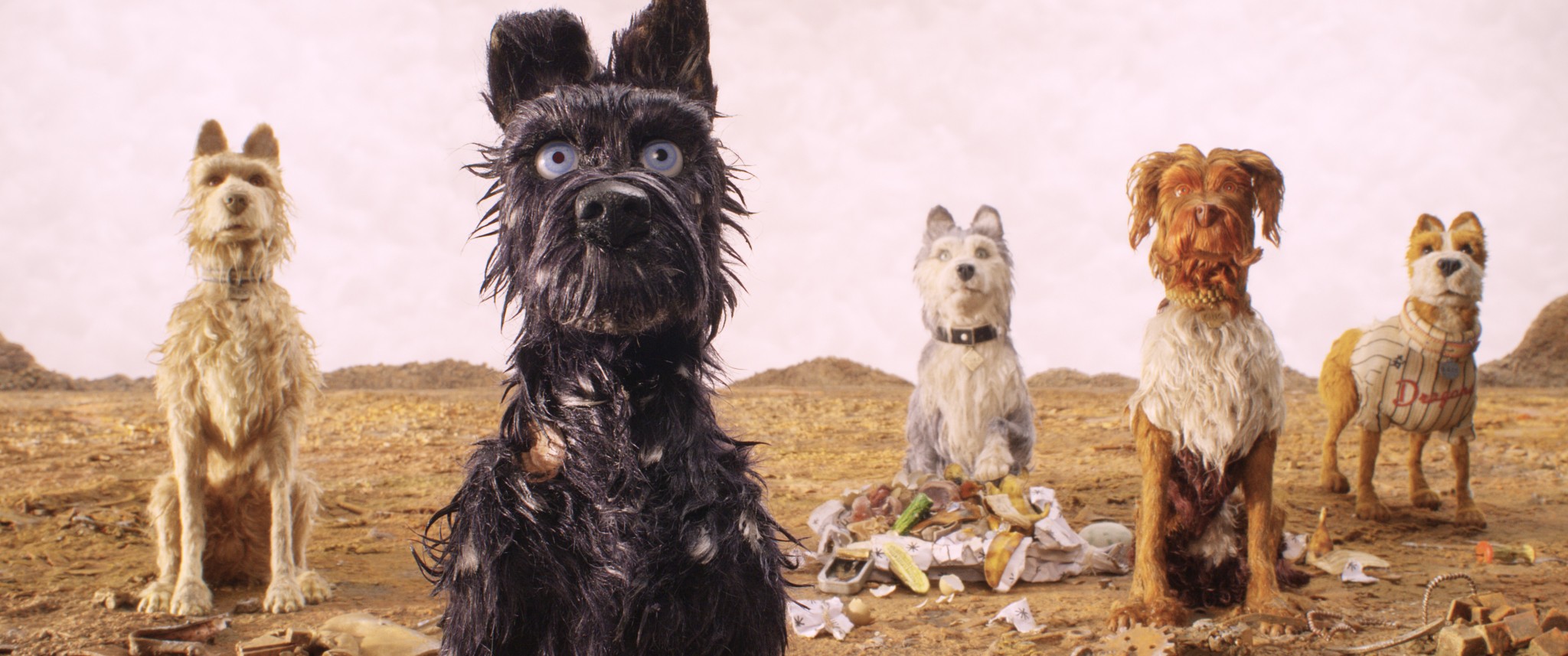
    My wife loves Wes Anderson and I’ll give Isle of Dogs this ― it was better than The Fantastic Mr. Fox. The eyes on those dogs are piercing, and it’s fun trying to guess who the voices are from Anderson’s galaxy of collaborators. Otherwise, not a whole lot there.

    10. The Notorious RBG

    It was a very good documentary, but all I can think now is, Forget the weight-training sessions with the personal trainer; we need to wrap Ruth Bader Ginsberg in bubble-wrap or, better yet, cryogenically freeze her till April 2021. Also, seeing this means I don’t need to see the feature film coming out in early 2019.

    9. Mary, Queen of Scots

    Saoirse Ronan and Margot Robie are very good, but watching this movie is to be reminded that men acting badly is not some recent #MeToo development. There apparently wasn’t a decent fella in all of Scotland in the 16th Century. Also, the film’s pacing is hard to follow ― years go by and Ronan never ages a day. In fact, when her 46-year-old neck is stretched out on the chopping block in 1587, on the order of her “sister” Elizabeth, she looks little different from the 18-year-old who returned to Scotland to reclaim her throne in 1561, albeit with far-less-dramatic hair. Elizabeth, on the other hand, has gone through an elaborate transformation from fetching young woman to a bleached, blanched vessel of state power. The difference in their looks and their demeanors (Mary’s inability to subvert her desire and ambitions vs. Elizabeth’s sad mastery of both) put the lie to the trope that they were the only two people in the world who could understand the other, with the final irony that Mary wins the long game despite losing so many along the way.

    8. BlacKkKlansman

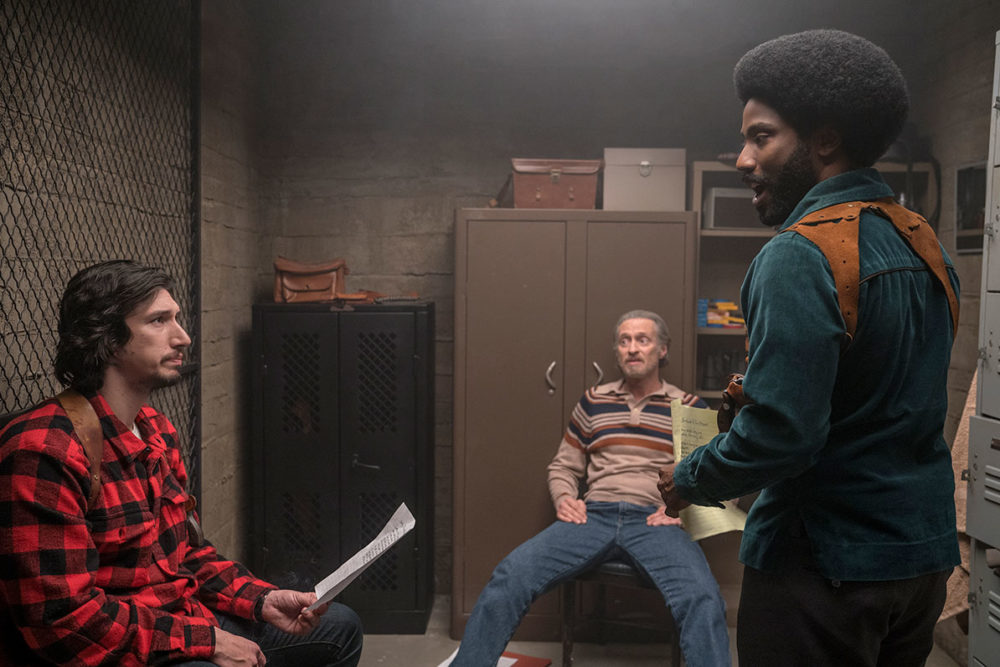
    This is good Spike Lee, and it’s been a while. I loved the Kwame Ture speech at the beginning and the closing, including the footage from the Unite the Right march in Charlottesville, brings it all full circle. But even the movie poster touted this as “based on a crazy, outrageous, incredible true story” and I really struggled to believe the movie through its middle and unruly end. Not the broad point, that a black police officer in the 1970s managed to infiltrate and expose a local KKK chapter in Colorado Springs, but the idea that the KKK folks can’t distinguish between the voice on the phone and the voice in front of them was hard to accept.

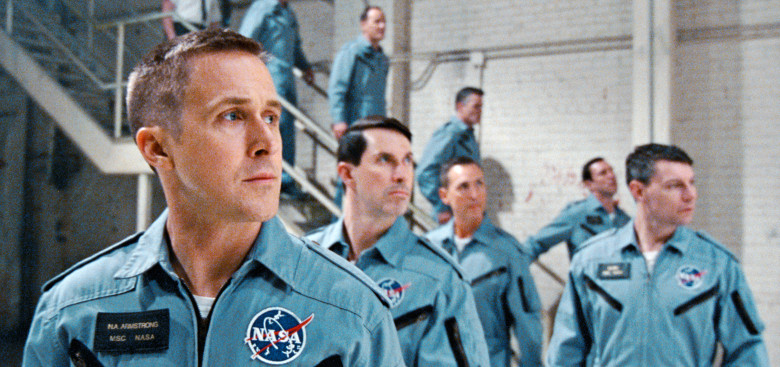
    Ryan Gosling’s upcoming film First Man about Neil Armstrong

    7. First Man

    I’m old enough that I remember the Apollo missions. One of the earliest memories that I can place to a time and location is being in my family’s house in Hazlet, N.J., watching astronauts on the moon. For some reason, my dad had out his reel-to-reel audio recording machine. I don’t know why, in the same way I don’t know how Damien Chazelle, fresh off his Oscar for La La Land, let this one get away from him. The story is so stirring, I can’t believe it hasn’t been done before. But somehow the end, which should have had me locked in, instead fell a little flat (and not because it didn’t show an American flag on the moonscape). Chazelle got a little indulgent, included a bit too much of the discomfort of space flight, and it went on just a smidge long ― which is a shame. Ryan Gosling was awesome.

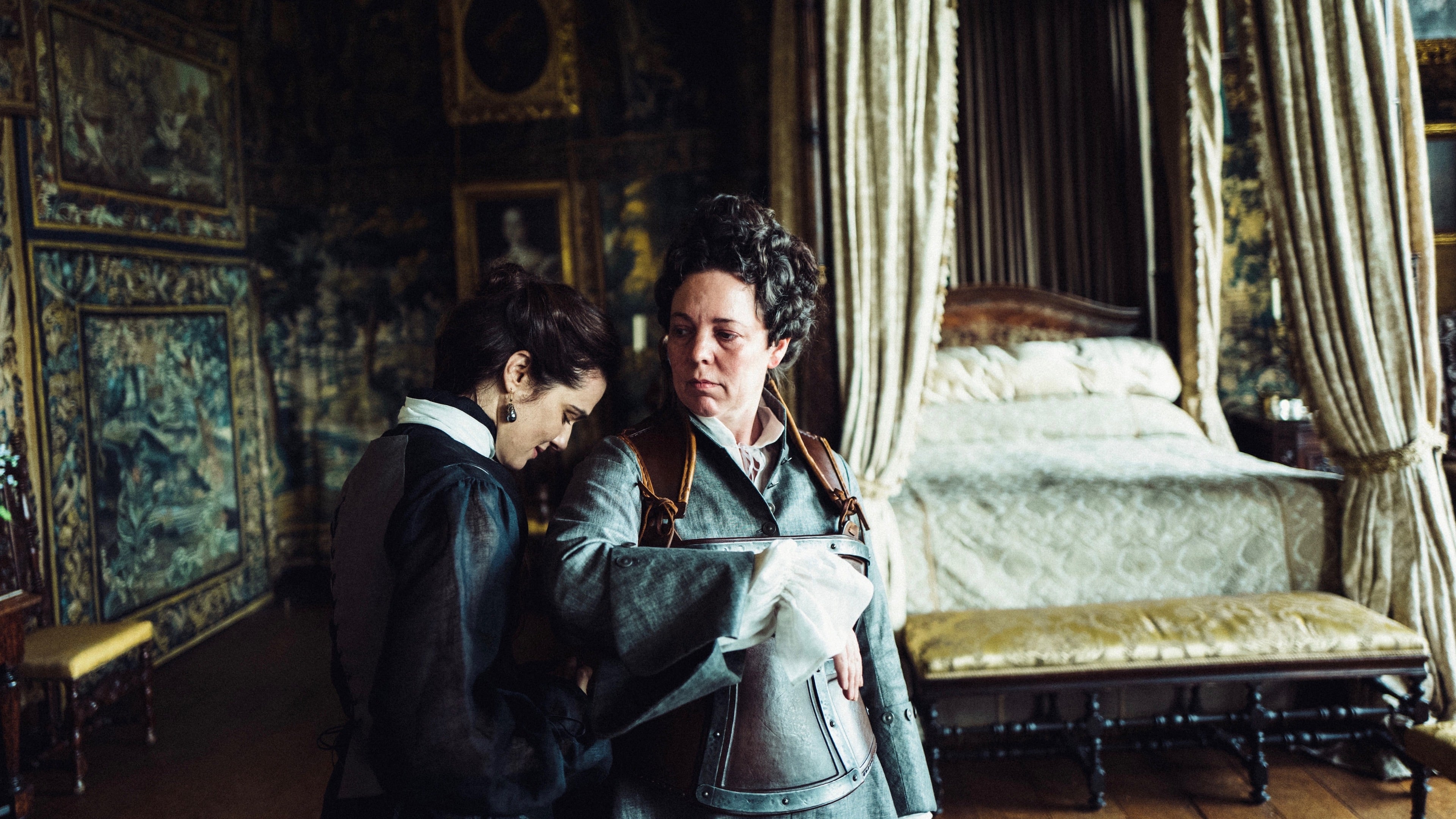
    6. The Favourite

    I like Olivia Colman a lot (she was great in Broadchurch and The Night Manager), but Rachel Weisz owns this movie. Her Sarah Churchill, the Duchess of Marlborough, is Queen Anne’s oldest friend and deft manipulator. But not the deftest. That title goes to Emma Stone’s Abigail Hill. All three have fun in a very, very saucy comedy, but Weisz’s Sarah ― so mean, so able, and so deserving of a comeuppance ― is the one I found myself rooting for at the end of a too-long 135 minutes. Hail, Churchill!

    5. The Ballad of Buster Scruggs

    I’m usually pretty all-or-nothing with the Coen Brothers. It’s either great (Fargo, No Country for Old Men, Raising Arizona, True Grit) or bores me (Hudsucker Proxy, Barton Fink, The Ladykillers). Buster Scruggs, though, landed firmly in the middle, with the six mini-episodes running hot and cold, and netting out to something lukewarm. Loved Zoe Kazan as the anxious pioneer who almost has a happily-ever-after in The Gal Who Got Rattled, and the opening bit with Tim Blake Nelson was funny. But Near Algodones, Meal Ticket, All Gold Canyon and the Mortal Remains all dragged some despite being no more than 20 minutes each. It’s a rarity for me: middle-of-the-road-Coens. And for the record, I’m with The Trapper: People are like ferrets.

    4. Roma

    Alfonso Cuaron’s very personal film about a maid (Yalitza Aparicio, as Cleo, is magnificent) who cares for a privileged family in 1970s-era Mexico is gorgeously black-and-white and has some beautiful tracking shots. I wish I’d seen it on a big screen. But the thing that has surprisingly stuck with me is empathy for the mom (played by Marina de Tavira) ― abandoned by a cad, struggling to stay afloat and keep the kids cared for and, most movingly, telling them the hard truths that the kids deserve to know about their family while on vacation. Her worst-ever driving skills made me laugh, too. Hang in there, Sofia! Things have to look up soon.

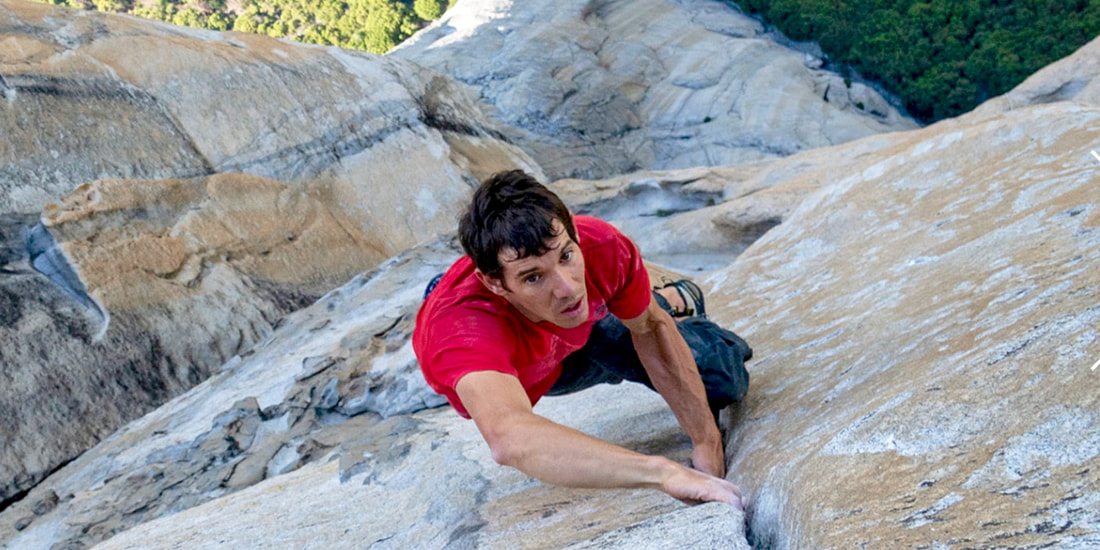
    3. Free Solo

    I don’t know if it would be possible to watch this documentary by Jimmy Chin if I hadn’t known that Alex Honnold was alive and well. That’s how hair-raising this film is. How Alex does what he does, maneuvering up the sheer granite face of Yosemite’s El Capitan for 4 hours and 3,000 vertical feet without any room for error ― and to see the joy in his face as he goes ever-higher ― is so audacious and harrowing that I never want to know what the dude is up to. Like the film crew, which was operating under no assurance that he wouldn’t slip off the rockface at any moment, I don’t think I could bear it.

    2. Black Panther

    This movie, which inverts so much racist vitriol and posits the people of a resplendent African nation, who are by turns a) technologically amazing, b) stubbornly tribal, c) proudly progressive, d) haunted by loss and abandonment, and e) courageous and ethical, was a deliriously fun ride. And I want a little of whatever Michael B. Jordan is taking ― his muscles’ muscles have muscles.

    1. First Reformed

    Paul Schrader’s bleak film about a pastor (Ethan Hawke) who falls into despair over the state of the world is very, very good, and the wild, miraculous ending is great. But what I like best is that the movie served as the topic for one of my favorite church messages of the year, by Frank Zinni, who unblinkingly looked at despair with subtlety and courage. As someone who has had a very vulnerable-feeling year, it was a true gift. The line that stays with me, that Frank credits to the poet David Whyte: “Despair is a season.” More from Whyte:

    Despair is strangely, the last bastion of hope; the wish being, that if we cannot be found in the old way we cannot ever be touched or hurt in that way again. Despair is the sweet but illusory abstraction of leaving the body while still inhabiting it, so we can stop the body from feeling anymore. Despair is the place we go when we no longer want to make a home in the world and where we feel, with a beautifully cruel form of satisfaction, that we may never have deserved that home in the first place. Despair, strangely, has its own sense of achievement, and despair, even more strangely, needs despair to keep it alive …

    We take the first steps out of despair by taking on its full weight and coming fully to ground in our wish not to be here. We let our bodies and we let our world breathe again. In that place, strangely, despair cannot do anything but change into something else, into some other season, as it was meant to do, from the beginning. Despair is a difficult, beautiful necessary, a binding understanding between human beings caught in a fierce and difficult world where half of our experience is mediated by loss, but it is a season, a wave form passing through the body, not a prison surrounding us. A season left to itself will always move, however slowly, under its own patience, power and volition. 

    Refusing to despair about despair itself, we can let despair have its own natural life and take a first step onto the foundational ground of human compassion, the ability to see and understand and touch and even speak, the heartfelt grief of another.

    In a hard year, First Reformed was a movie that almost sunk me, but, in the way that art so often does, lifted me instead.

    OK, so I haven’t see a lot …

    Here are things I haven’t seen but probably should before doing an honest-to-goodness “Best of” list. As I see some, I’ll slot them above.

    • Avengers: Infinity War
    • Annihilation
    • Spider Man: Into the Spider-verse
    • A Star Is Born
    • A Quiet Place
    • Eighth Grade
    • Fantastic Beasts
    • If Beale Street Could Talk
    • Bird Box
    • Won’t You Be My Neighbor
    • Green Book
    • Ready Player One
  • St. Joe’s Grads Feed Boyle’s Mission

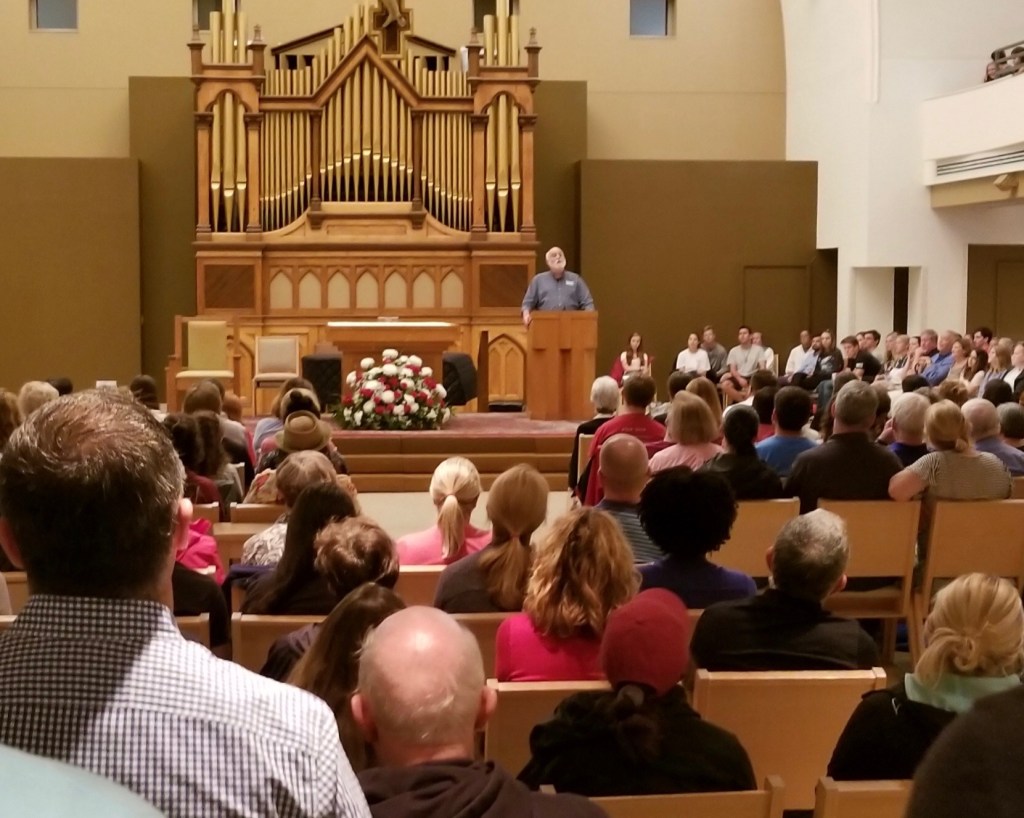
    When Greg Boyle, S.J., spoke Wednesday at the Chapel of Saint Joseph, most of the attendees knew the Jesuit priest and his ministry Homeboy Industries, the largest rehabilitation and re-entry program for gang members in the world, from his TED Talk or a report on 60 Minutes.

    Many members of the Saint Joseph’s community have been involved more deeply, and practically. Here are two such stories. One recent graduate reached out to Homeboy and brokered a business deal that significantly increased Homeboy’s business reach and revenue. Another went there to serve for a year, found her calling, and stayed on as a case manager.

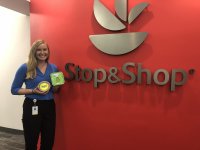
    Madeline Mollahan holds packages of Homeboy guacamole and salsa at Stop & Shop headquarters in Massachusetts.

    The Heart of the Deal

    Service to others and business success are often separate. Madeline Mollahan ’18 found a way this year to bring them together.

    Mollahan, who graduated this January from the food marketing co-op program, was hired by Stop & Shop, one of the largest grocers in the Northeast with 410 stores across Massachusetts, Connecticut, Rhode Island, New York and New Jersey, as a category analyst for specialty deli — hummus, salsa, guacamole, spreads, dips, and cheese products.

    While looking for new products, she came upon Homeboy Industries, the Los Angeles-based rehabilitation and re-entry program founded by Boyle. She knew Homeboy from her time at Saint Joseph’s, and because her younger sister (who attends the University of Scranton) had participated in a service trip to Homeboy that deeply impacted her.

    Mollahan took Homeboy’s offerings to her manager, and she gave her the green light — and asked her to take point on the relationship.

    “I take great pride in having Homeboy [in Stop & Shop], not only because it has a Jesuit background, but because it goes to such a good cause,” Mollahan says. “That is heart-warming to me.

    “It’s also a great, healthy product — no preservatives — and we’re giving such a quality product to my customers. That, as a professional, makes me feel good.”

    Mollahan, from Boonton, New Jersey, did more than merely place Homeboy products on a store shelf. She worked with the publisher of Boyle’s best-selling book, Tattoos on the Heart, to have the book and the Homeboy story adjacent to the food products so customers encounter more than just guac and salsa.

    “They can read on the package and see the book right there and put it together to understand what the story behind Homeboy is,” she says.

    It’s worked. Since their introduction five weeks ago, Stop & Shop is selling a lot of Homeboy guacamole and salsa each week.

    “I didn’t have to do any marketing. It almost sells itself,” she says, “which is pretty incredible to see.”

    Thomas Vozzo, the CEO of Homeboy Industries, is appreciative. Homeboy earns more than 30 percent of its $20 million in annual revenue through its business operations (the rest comes through donations and government funding). The money supports the employment of about 250 Homeboys and Homegirls, former Los Angeles-area gang members who sign on for the 18-month program. Those employees, plus about another 1,000 people a month, receive services including job training, tattoo removal and anger-management therapy. And it works: While the average person incarcerated in California has a 2-in-3 chance of returning to jail, a UCLA study of people who participated in Homeboy’s programs found the recidivism rate dropped in half, to about 1 in 3.

    “The Stop & Shop deal brought us to the East Coast,” he said. “It is very significant for us. And it’s a testament to Madeline. We depend on good people like her who know our mission and help to expand our work and business.”

    Mollahan credits Saint Joseph’s generally, and the food co-op program specifically, for her ability to step into Stop & Shop and make an immediate impact.

    “St. Joe’s definitely gave me the resources for that,” she says. “I owe my career right now to the food marketing co-op program, because I would not be in my position today if I didn’t have that experience with the food marketing co-op program.”

    Sharnise Simmons and Molly Verghese

    A Sense of Vocation

    Molly Verghese ’17 graduated last year and decided to take a year off before starting work toward a doctoral degree in theology.

    Her experience in the Inside-Out program at Graterford State Prison, where the class was comprised of 15 Saint Joseph’s students and 15 incarcerated men, awakened something in her.

    “Getting to know the men’s stories … that just jolted me,” says Verghese, of Rochester, New York. “I still remember walking in the doors of the prison, and what overcame me was a sense of vocation — where your greatest gift meets the world’s greatest need.”

    That sense of call eventually led her to pick up and move to Los Angeles last August for a service year through the Saint Joseph’s Worker Program. She started there as the manager for a diaper-distribution program. That provided an opportunity to get to know the community, and she became engaged and invested as she learned people’s stories.

    She shared their challenges, too, and something shifted. One day, Verghese says, she was asked to drive a woman to the hospital who had been beaten with a baseball bat. It was difficult, but being there for another person in a time of need touched her. Later, when the woman needed help finding a place to live, she asked for Verghese to drive her. That drive was full of laughter, not pained silence.

    “It was a powerful moment,” she says. “It said, ‘What is here? What’s stirring?’ ”

    Verghese eventually was asked to stay on beyond her year and became a case manager at Homeboy. One of her clients, Sharnise Simmons, of South-Central LA, will be among the speakers Wednesday evening on the Saint Joseph’s campus.

    “Molly is great, I can say anything to her and know it’s OK,” Simmons says. “Before this, I was very isolated. Now I can share my feelings.”

    Verghese reflected on her experience at Homeboy and what it has provided her.

    “The gift of being able to name our gifts,” she says. “It takes a mix of humility and confidence. And I couldn’t have done this without my experience at Saint Joseph’s.”

    Editor’s note: This article was originally published at https://www.sju.edu/news-events/news/near-and-far-sju-grads-feed-boyles-mission.

  • The Capital Gazette Is All of Us

    I’ve started and stopped writing something about the mass shooting in Annapolis a few times now. It hits close to home for me. I worked in several small newsrooms as I started my journalism career.

    Working at a local, non-metro paper is a lot of things: it’s a rite of passage for young journalists; it’s a passion project for those who call these communities home. You don’t do it without learning a lot about the craft AND more about people and communities.

    There’s been a lot of politicizing of the Press in the last few years. It goes beyond the President. Even before Mr. Tump rose, I would be asked—exclusively by self-identified conservative friends and acquaintances (that’s not an accusation, simply the truth)—about the political leanings of other journalists.

    The honest truth is, I often didn’t know who colleagues voted for. Working in a newsroom, you do find out about each others’ values. From that, I could probably guess which way the other people leaned. But, in most cases, I wouldn’t presume to think I knew. More importantly, it didn’t much matter to me.

    That’s a thing about journalists—we are expected to be impartial in our profession and so, we don’t trumpet our political affiliations. I have been an independent voter for almost three decades now (save one electoral season, and I wasn’t a newspaper journalist then) and I am now, even though there is no compelling reason—I am unemployed and my affiliation has no effect on any reporting I do. My wife asks why I don’t choose a side, so I can vote in primaries. But I am more comfortable as an independent. (And though I now lean left, I am not unfailingly partisan: I have voted for multiple presidential candidates from both the Republican and Democratic parties.)

    So I don’t appreciate the question. The troubling thing for me is the assumption that political affiliation supercedes everything else—that partisanship “leads” and other factors are subservient. Journalists I’ve spent time with don’t talk about our personal viewpoints regarding politics and politicians that much; it certainly wasn’t the most interesting thing about anyone I ever worked with. (Note: I’m not and never have been a political journalist, so I don’t claim to know what their late-night conversations look like. But I’d be surprised to find out that they are much different.)

    As a journalist, and from my experience with other journalists, that isn’t where I/we start. We start with these 5 W’s: Who, What, When, Where, Why. We try to understand an issue or a person or a circumstance, so we can tell others about it. And when we find a good story—one that’s important for people to know about, which only a good journalist is going to be able to report and uncover—we throw ourselves at it.

    I’d encourage you to read the bios of these five people at The Capital GazetteRob Hiaasen, John McNamaraWendi WintersGerald FischmanRebecca Smith. (And think about how the hell the staff wrote these profiles about friends and colleagues who were alive and kicking just hours earlier.)

    Every newsroom has its Rob, its John, its Wendi, its Gerald, its Rebecca. Every office does. In fact, they could be from the sitcom The Office.

    They are nobody’s enemies.

    I think about them and how gosh-darn American they are, and I think about this affiliation question, and I worry that partisanship is a virus that blinds us to the humanity of our fellow citizens, our fellow humans.

    I think about how can I show up when I meet someone for the first time, or the hundredth time, without a preconceived story of who they are and what motivates them. How I can just be with them, listening to their story, understanding their values and motivations and concerns. I think, if I can do this, I will be a better friend, a better neighbor. I’ll be a better journalist and, honestly, that’s what I’ve always wanted to be through the now-long arc of my professional life.

    So that is my intention, the devotion I want to offer at the altar of this tragedy.  I want to meet my annoyance and frustration with curiosity and empathy—and without my judgments.

    I’d be interested in how this mass shooting has affected you.

  • Losing Faith in Facebook

    I’ve been equivocal about Facebook for a while now, and the news of the last week has me re-considering even my reduced activity on the world’s largest social network.

    What’s surprising to me is that a lot of other people apparently are too.

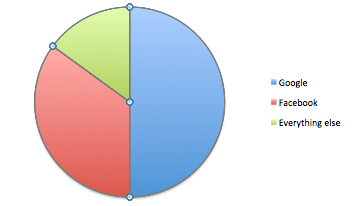
    Social networks are notoriously fragile—remember MySpace? Friendster?—but Facebook was thought to be beyond such vulnerabilities. Indeed, it had grown into one of the two digital behemoths looming over Internet advertising (beside Google), with more than $40 billion in revenue in 2017 alone.

    But maybe it IS vulnerable if enough people lose faith in it.

    And maybe that’s happening, because this is the biggest story on The Verge right now.

    And Brian Acton, who sold WhatsApp to Facebook in 2014 (for $19 billion) Tweeted this today.

    And my various news feeds are mighty skeptical about Facebook. Many folks I knew were already exhausted by the political proselytizing and in-fighting that have become a persistent feature for the past two years, but this is something different: a feeling of vulnerability among users regarding the platform itself, rather than the people who populate it, as an unsafe space.

    I’m not convinced that what Cambridge Analytica did actually moved the election. There’s a good story from Wired that explains how difficult a trick that would be. Given how small the margin between victory and defeat were, though, it’s possible.

    My overarching concern is that this case highlights just how little Facebook values the personal in personal data. And while I am not alarmed about my personal data per se, a platform that can take mine and aggregate it with billions of other people’s data concerns me in that there is a possibility to create tremendous vulnerability at a societal level. I worry that another outfit will soon (or might already be able to) pull together the data with a more-perfect model. (There are plenty of other players in this space, and not all may be as reckless as CA, for good or bad, and might cover their tracks more effectively.)

    Most importantly, Facebook in its actions appears largely indifferent to what happens to and with all this data after someone pays for it. Their lack of response so far to the crisis, and the upcoming departure of security chief Alex Stamos reportedly after clashes over how to share information from their internal investigations, are all bad signs. It’s also annoying to hear Zuckerberg and Co. deny the efficacy of Facebook ads to impact behavior when that’s the entire premise of the business, which has been phenomenally lucrative over the past decade.

    In the short term, I am interrogating my Facebook presence. I went through Facebook’s settings (Buzzfeed has a good article on where to find them) and saw that I had allowed more than 130 apps to see my Facebook data. I removed a lot of those, and more will go when I find some additional time. Also, I was allowing friends’ accounts to access my data. Done—and sorry, friends, for exposing your data this past decade.

    ###

    So let’s take the creative leap that billions migrate away from Facebook, maybe not wholly, but enough that they need another channel for their online-digital activity. Where do they go next? I don’t think it exists yet.

    I don’t think it’s Vero, this year’s creatives’ social network du jour.

    I enjoy Twitter, but everyone isn’t there and it’s best use is for commenting on the events of the day, not for dropping a CONGRATS under the photo from my friend’s kid’s graduation party.

    Snapchat and Instagram, too, trade in something different—media-heavy platforms for sharing events more than thoughts, and confusing enough that people don’t know how to connect there as easily as on Facebook. They can handle the graduation party, perhaps, maybe even better than Facebook, but I’m not so sure about them for more thoughtful sharing.

    I loved Path, but it’s mobile-only and never quite grew up all the way. WeChat, WhatsApp, Telegram, even Apple iMessage … all healthy messaging and social platforms, but it’s hard to see any of them replacing the big blue F.

    My thought as of 9:33 pm Tuesday, March 20, is that I’ll leverage my blog, or TinyLetter, and use that to share thoughts, both long and shorter form, then turn to Twitter for the quick hits.


    Regardless, I am committed to further limiting my Facebook exposure until I feel I must—either for work (I have worked in digital media for the past two decades) or because something fundamental changes with the platform. I wouldn’t hold my breath. (As of 9:08 a.m. Wednesday, Mark Zuckerberg has avoided speaking on the situation.)

    ###

    If you’re looking for a read to understand what Cambridge Analytica was trying to do, you could do worse than this from Wired.com. It’s written by Antonio Garcia Martinez, a former member of Facebook’s monetization team. If you don’t want to, know that he’s skeptical about the effectiveness of the campaign, and explains why in a clear-eyed way.

    Among his observations:

    One of the real macro stories about this election and Facebook’s involvement is how many of the direct-response advertising techniques (such as online retargeting) that are commonplace in commercial advertising are now making their way into political advertising. It seems the same products that can sell you soap and shoes can also sell you on a political candidate.

    ###

    Also here’s the story that started it all this weekend, via the NYTimes.

    And the latest, from Politico, on the Trump campaign efforts to distance itself from this garbage fire:

    ###

    Before you get too nostalgic about Facebook’s demise,  Marketwatch points out that this is likely a great opportunity for stock buyers.

    ###

    Where’s Facebook’s leadership? I like this from Tech Crunch.

    ###

    Wired, which had a great deep read on Facebook in last month’s issue, offers a lot of insight into what’s been going on behind the scenes as the company maintains a public silence—including how to handle the fact that a psychologist who helped found CA now works at Facebook!

  • My Favorite Movies of 2017

    My friend John Gilpatrick was recently asking me about my favorite movies of last year. Thankfully, I had given it some thought. And I’ve caught a few contenders in the past few weeks.

    So here goes:

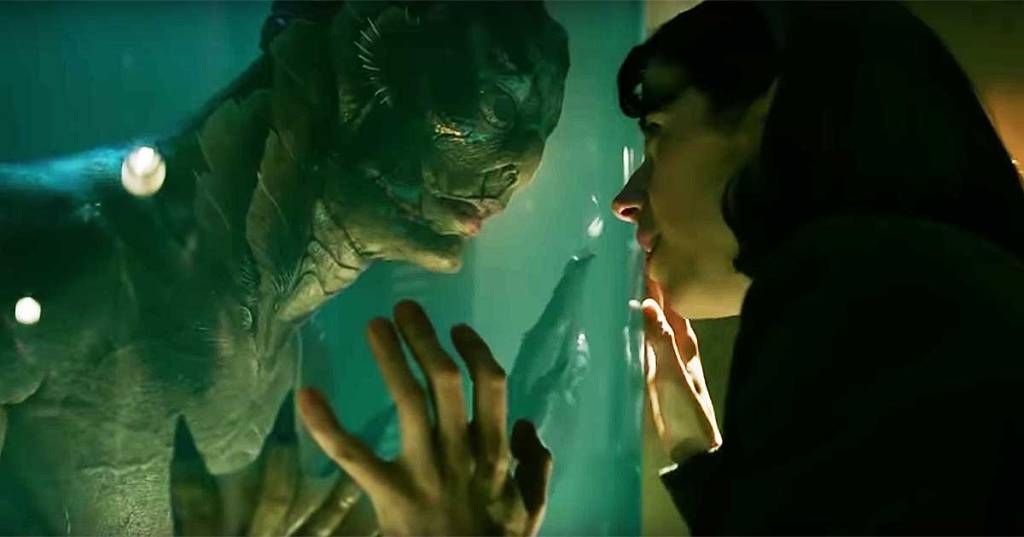
    1. Shape of Water. “Lyrical” is the best word I can use for director Guillermo del Torro’s creation. This film captivated me with its magic-realism ethos and faithful-to-the-‘50s frame. Throughout it all, you could feel del Torro’s assured hand. Sally Hawkins and Michael Shannon were great, so was Richard Jenkins. And it’s cool they found a use for that old wetsuit from Creature from the Black Lagoon.

    2. Lady Bird. From first scene till the end—which had my wife and a friend sniffling in the dark—this movie walked a fine line with humor and grace. Saoirse Ronan was so winning, and Laurie Metcalf so channeled a mom that I could understand and appreciate, if not always endorse. I kept waiting for the spell to break, and it never did.

    3. Phantom Thread. Daniel Day Lewis was mesmerizing, but Vicky Krieps and Lesley Manville were unflinching in taking up the challenge of acting opposite him. Paul Thomas Anderson took care of all the details—the music is gorgeous—and maintained this cool remove that managed to hold my attention. Still not sure what exactly the “Phantom Thread” of the title was—we discussed over drinks with friends afterward—but it was very, very good.

    4. Get Out. I have read a lot of Ta-Nehisi Coates over the past two years, so the idea that white people put black people’s bodies to use as they see fit isn’t foreign, and yet Jordan Peele’s film lands like a gut punch on  my white male privilege. Daniel Kaluuya and Catherine Keener were very good, and Lil Rev Howery was funny, brave, and gave me a new faith in the TSA. I saw this movie recently and it’s been haunting me a bit, like it should in 2018, I think.

    5. The Post. Yeah, it is the movie we need right now, and yeah, it had Tom Hanks and Meryl Streep. But I liked Bob Odenkirk’s Bob Bagdikian the best. And maybe it’s because I knew how it ends, I didn’t find all the tension all that tense. Lastly, I had to fight the urge to conflate the Pentagon Papers with Watergate. Yeah, I know they’re related only by time and place. Anyway, put it all together and I liked it, but didn’t love it.

    ebbing-mo

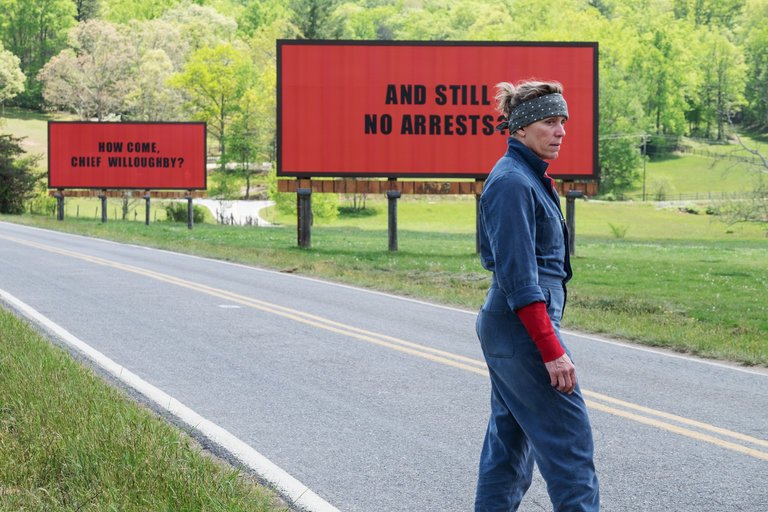
    6. Three Billboards Outside Ebbing, Missouri. This film, written and directed by Martin McDonough, was a lot to sort through. Frances McDormand was fearless and great. Woody Harrelson was sympathetic. Sam Rockwell was scary and apparently redeemable. But all in all, I just didn’t believe in much anything the movie did or said. It seemed to use the characters it created as tropes for dark jokes, lessons learned too late, or bad consequences, and didn’t seem to care a whole lot for the people hurt or the audience having to watch it. It’s worth a watch, but a day after making it through this dark tale, its redemptions (and the presence of Peter Dinklage) rang false.

    7. Star Wars: The Last Jedi. It starts fast and ends fast, but the interminable chase in the middle was hard to watch—and even the action that occurs matters little if anything to the plot. Daisy Ridley is pretty bad-ass, and Adam Driver does well as Kylo Ren, but by the end I wasn’t sad to see Mark Hamill go and Carrie Fisher’s real-life passing (and Disney’s insistence it will not digitally re-create her for Episode IX) means we can hand off the franchise to the young’uns. I think that’s for the better. Now a movie that didn’t trip over itself to track back to earlier Star Wars canon would be most welcome of all.

    8. Darkest Hour. Gary Oldman has fun playing Churchill, but at this point, who hasn’t or wouldn’t? Sitting through the credits, I ended up fantasizing other actors taking their shot at Winston—Liam Neeson, who hunts Hitler across three continents after he makes a menacing gesture at Churchill’s daughter, before gruesomely killing him with his own hands, for instance. Or Dame Judy Dench, casting cold, blustery shade. The movie was fine, Oldman was terrific, and it took me a while to figure out that Churchill’s nemesis (Stephen Dillane) was indeed Stannis Baratheon in “Game of Thrones.”

    9. Loving Vincent. A really creative, animated approach to learning more about Van Gogh and his death. Hard to believe he died without ever selling a painting. That has hung with me more than the who-did-it plotline.

    10. Molly’s Game. Mostly her because my son the casino player development exec loved it, but it was also a sexy, pretty-fun watch (if long). And props to Jessica Chastain, who manages to chew through giant piles of Aaron Sorkin dialogue without any signs of indigestion.

    I didn’t see Dunkirk, The Big Sick or Call Me By Your Name. I doubt either would have cracked my Top 10, but Call Me stood a better chance.

    Worst of 2017. DetroitThis interminable movie from Kathryn Bigalow was so earnest in its rightful, righteous wrath against members of the Detroit police for a truly horrible event during the riots of the ’60s that it completely loses its storytelling bearings. At the end, it does one of those what-happened-to-the-principals montages and I realized those characters were supposed to be the center of the film—except they weren’t, because Bigalow got so caught up in the horrible event that she did more development of the monsters and less of the supposed main characters. It was so hard to watch that my wife got up and left to do some shopping at Target, and I would have joined her except we were there with a friend who wasn’t about to leave, and it would have been rude to leave her there alone. So this movie wins my Stockholm Syndrome Award for 2017.


  • Lance Armstrong’s Incredible Comeback

    (Editor’s note: Published June 5, 1998, in the Philadelphia Daily News. Re-reading the part about Lance Armstrong’s reckoning and decision to commit to being a great cyclist again in the spring of 1996 feels more ominous than it did when I wrote it. That said, even with all the guy did to hurt the integrity of cycling, his impact on cancer survivors and research is impossible to ignore. And I appreciated that his wife Kristin shared a note Armstrong had written to the teenager that leads off the story. It was a window into him that I couldn’t have gotten any other way.) 

    The letters and emails come in—from cancer survivors, from those still fighting the disease, from those who have lost someone to the disease. The letters go out. Feisty, personal words of encouragement, like these, to Billy, a 13-year-old from Austin, Texas.

    I heard that your last doctor’s appointment didn’t go the way you planned. I’m sorry to hear about that, but I want to talk about the bigger picture with you. Cancer is a funny illness that comes in all shapes and sizes, sometimes better or worse. Sometimes a short fight, sometimes a long fight. The key word is fight. When I met you at St. Andrews, I felt I was meeting a fighter and shaking the hand of a winner. Regardless of relapse or last checkup, you must keep the faith. The faith in your doctors, the faith in your family, and most importantly the faith in yourself. This, my friend, is absolutely the best thing you can do for yourself. Tell your cancer to go away. Plain and simple, tell it, “Get out of my life. I’m a busy guy.”

    I get asked every day why I returned to professional cycling. The answer isn’t about money, winning races or fame. The answer is because of people like you. Cancer patients that want to live forever and fight like hell. I will ride my bike tomorrow for five hours and think of you all day. That’s right, thinking of you, the fighter. Hang in there, my friend.

    Yours truly,

    Lance Armstrong

    At Sunday’s First Union USPRO Championship, Lance Armstrong will take his bike to the starting line on Benjamin Franklin Parkway and continue what is becoming a remarkable and unprecedented comeback, in the making 20 months since he was told he had testicular cancer.

    The disease cost him 2 years of his career as the most promising and talented American racer of his era. It cost him money. (His French team, Cofidis, negotiated its way out of a 2-year, $2.5 million contract as soon as it found out about his illness.) It nearly cost him his life.

    And he has accepted it all.

    “It’s been an unbelievable two years, but that’s the way life goes,” Armstrong, 26, said earlier this week. “It’s been well worth it, though I wouldn’t want to have to do it again. I’m pleased with the way things turned out.”

    Said his wife, the former Kristin Richard: “It changed his life, and because he’s recognizable and was so open about it, it changed other people’s lives. Countless lives were helped because he had the courage to come out and talk about the disease. It’s profound.”

    ‘What Are My Odds of Surviving?’

    In the beginning, it was only profoundly disturbing. Armstrong was diagnosed with testicular cancer on Oct. 2, 1990. He was first told he had an 80 percent chance of recovery, but doctors came back several weeks later with more dire news. Before the affected testicle was removed, the cancer had spread to his abdomen, his lungs, and his brain. There would be surgery to remove the lesions on his brain, and intensive rounds of chemotherapy.

    “What are my odds of surviving?” he asked. Less than 50 percent, the doctors replied.

    The surgeries were successful and so was the chemo, though it took a terrible toll, eating at his physical fitness. Thankfully, as a trained athlete, he had plenty to spare.

    And even as he fought his way back toward health, he already had begun to think of a way to help others.

    The Lance Armstrong Foundation was founded soon after the cyclist’s diagnosis, in an Austin restaurant, mostly as a vehicle for a charity bike ride. Today it has three full-time employees and offers two $50,000 grants for research on urological cancer, as well as information on the disease and support for its victims. The second running of its annual charity ride, the Ride for the Roses, included more than 4,000 cyclists and raised about $500,000. Armstrong vows to build the event into the biggest charity ride in the United States.

    “We have some expenses to pay, but even so it was a really good take for a second-year event,” he said. “There’s a trust thing you have to build up. People will give to the United Way and such, but it’s harder for a new event. I’m very proud.”

    And very much in demand. Beyond the media attention his comeback is stirring, he receives a steady stream of letters, many from men who found they had testicular cancer after Armstrong’s case raised their awareness. He offers what help he can—going as far as to get his doctors in touch with a letter writer—and tries to keep pushing the issue into the public consciousness.

    A Step Back

    Armstrong, though, found little help when he announced last fall that his doctors had given him permission to train seriously again and he wished to return to the pro circuit. No offers came out of Europe, the ultimate cycling proving ground and home to the biggest and best teams.

    He ended up signing with the U.S. Postal Service squad, an up-and-comer with both a European and domestic racing schedule but a relatively small $4 million budget (the biggest Euro-teams have budgets twice as big).

    Lance and Kristin moved into an apartment in Nice, France, with Armstrong feeling strong and expecting to do well. He finished an encouraging 15th in the four-day Ruta del Sol stage race, But trouble was brewing.

    “I started too aggressively, probably did too much too soon,” he said. “I probably should have taken things more gradually.”

    It all came to a head in the second stage of the Paris-Nice stage race, in March.

    “His confidence had been shaken by how hard it was at the beginning of the season,” said Mark Gorski, the U.S. Postal Service team manager. “He finished 15th in Ruta del Sol, which is a good placing. But he had to work incredibly hard. If you compare it to spring training in baseball, he had to work so hard to get in peak form, as compared to before [he was sick].

    “At Paris-Nice, he didn’t do as well as he wanted. It was windy and cold. He didn’t do as well as he expected in the time trial on the first day. On the second … he reached a point of extreme frustration.”

    Armstrong pulled to the side of the road and got off his bike.

    “I got a phone call from Lance while in the market [in Nice],” Richard said. “He said he had stopped. I was worried that he had crashed or had the flu. But he said he was coming back to Nice and we would talk. That made me even more worried.”

    The two had a long conversation about Armstrong and his motivation. After all he had been through, he wasn’t sure that he was ready to commit himself as fully as he needed to if he wanted to succeed in pro cycling again. They decided to return to the States and figure things out.

    ‘It Was Magic’

    In time, he decided he indeed wanted to race. He spoke with old friend and former U.S. national team coach Chris Carmichael, and they put together a plan to get him in shape for Sunday’s USPRO Championship, which he had identified in February as a race he thought he had a realistic shot at winning.

    The plan came together perfectly. Amid his training, he and Kristin were married on May 8 in Montecito, Calif.

    A refreshed Armstrong raced a little for the Postal Service team, then had his coming-out party on May 22, the Friday night before the Ride for the Roses. He won a circuit race through the city’s nightclub district with 20,000 spectators hollering for him.

    “When he came across the finish line, it was magic,” Richard wrote in an online diary she keeps on the foundation’s web site.

    His form has continued to improve. He finished second to teammate Frankie Andreu in Tuesday’s First Union Invitational in Lancaster.

    “It continues to astound me,” Gorski said. “I’ve never seen anything like it. It’s phenomenal to come back from what he has been through. He was the strongest guy in the field [at Lancaster].

    “He had shown flashes, trained hard. Physically, he was doing fine. He was having more difficulty emotionally and mentally. He was so aggressive; he needed to be more patient.

    “Once he got used to the idea that he wasn’t go to win a Tour de France stage or the World Championships in his first two months back, his confidence began to grow again.”

    And now, improbably, he approaches the 156-mile USPRO Championship with an apparent shot at winning it. He has done it before. He shattered the field on the penultimate climb of the Manayunk Wall in 1993 on the way to a $1 million bonus for winning the three races of the Thrift Drug triple crown.

    And where weeks ago nothing was expected of him, now nobody’s quite sure what to expect. Not even Armstrong.

    But there is hope and encouragement. Lance Armstrong will hear it on the streets of Philadelphia from fans on Sunday. And he’ll get a daily dose in his mailbox from folks who know what a real challenge is.

    Not Yet the Competitor

    Asked about living as a athlete and a cancer survivor, Armstrong mentioned an article he saw recently on golfer Paul Azinger, who had a lymphoma removed from his right shoulder in 1993.

    “Azinger said it took a while to feel like a professional golfer again, as opposed to like a cancer survivor,” Armstrong said. “Instead of saying, ‘I have to make this shot,’ you say, ‘Whether I make this shot or not, I’m just glad to be out here.’

    “In time, that fades and you become more competitive. At this point, I’m a year-and-a-half out. I’m still looking at this like a survivor.”

  • No More Chasing Facebook? As a Journalist, ‘Hooray!’

    The announcement that Facebook would be turning its back on news organizations made me a bit nostalgic. I remembered, as managing editor for MensHealth.com, being the person who set up our Facebook page. We didn’t have social media editors then. We barely had “social media.”

    I haven’t looked back to what year exactly it was, but I know that initially, it didn’t add up to a lot of traffic. Even at that point our audience arrived from a pie chart with five pretty-equally-sized slices:

    • Newsletters
    • Search
    • Direct (people typing menshealth.com in their browser or arriving in ways that we didn’t understand how the hell they arrived)
    • Syndication partners (think Yahoo, AOL and MSN)
    • Referrers (anyone who wasn’t Y!/AOL/MSN, including small potatoes audiences from Twitter and Facebook).

    screenshot_2_1_18__10_45_am.png

    Fast-forward to today, and it looks more like this:

    Screenshot_2_1_18__10_42_AM

    Over those years, we joined thousands of other publishers, big and small, in doing as Facebook instructed in pursuit of additional access to audience, or “reach”.

    When Facebook said, “We’ll give you better reach if you post more,” we went from 10 and 20 daily posts to 50.

    When Facebook said, “We’ll give you better reach if you use a proprietary format that in effect moves your content to our environment,” we put developers on the task even as it separated our content from ad inventory that we could sell easily.

    When Facebook said, “We’ll increase your audience if you create more video that can be watched with the sound off,” we upended staffs, priorities, and process and did that.

    And each time, the dynamic was the same—a short-term boost to reach, followed by a seeming loss of attention by Facebook and a subsequent fall-off in audience.

    From a year ago: Why Social Media Isn’t Up to the Present Challenges

    All that energy and attention spent on Facebook came with costs—decisions to forgo syndication relationships, new newsletter formats and Web site development, as they all seemed an awful lot of work for not a lot of audience.

    And today we sit in a world where Google reliably delivers a large proportion of most publishers’ audience and Facebook … well, we’re not sure what the heck Facebook will be doing, except it won’t be reliable.

    So I, for one, am glad we’ve finally reached this point, and I know I’m not alone.

    Because Facebook was, for traditional publishers, always about chasing clicks. And because Facebook offered scant ways for brands to differentiate themselves from each other on the platform, premium brands found themselves competing for clicks with outfits that had far less to lose by being provocative and pandering. This led where you might expect it to lead—to weekly audience development reports at many big publishing brands that included excerpts like this:

    “Our top article on Facebook last week was about the cat torture story. We should keep our eyes open for more animal-in-distress stories. Even better, if we could aggregate and turn it into a weekly animal-in-distress franchise. Can we do that?”

    The answer should have been an emphatic no, but, you know, traffic. And how else are editorial teams going to meet their numbers? By posting a steady stream of articles about diabetes risks to people’s social media feeds when the other outfits breathlessly obsessed over the Kardashians? (One request for Facebook, by the way—if you’re removing the “news,” please refrain from calling the aggregated information “the Newsfeed”. Thanks!)

    Look around the web, trade out “animal-in-distress” for “hot chicks” or “embarrassing-failures” or “poorly-dressed-people-in-public” and you’ll see how this slippery slope has left so many traditional publishers looking up to where they started.

    Even worse, because programmatic ad-buying and -selling has relentlessly lowered advertising rates, this high-volume, low-quality traffic could not sustain even this high-volume, low-quality business, forget the more thoughtful (and more expensive) version that it shouldered aside.

    So what comes next?

    The world rarely turns back and re-traces its steps, but I’m hoping for a renaissance or re-tracing, of sorts. A movement toward quality and authority (the good kind, not the authoritarian version) and a movement away from a clickbait economy. There are encouraging signs. Subscription models are slowly re-asserting themselves on the Web, especially for top-tier news organizations like the New York Times and Washington Post. (The Wall Street Journal was able to leverage its unique financial coverage to make this model work earlier than everyone else.)

    I don’t know if subscriptions (even aggregated subscriptions, like Scroll) are the answer for everyone, but local news organizations and magazines are going to need to find sustainable models, too. The key is going to be authenticity and benefit—what do I get when I pony up as a fan or member? It’s going to require high-quality writing and curation, that seems a given, but likely it will need to include more value, too. More chances at special access. More ways to leverage the brands’ expertise and integrate it in ways that allow real people to accomplish real things in the real world. Speaking of the real world, I think brands are missing a huge opportunity if they don’t create real-world ways for their biggest fans to gather around their passions.

    And more creative, engrossing ways to tell amazing, important stories.

    It’s going to require more of a lot of things—among those things, money invested by publishers. (Michael Silberman, the chief digital architect of New York Media, does a better job of laying out the essential skills digital media businesses will need to thrive in this new world.)

    Here’s the good part, for those brave enough to spend into this uncertainty. Even Facebook expects that it’s stepping back from “news” means that space is going to open up in the digital canopy, that people are not going to use the time they scrolled through their newsfeed for frothing takedowns of Trump and Hilary to instead play frisbee in the park. People will still be head-down on their phones.

    Something completely different: The Time I Was a Couple Weeks from a Fatal Heart Attack

    So when they swipe out of Facebook, where will they go?

    My first guess is that aggregators will see a boost. Apple News and Twitter, Flipboard, too. Each will get a bigger bit of the pie. But again, this will be the low-quality end of the pool.

    My second guess is that this is going to open space for publishers to find (or more accurately, re-find) higher-quality audience. I think publishers are out of their minds if they don’t spend aggressively in the next two years to re-connect with these high-quality audiences. Among things to do:

    • Enhance the digital offerings you control. Maybe we’re not in a post-website world after all. Your mobile site needs to sing. And load in a flash.
    • Create a raft of highly satisfying email products. Some can connect to the home base, but others should be satisfyingly self-contained.
    • Re-think your app. If it’s been gathering dust for the past several years, put work into it.
    • Try a variety of subscription models, including some with that mix digital and real-word expressions (events, workshops, meet-and-greets, podcasts, AMAs with thought leaders, etc.).
    • Try it! Whatever it is. Podcasts, pop-up events, Reddit AMAs, announced group walks, public Slack channels, animated GIF templates of your video anchors with an open field to write in anything. Stopping the bad ideas is easy. Building on the good ones is fun. So try!

    The last seven years have suggested strongly that social media can accomplish a lot of things—from exhilarating communal moments to hideous acts of bullying and abuse. As a primary or exclusive online experience it is both addicting and exhausting, compelling and cheapening. For publishers, it’s proven to be mostly a dead end.

    Now is a time for those brands to “lean out” of social and create a different, and hopefully better, way (or, more likely, ways) for their audiences, themselves, and their businesses.

    If my career continues in journalism, I hope to be part of finding these other ways. And I suspect it will require both a large investment in time and money, but an even larger one in deep thinking and re-connection with people who value reality, connection, and authority.

    I am optimistic that this future exists and I am jazzed to see what form it takes and how it impacts the world.