• A Modest Proposal: Super Bowl Saturday

    (This is an updated version of this post that also appeared at Vice in January 2018. The earlier one appeared at MensHealth.com.)

    The Super Bowl is broken—and not just because the insufferable New England Patriots keep winning it.

    No, the Super Bowl has a timing problem. The game starts late (6:40 pm ET), runs late, keeps kids up late—or even worse, sends sports-loving kids to bed without resolution. (What is this, baseball?) And if you throw or attend The Ultimate Super Bowl Party, it involves the kinds of food and drink that could use a relaxing day-after to work through the system.

    Instead, Monday morning looms over the Super Bowl like Tom Brady does every year over the poor suckers who make the game from the NFC. Put your hand in the air if you spend most Super Bowl second halves preoccupied by a Monday morning presentation for your boss, or by the simple fact that you’ll need to get up and go to the office, even if you promptly spend the morning in the restroom, revisiting the halftime spread.

    Various studies and surveys suggest that somewhere between 10% and 20% of workers either take Monday off or show up late. Global outplacement and executive coaching firm Challenger, Gray & Christmas, based in Chicago, has done the math and estimates that as much as $3 billion is lost due to absenteeism and water-cooler analysis of the game and commercials. “If all workers who watch the Super Bowl come in just one hour late or spend one hour discussing the game instead of doing work,” Andrew Challenger, the firm’s vice president, said in response to the survey, “the cost to employers could hit $1.78 billion.” That’s a lot of chicken wings.

    There have been several calls, including one in the 2016 Republican presidential race by Ohio Gov. John Kasich, to make Monday a national holiday. And we could do that, but that seems more problem than solution — and would involve the government and your HR department. It might take decades.

    The solution is so simple you’re going to wonder why it has taken LII years to do it: Move the Super Bowl to Saturday night.

    It would solve the work problem as well as the biggest health issue that the game presents: loss of sleep.

    Renowned sleep neurologist W. Christopher Winter, president of Charlottesville Neurology and Sleep Medicine and author of The Sleep Solution says that short of abolishing Daylight Saving Time, moving the Super Bowl up a day is the best thing we can do for America’s sleep.

    “Think about this,” he says. “We are essentially gathering up throngs of people, many of whom have made resolutions this year to get more sleep, and broadcasting the most popular event of the year on Sunday night. For many who stayed up late to watch the Grammys—like my kids did—they are getting a back-to-back whammy. And those are kids. I haven’t even mentioned adults and alcohol.”

    For kids alone, the consequences are dire: Multiple studies have shown that students are already sleep-deprived enough as it is. When students sleep more, as this very website has reported over and over again, it’s better for their grades, better for their mental health, and even lowers the risk of car accidents.

    As for the rest of us, those lost hours of shut-eye are a whammy that can reverberate long after the winning quarterback holds aloft the Vince Lombardi Trophy. Winter says getting to bed late Sunday, even if you sleep in on Monday, starts a cascade of ill consequences.

    “When these individuals get into bed at their normal bedtime [Monday], their brains are saying, ‘Why are we in bed so early … we just woke up!’ prompting them to have trouble sleeping and stay up late once again,” Winter says. “This is how a chronic problem like insomnia gets its start.

    “I’m certain that I’ll be seeing many of these individuals in my clinic six months from now. ‘I can’t sleep, doc. It all started when my Eagles blew that lead in the Super Bowl.’ ” Winter also helpfully reminds us that the World Health Organization has identified poor sleep as a risk factor for cancer.

    And what for, exactly? A Saturday Super Bowl doesn’t screw up anything but a bunch of VIP parties in the host city and force CBS to move “48 Hours” to Friday—or Hulu (CBS already moved “Super Bowl’s Greatest Commercials All-Star Countdown” from Saturday to last Tuesday). It makes the Super Bowl the opening act for a truly awesome party night, a night that makes New Year’s Eve pale in comparison. It makes it a truly Super Saturday.

    It also would serve as a modest puncture to the high sanctimoniousness of this Big Game. The two-week interlude between championship games and the Super Bowl is a smug exercise in stretching … out … the … hype … to … out … rage … ous … extremes. It leads to embarrassing stuff like this.

    As for the game itself—remember that, The Game, the reason for all this hype?—the move should have little to no effect on the level of play. Anything over seven days of rest provides ample recovery and preparation time, and takes the game out of its normal routines. If anything, the teams should be sharper with one day less off.

    Despite this avalanche of reasonableness, I’m sorry to say that you won’t be gathering at 4:30 Saturday to get your Super Bowl pregame going. And for a simple reason: The game remains a pure, swim-in-an-Olympic-sized-poolful-of-money spectacle and success. More than 111 million people watched New England edge Atlanta last year—down just a bit from the record 114 million three years ago. A 30-second spot on this year’s broadcast will run advertisers as much as $5 million. Despite all the talk about the NFL no longer being the dominant entertainment franchise in the United States, the facts say it is.

    Being dominant means you can do whatever you want—even schedule your biggest event of the year at a colossally inconvenient time. But it is a dumb mistake with a simple, nearly-cost-free solution. And it would even respect the wishes of TB12 himself.

    “Given that Tom Brady sleeps in really expensive pajamas and is very much a fan of quality sleep,” Winter says, “shouldn’t we all be following his lead?”

    Actually, we might want to think twice about that, too.

  • Renegotiating Facebook

    A friend’s request on Facebook that others unfriend him was what brought it into focus for me — the idea that we’ve crashed into the limitations of social media, that Facebook as a platform and a tool is inadequate for what it’s attempting to provide, what it can’t provide.

    Last Saturday, as everyone in North America’s feed blew up with updates related to the Women’s March, he wrote:

    “I love and respect each of you but I am terribly fatigued by rhetoric, anger and politics.”

    At first, this struck me badly, as a response to the specifics of that day. I had been at the march and was exhilarated by the event. I thought I knew how my friend had voted in the last election, and that we had voted differently (turns out I was incorrect, but not in the way I thought). And yet …

    I knew the feeling. I too am terribly fatigued.

    When I stopped delivery of my daily newspaper, I started to scan Facebook and Twitter instead. I am thinking about re-starting my daily subscription—or creating an RSS feed to scan over breakfast.

    It’s not just fake news or discourse coming from the other side. I’m exhausted by the volume, tone, and velocity of social media, Facebook especially.

    My exhaustion is, in important ways, a function of Facebook’s phenomenal success. What was once a modest way to connect with distant friends has grown into a way to broadcast all manners of things to large numbers of people, near and far.

    I value people sharing an opinion, a milestone, a struggle, a recommendation, a call for help. I appreciate people celebrating their joys and sharing their challenges (really, this is not a call for people to stop trying to connect).

    But when many, many people share at once, as happens in the current political situation, the volume of personal broadcasting is overwhelming and much of it is strident. I liken it to going to the supermarket and running into everyone I know in town—three times a day, every day—and half of them are angry.

    And that’s only the beginning of the overwhelm.

    Beyond personal sharing, Facebook has become entertainment. It’s become celebrity watching. It’s become a primary source of news. It’s become commerce. It’s become the soap box, the confessional, the debate club, the healing circle, the corner bar, the octagon. It’s become the commons, where it performs the audible miracle of allowing me to hear the roaring street AND the individual voice at the same time.

    The secret for Facebook was taking all these experiences and concentrating them into one experience. It took many of the informational, conversational and emotional inputs of one’s life and put them into a single feed–like a master chef who takes many disparate elements and, through the use of a pot and some heat, creates the most delicious, seductive reduction. You could check in on almost all aspects of your life—excepting money—at the same time.

    Which was exhilarating. Until it became less exhilarating. Then annoying. Then concerning. And now, many times, tiresome and distracting.

    I’d been feeling an allergic reaction to Facebook beginning before the election season. It manifested itself in the usual complaints: oversharing, humblebragging, etc. And let me beat you to an obvious point: I’m as guilty as anyone. I’ve mined my life for likes. Shared a photo of a son in a hospital bed without asking his permission. Shared a family death before I was sure every person who shouldn’t find out on Facebook had been told, then looked at someone who was offended as if THAT person was some sort of social Luddite.

    And when I review my behavior, I think, the problem was not sharing. The problem was sharing with everyone I’m in relationship with on Facebook at the same time.

    Looked at plainly, I did it for several reasons:

    1. It was, and is, the easiest way to use the platform. Put the cursor on “What’s on your mind …” and type. You can create circles of relationship, but really, who is going to do that? That was the promise of Google+, right? A promise that died an unattended death. Anybody used Google+ recently?
    2. I desired maximum response. It validated the post and, by extension, me.
    3. I didn’t think a whole lot about who I was talking to.

    To that last point, I’ve been thinking about who I want to talk to. And I’m realizing that I need to be far more intentional about Facebook, because this marvelous tool, and its ubiquitous feed, has changed my relational taste buds. Because what you say on Facebook, you say once, to everyone you know on the platform, in a single way.

    I suspect that, in this particular season and maybe in every season, this is not for the better.

    Because that’s not how it is in most of my life. There, I talk to specific people and groups about singular parts of my life, in many different ways. Based on what we know about each other. Based on what we don’t know, or maybe don’t want to know, about each other. With some people, I joke. With some, I’m earnest. With others, I press. I’m curt. With some, I do most of the talking. With some, I simply listen. With all, the relationship is bent by the complexities of experience, viewpoint, and a thousand other things.

    With Facebook, something is lost in the equation. I can respond on the platform — I do, every day. I like, I “react”, I comment. But “liking,” “reacting” and listening are not the same thing. And on the posting end, to post on Facebook and not receive a sufficient number of “likes” (you know your number) feels like one has been ignored. And being ignored on Facebook doesn’t feel good.

    I don’t imagine I will delete the app and step away from Facebook. That doesn’t solve the larger issue, because even if you skip on the amazing sauce they serve at Zuckerberg’s Diner, you still need to eat. And I want to eat. I yearn to connect. I yearn to share my truth. But for me, connection and truth-telling do not translate well as wholesale transactions. (There are people who very ably integrate Facebook with what seems to be their whole lives. I would love to understand how they do it. I plan to talk to them about it.)

    I am thinking now about what is the best way to be in relationship with people, rather than the easiest. And in that spirit, how should I approach Facebook?

    I’m thinking that I’ll use Facebook to share “thought” things — when I write things like this AND, importantly, when I want to offer emotional or personal support to people and values that matter to me. I think such things benefit from airing in the Commons. Oh, and you’ll get the occasional personal/familial milestone. (Note: My 25th anniversary is just two months away.) Twitter (@kevdonahue) is likely to be more spontaneous, but again, it’s a singular broadcast to a varied audience. I don’t expect it to resolve this tension for me.

    I don’t know if anything is going to “solve” this, actually. FACEBOOK IS SO DAMN EASY. Especially for guys, who often aren’t skillful at or don’t want to put in the time to cultivate practices of intimacy and connection.

    So back to my friend, who suggested that one way to solve this Facebook issue was to unfriend. I offered this:

    “We are not going to re-engineer [Facebook] into something else. My intention in 2017 is to develop or return to tools that do what I want. Three thoughts: 1. want to set up a scheduled phone call? Things that aren’t scheduled rarely survive these days. Maybe we include others. 2. Scheduled email. Or maybe mail it. There’s something about words put down physically that makes me think about them more. 3. I use an app called Path for family stuff that I don’t want to put on Facebook. You are family, and I’d be happy to include you in my family there.”

    So that’s my “broadcast” plan. My “listening” plan is to restrain my checking of Facebook and Instagram to twice daily. Twitter is going to be harder. No promises. If you need me to see something, email or text. Yup, old school. I’m going to try this through February. I expect it isn’t The Solution, but an opening position as I renegotiate social media. Because in this time and these circumstances, this no longer works for me.

    If you are feeling similarly overwhelmed and want to not count on Facebook to connect us, you’ll be able to find my longer thoughts at Medium (www.playful.li) or WordPress (www.kevdonahue.com). And friend me on the app Path (available on iOS and Android, my gmail is kevdonahue). For me, Path is old Facebook — no brands, no sharing news (real or fake), all photos and drop-ins and experiences and favorite songs and words. I don’t promise it won’t be political at times — today I posted a checkin from the protest to the Trump Administration’s Executive Order on Immigration — but the post before was a four-plus-decades-old photo of my wife as a young girl. You want to know how my mom is looking and doing? For the foreseeable future, that’s Path. (And, by the way, she is feeling and looking great!)

    If you love Facebook, please, keep loving it. If it informs, connects, frustrates, and delights you, continue to be informed, connected, frustrated, and delighted. I’d be interested in hearing how others skillfully “receive” Facebook in their lives.

    And if any piece of this affirms a thought or a feeling you’re having, sit with it and do your own discernment. Think creatively about what is best for you — and pursue that.

    We are coming to some sort of decision point about technology and relationship. I don’t know where it takes us individually or collectively. Frankly, the “collectively” part scares the heck out of me right now. It seems the viral nature of social platforms and the self-confirming tendencies of human nature lead to unreality bubbles. But it’s not for me to decide how everyone will use these tools that have wound themselves so sinuously into our lives. I can only do that for myself. And my intention is to pay attention in a way that doesn’t eat me alive or send me chasing my own anxieties and preoccupations.

    Which brings me to a quote I read in a really good post (Distraction is ruining the country, on BackChannel), from somebody named Herb Simon, in 1971:

    “In an information-rich world, the wealth of information means a dearth of something else: a scarcity of whatever it is that information consumes. What information consumes is rather obvious: it consumes the attention of its recipients. Hence a wealth of information creates a poverty of attention.”

    Wishing you riches of attention,

    Kevin


  • It’s a Bat

    So I’m sitting at work yesterday afternoon when I see a zig-zagging beam of light to my far left. A couple minutes later, I see it again. It happens maybe 5 times over 90 minutes.

    As I prepare to drive to a church meeting about an hour away, as I walk down a hallway, I notice something out of focus in my left eye’s field of vision. I mean, really IN my field of vision. Like, IN my head.

    By the time I get to the meeting, this is officially a thing, and I spend half of the time there watching this structure, this blob, hover just outside my ability to focus on it. (The rest I spend listening and offering whatever bizarre metaphors come to mind—if you’ve ever been in a meeting with me, you know, The Usual).

    Driving home is good because in the dark I have far less sense of where the damn hairball in my head is. I get home, share a mixture of anxiety and dread with Virginia, and agree to see my ophthalmologist the next day.

    Next day, the ophthalmologist is looking in my eye when she says, “This is gonna be uncomfortable.” She proceeds to numb out my left eye, puts gel on the bottom of what looks like a salt shaker, places it firmly against my cornea and looks through it in to my head. The salt shaker has four mirrors, she says, that allow her to look all around my eye. For the floater. Come on, Dr. Jill, you don’t need four mirrors! It’s right there, in the top left quarter of my field of vision!

    She sees it.

    “Oh,” she says, “that’s a big one.”

    I know.

    “It looks like a bat.”

    Yup.

    The bat, I’m told, is a glob of viscous goo that has separated from the retina in my left eye. It’s pretty normal, called “a floater,” and it’s not particularly dangerous—except for that moment of separation, which can tug and tear your retina. Apparently that was the light show in my far-left field of vision. Dr. Jill tells me things look good, but she doesn’t exactly look like it’s good. And when she tells me to come back in a week, and to call if ANYTHING changes, I’m thinking this could be OK but bears non-ignoring. No Thursday basketball this week.

    I drive home, sunglasses on, in that hands-groping-through-the-windshield-trying-to-help way that I always drive while my eyes are dilated and I’m too stubborn to tell Virginia I could use a ride home (or even better, to work, 35 miles of physics-defying will). Thankfully, while it’s clear, it’s January, there’s only so much sun, and there’s no reflected light off snow.

    So I’m driving home thinking how 18 months ago I basically had never had a “real” health issue in my life. Since then, three visits to the cardiac catheterization theater, three medicated stents—including two in my left anterior descending artery (the proverbial Widowmaker)—as well as a high ankle sprain and co-occurring stress fracture in my lower left leg, and now this damn bat flittering around in my left eye, which has been seeing less and less at night since last winter.

    And—duh!—I’m forgetting the basal cell on my nose that was removed 4-5 years ago, with the surgeon suturing me up like stitching together a softball. So ONE health issue in previous 49 years.

    Exasperated, I think, What’s left? And I lean on humor, and joke with my wife that I’m almost through the checkboxes. All that’s left is diabetes and sexual dysfunction.

    It strikes me that one of life’s mysteries is finally coming into view: the mystery of older men and Viagra jokes, the source of so much of the humor of my dad and his contemporaries over the last third of their lives. I always wondered why so many jokes, told so often, despite the eye rolls and the sighs and the not-agains.

    As I stare down and fight back against this creeping obsolescence—heck, this galloping obsolescence—I see the lure of and surrender in the blue-pill joke. The unease expressed in humor. The vulnerability in the repetition and preoccupation with the joke and its deeper truth: age softens us, in different ways. The finality, because, let’s face it, there is not much line left to let out from the great twine-ball of malady-based humor once you’re past the Viagra jokes. Cracks about low-salt diets, about adult diapers, about “Hafzheimers” and fading memories, about St. Peter and the Pearly Gates and what awaits you, and who’s going to miss and not miss you.

    So I brush the floater from my attention and set my intention on getting back on the basketball court, and back on the trail, and on writing every day, and making mad, loud, passionate love on a schedule that’s something less than hourly and better than quarterly. And drinking less on weeknights—unless with friends. And cleaning this sloppy desk. And making mad, loud … damn it! I’m repeating myself. The Hafzheimers!

    Anyway, so a man and his wife go to the pharmacist to pick up his prescription for Viagra. The man is shocked that it costs $10 per pill, but his wife says …

    You’re right. I shouldn’t go there.

    “$40 for the year doesn’t sound so bad.”

    I’ll be here all year, folks.

  • Mary Visits Philly

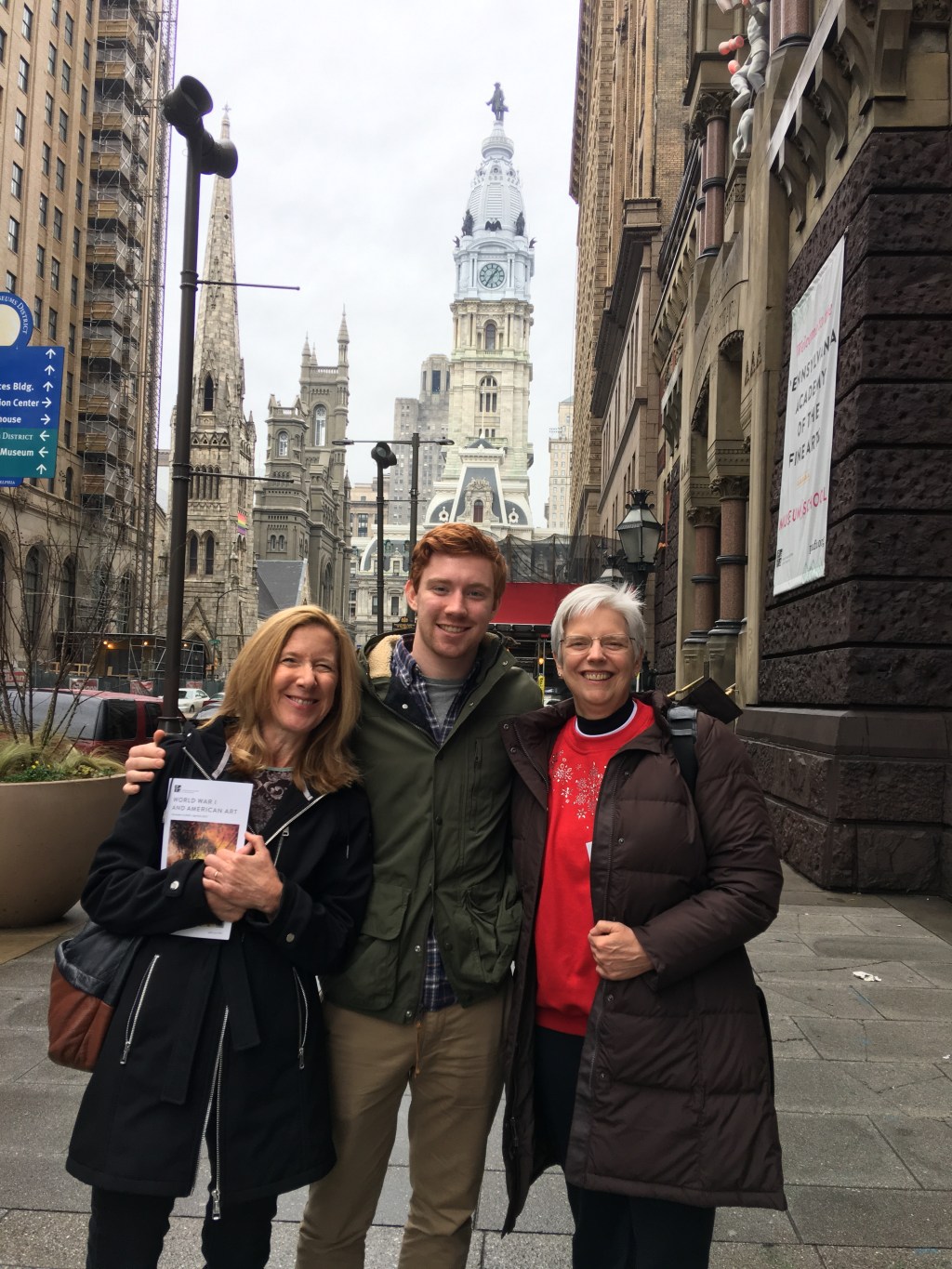
    Virginia’s cousin Mary Plaine came (via train from Maryland) and visited us this weekend. We went to the Pennsylvania Academy of Fine Arts, the Comcast Tower’s Christmas show, then visited the Christmas Village at City Hall. A very Philly Christmas to all!

    -Some rain, but hearts warmed being together and trying to feel that hope that is part of Advent. A hard season to get there with so much to change in 2017, but gotta hope the light and love will return and will sustain us. Being with so many of my favorite people always helps. vak


  • My Favorite Audible Listens This Year—and the Opposite

    What I’ve listened to on Audible this year.

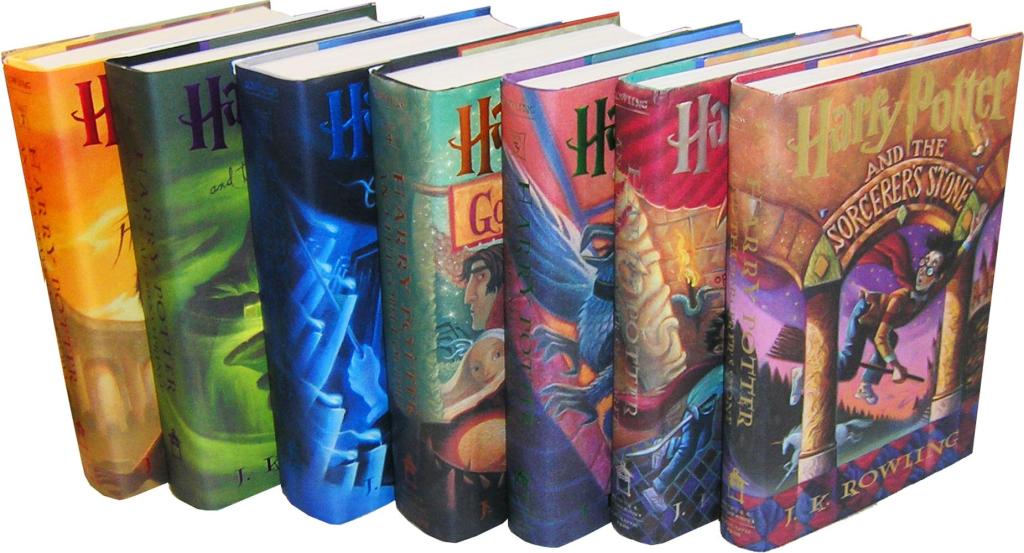
    All the Harry Potter books, by J.K. Rowling. Yup, I started in January and by May I’d gone through seven books and reached Train Platform 9 3/4 with Ron, Harry and Hermione surrounded by little ones headed to Hogwarts (oops, Spoiler Alert—though judging by all the disbelief I ran into for reading the books now, it seems every person in the world who can read already HAS read these books). I really enjoyed the books—Rowling has pulled off a real Pixar triumph: an accessible work of art in which both children and adults can find deep value and enjoyment—and I’ve been jonesing to listen to the last hour or so of the final book, from when Harry approaches the Death Eaters’ camp till the scene ends in the great hall at Hogwarts, for a good two months. A few favorites. Favorite book: Prisoner of Azkaban. Favorite character: Prof. Remus Lupin. Most satisfying scene: that last one where Valdemort and Harry circle each other, with the weight of all that story leaning in on this final confrontation. Six months of commuting was time well spent.

    The History of the Renaissance World, by Susan Wise Bauer. Truth is, fiction lends itself better to audio books than non-fiction; following a plot is a more natural experience than trying to follow the dates, names, and facts of history. Even so, I like to switch between the two, especially when listening to a long series of fiction books like the Potter series. So I listened through this exhaustive review of the major cultural centers of the world at the time of the European Awakening. And, sitting here, I can’t tell you one damn thing I learned while listening. Bauer’s approach, and I’ve listened to another book by her, is to switch between cultural centers across the world, and it often becomes a succession of warlords supplanting each other. I get bored and disconnect. I guess the Renaissance World—or Bauer’s approach—just isn’t my cup of tea. I happily jumped back to the last two books of the Potter series after this.

    Leaders Eat Last, by Simon Sinek. Could have been 40 pages long. I’ve really tired of obvious self-improvement books. I don’t think I’ll be reading any for a decade, at least. I think I’m better off putting that time to being attentive and kinder—to myself, to others.

    Ready Player One, by Ernest Cline. I enjoyed this book, about the lure of virtual worlds over (an awful) reality, more than I expected. It made me remember me and my friends in the ’80s, which was nostalgic and warm for a bit, but I stopped playing video games somewhere around Asteroids and Missile Command (and started obsessively playing Strat-O-Matic baseball against myself, keeping detailed stats; don’t ask how you do that) and I don’t have a particularly strong nostalgia gene, so it started to curdle after a while. It’s a bit on the long side, but after reading those final Harry Potter books, it was pretty breezy.

    between-the-world-me

    Between the World and Me, by Ta-Nehesi Coates. Moving, powerful, concise, its father-to-son triumph being that it serves both as invitation to taste of the amazements and adventures of life and a cold caution to the brutal truths that exist in this very same world. I felt all that this summer when I read it, and 100 times more after this recent election and the palpable sense of dread, vulnerability, and regression as we await the new administration. I started to read Coates’ eulogistic appreciation of Barack Obama’s presidency earlier today and I just don’t have the heart yet to finish it. If the arc of the moral universe bends toward justice, it’s sure taking its fucking time. On that, I think, Coates and I would agree.

    The Crusades: The Authoritative History of the War for the Holy Land, by Thomas Abridge. I read this because the Crusades are one of those things that is such a big part of the historical context of the relationship of the West and Middle East, but I knew almost nothing about it. I knew Christians had gone to the Middle East to reclaim the “Holy Land,” I knew they had been ultimately unsuccessful — but I also had heard of Crusader States. What were they? And I knew Richard the Lionhearted was an English king who joined the Crusades, but that was about it. I also knew almost nothing of the Muslim caliphates, and men like Saladin, and how that all played out. When I read about the history of this part of the world, I am reminded that we imagine ourselves past history—that somehow this teetering present can remain, poised on this very moment, forever, no matter how just or unjust the moment is — but that’s what people always think, that they are outside the flow of history, when we are assuredly in it. And those who believe themselves on top will again be on the bottom, and the reverse as well. (That’s actually the wellspring of my hope these days; history is not done with me or us.) This book was immensely helpful in clarifying my understanding of the time and place. It is long, though, maybe longer than it need be.

    hamilton-book.jpg

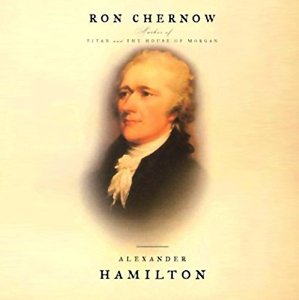
    Alexander Hamilton, by Ron Chernow. Speaking of long, Chernow’s work is an exhaustive recap of a most amazing, peripatetic, and brilliant life. Alexander Hamilton was so fully human — capable of the loftiest thoughts and the most amazing projects, and yet so often a victim of his own passions, poor judgment, and insecurities — as to leave me both awestruck and pitiful. How does one cram so much experience into one short life? How can someone be both so transcendent and so mired in the petty and petulant? I don’t know, but my gosh, I see why Lin-Manuel Miranda would drink deep of this Founding Father’s life. Bring even half of it to life and you have a hit. Judging by the reviews and songs, Lin-Manuel did a good bit more than half.

    bruce-400x

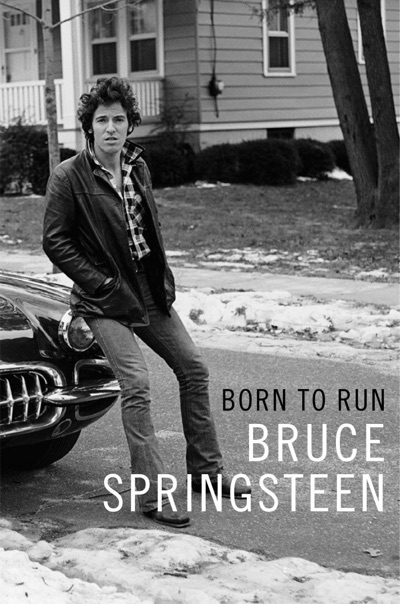
    Born to Runby Bruce Springsteen. The autobiography is good—candid, thoughtful, full of detail, maybe even a little masochistic—but the best part of the audiobook is that Springsteen reads it. It’s like having Bruce himself sitting in the seat of your car, telling you stories. There’s nothing like actual rueful laughter to convey, you know, rueful laughter. Lots of life advice can be plumbed from the book: take care in the people you surround yourself with; understand contracts BEFORE you sign them; know what you want and cling to it, staunchly, obsessively … my favorite though comes from his song Long Time Coming: “Yeah I got some kids of my own/Well if I had one wish for you in this god forsaken world, kid/It’d be that your mistakes will be your own/That your sins will be your own.” As a parent, as a citizen, as a human in the world, amen. (Speaking of Bruce, I enjoyed this list of his 300-plus songs, from worst to best.)

    And that’s it. After looking at this, I’m going to do more shorter fiction in the coming year—and I’m committing to actually read books, with my eyes even! It’s good for your brain, says science, which I’m still a fan of. That said, I’m curious and open to ideas for my 2017 reading (and listening) list. Please use comments to provide recommendations. Thanks in advance!

  • What Would Hamilton Do? The Mixed Feelings Of Reading His Bio During Election Season

    The musical Hamilton has certainly piqued interest in the Founding Father who did the most among those who never became President—and was also the guy who introduced we Americans to the tawdry sex scandal (if only Gary Hart had delivered as complete and humiliating a public explanation as Hamilton did for his sleazy indiscretions). But not having a vast cash reserve, I skipped on the Broadway show and merely listen to a Hamilton playlist on Spotify and the excellent Ron Chernow biography that inspired Lin-Manuel Miranda.

    The audiobook is Russian-novel long—36 hours, 2 minutes on Audible—and fascinating. Of course, I didn’t know much at all about Hamilton except that Aaron Burr shot him dead in Weehawken, and that he did enough before that to get his face on the $10 bill.

    And boy, was I missing out on a lot. Hamilton’s fingerprints are all the U.S. government. And his work remains relevant today. The Electoral College is pretty much his doing. He writes about it in the 68th essay of the Federalist Papers (yeah, he wrote the majority of 85 essays explaining and popularizing the Constitution, and almost every one of his is brilliant; it’s one thing to be a gas bag and another to be a brilliant gas bag).

    Hamilton’s purpose in inserting the Electoral College was to put a circuit breaker in the system as a check on the electorate, whom he really didn’t trust.

    Two-hundred-plus years later, that Electoral College finds itself smack in the middle of it. For those of us, and I count myself among them, who worry that the American people last month made a grievous choice (likely, it now appears, with the help of Russian intervention), this is exactly why Hamilton sought to include this mechanism.

    Myself, I think the problem is less with the duties of the Electoral College electors and more with the increasing discrepancies between popular vote and Electoral College vote totals. This excellent piece by Harvard professor Lawrence Lessig spells out why the Electoral College isn’t just an increasingly ineffective institution, but an unjust one, as its “winner-take-all” approach in most states effectively disenfranchises nearly half the electorate in every election. I doubt his argument will get a fair hearing before Jan. 20, 2017, but I wish it would. And I hope that it does before the next election, as I think it would move our system closer to every vote counting. (For those who want the Electoral College to take a more Hamiltonian tack and pressure the electors to consider their votes for Mr. Trump, there’s this.)

    It’s hard to contemporize an historical figure. I’m not sure that late-18th Century Hamilton would have found Lessig’s argument a particularly comforting thought. Back then, he was no fan of direct representation.

    But I think his experience as part of the first Presidential Cabinet—and builder of institutions from scratch—would provide real insight into this time when cabinet nominees seem to be selected precisely to abolish the government institution they are selected to lead. The idea that a president could arrive wearing a suicide vest, elected to blow up those governmental structures, was not foreign to him.

    And yet, as a curious, practical immigrant from the West Indies who loved the promise of his adopted country and was always in pursuit of a more-perfect system of governance, he always had his sights set firmly on a better future—to me, it’s his most unabashedly positive American trait. I think he would see the merits in Lessig’s intellectual evolution of fair representation.

    At least, that’s the story I tell myself as I alternately listen to the story of this amazing man and the latest news on NPR.

    Like the Dixie Chicks sing, I Hope.

  • History’s Not Done With Barack Obama

    In the tumult of processing last week’s election, someone at church asked me Sunday morning who in the world could be the next Martin Luther King — the person who takes the lead on the hard road to a more perfect union—and the answer seemed so obvious.

    Barack Obama.

    He leaves the presidency a relatively young man (hair notwithstanding, he’s just 55), with a stated desire to return to his community organizing roots and tackle the gerrymandering that distorts our voting like some fun house mirror. That’s noble.

    (more…)

  • Concert for Hope at Berks County (Pa.) Detention Center on Sunday, Nov. 19

    With the election of Donald Trump as President-elect, there is a lot of anxiety about what will happen to people living on the country’s margins, including those who have entered the country illegally to escape repression and violence elsewhere.

    If you live near Southeastern Pennsylvania and are looking for a way to join with others to demand that these vulnerable people be treated with due process and dignity, please attend the Concert for Hope, held outside the Berks County Residential Center from 2 to 4 p.m. on Sunday, Nov. 19. The event is being hosted by the Lutheran Advocacy Ministry of Pennsylvania.

    (more…)

  • My Day at the Million Moms March

    Toward the end of today’s Million Moms March at Philly’s City Hall, one of the speakers asked every mom who had lost a child to gun violence to raise their hand, and the air went thick with hands.

    Then she asked for their names, and the air filled with voices and names.

    This plague of violence, heartbreak and death that has impacted communities of color across this nation, like that moment with all those hands in the air, challenges my ability to bear witness—to acknowledge that this simply IS before I try to solve or blame or simply throw up my hands in despair.

    (more…)

  • To Touch My Dad’s Cheek 6 Years After He Died

    The anniversary of my dad’s passing arrived this week and it was on my mind. Last week, during a mindfulness exercise with members of my church, we were asked to imagine someone who is suffering or has suffered, and he came to mind.

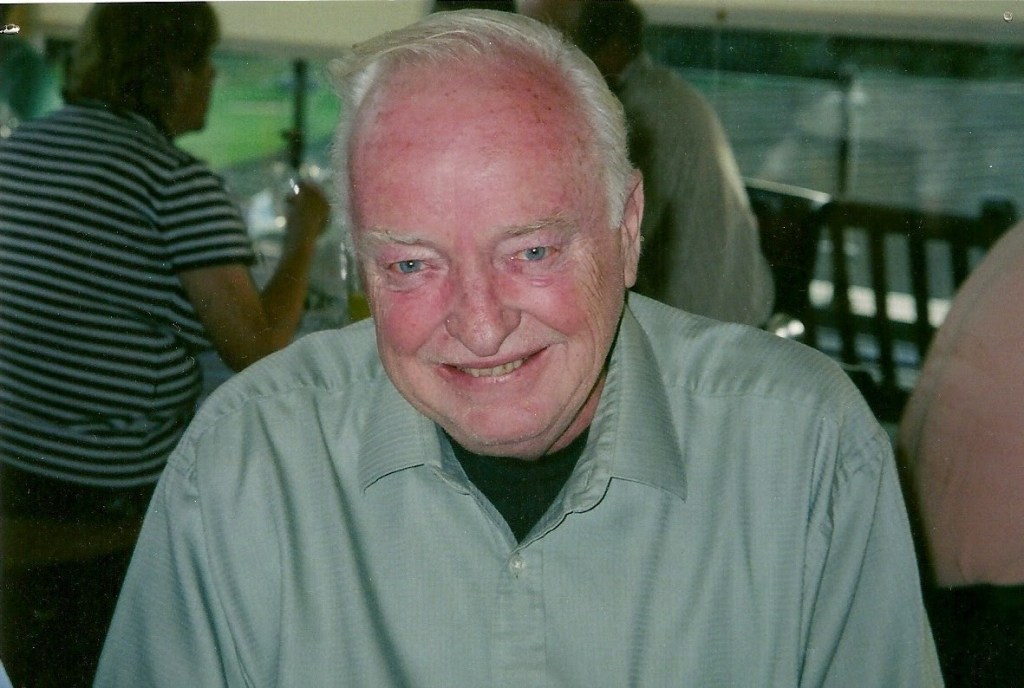
    At one point, Rev. Ken asked us to imagine the person in front of us. I did. And there was my dad, seated in front of me, looking much as he did in the days before he died.

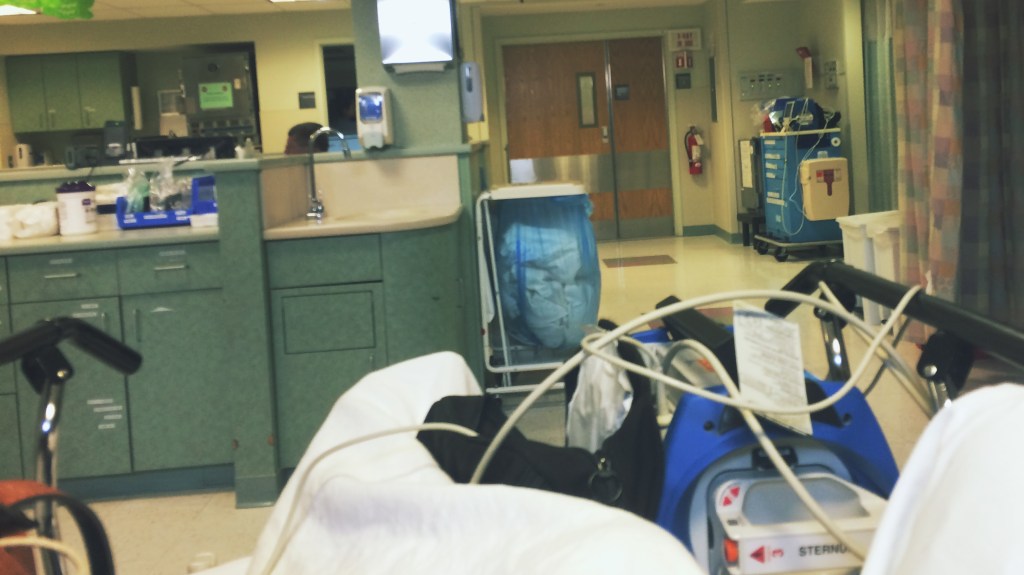
    It‘s not the end of my dad’s life, but it is not very far from it. In the hospital. I see the fear on his face, and the softness. We’re past anger now. There’s this: he will die soon.

    Then something shifts. I see my dad with a cigarette in his right hand, held in the air. His brow low, his head tilted. This is not the sad guy; this is the frustrated one, the aggrieved one. The one it is harder to love.

    And I reach out and put my left hand on his cheek. It’s very strange to extend this hand and touch him a week short of 6 years after he died.

    He doesn’t jump, or pull away, and I don’t either. I feel his stubbly cheek on the palm of my hand. It is this incredibly tender moment. It lingers in the quiet. I feel an urge to cry.

    My dad doesn’t offer any wisdom beyond his presence. And as I sit there, I become aware of my frustrations and anger with him, mostly about why he hasn’t tried harder to live in a healthier way, why he hasn’t stepped away from the Scotch and the cigarettes.

    And then I become aware that in the past year I’ve had two angioplasty surgeries. My dad had his first surgery—a crack-his-chest-wide-open bypass—at 44. I’m 50. At 50, he was still one and done. So despite my intent to eat right and exercise, despite my general desire not to follow in his steps, well, here I am—with a cardiologist and sketchy plumbing and one more hospital stay than him at 50.

    And I think about my boys and what happens when I’m not here, and let’s imagine the time comes sooner than any of us would want, how are they going to feel?

    And then I am aware of my dad’s cheek in my palm. And this realization: that life is life and loss is loss and all this counting and blaming and judging doesn’t get beyond that.

    That I can imagine my dad’s cheek in my palm and realize that, even 6 years later, our lives and legacies intermingle, and that is never going to be untrue. And my intentions matter, but there are truths in this world that run deeper than intention, and that judging or ignoring or writing about it doesn’t change this simple fact.

    The only thing that changes all that is living. Every moment. Breathe in. Share a meal. Ride bikes. Watch ballgames. Wake up to birdsong. Breathe out.

    Six years after my dad died, I felt his cheek in my palm, and I felt my throat tighten and an urge to cry, and that was what mattered. That’s what will always matter. Until the summoning and the suffering and the loving and the reaching and the intending and the imagining and the softening — until it all ends, it’s all here.

    And what a blessing that is.

  • A 2nd Heart Surgery in 7 Months

    It’s good to be home after a pretty scary week. On Friday, I had my second cardiac catheterization in the past 7 months, and I’m now the owner of two additional stents (that’s three total if you’re counting at home). The surgeon framed it not as a further deterioration but as a hopeful resolution to what started in September.

    Existentially, I’m fine. My heart is beating, I am not in any pain, there was no catastrophe that sent me to the hospital. Score one for me noticing what was happening inside me.

    Spiritually, I have been overcome by and struggled with how vulnerable I am, by what can go wrong even as I try to do right, by how my sphere of control is so very limited.

    And so I remind myself that I’ve never had that much control, that so much has gone and continues to go right in my life (me typing this being prime evidence), that I am surrounded by brave and loving people and a level of care that few people in this world have ever been able to access. I am open, aware and engaged in this great project of living and loving.

    I wrote this yesterday. I’m calling it Space:

    This hurtling
    Through Space
    That is my life,

    That is your life,
    Can leave me
    Nauseous, fearful,

    As if I was
    Mere inches
    From a great

    Calamity.
    And that is when
    I need the reminder

    That, if I open my eyes,
    Light is creeping
    Across the earth.

    The sun spills over
    The rounded corner
    Of the horizon,

    Illuminating
    A sky filled to bursting
    With others, looking
    As awkward in orbit as me.

    And I know this:
    This life, so fast,
    So frighteningly
    Close to the inhospitable,
    So vulnerable,

    It is bathed in light.
    It is connected
    To great joy

    If only I look out
    And in, and reconcile
    Myself to the height

    And the speed
    And the warmth
    And the cold.

    This is life lived
    On the edge of wonder
    And calamity,

    Which is to say,
    This is life.

  • Remembering My Uncle Tom

    Today is my Uncle Tom Stansfield’s birthday. He would be 87. The fact he passed away last year (June 14, a Sunday) doesn’t lessen my wish to celebrate him on this day. So here is a rough reprise of my parts of Tom’s eulogy, delivered along with my brother Chris, at Holy Family Church in Union Beach, N.J., 9 long months ago. My notes were still sitting on my nightstand, which tells you something. Maybe you knew him and this will bring him to your mind and heart. Or maybe — if you’re lucky — you have your own Uncle Tom.

    (more…)