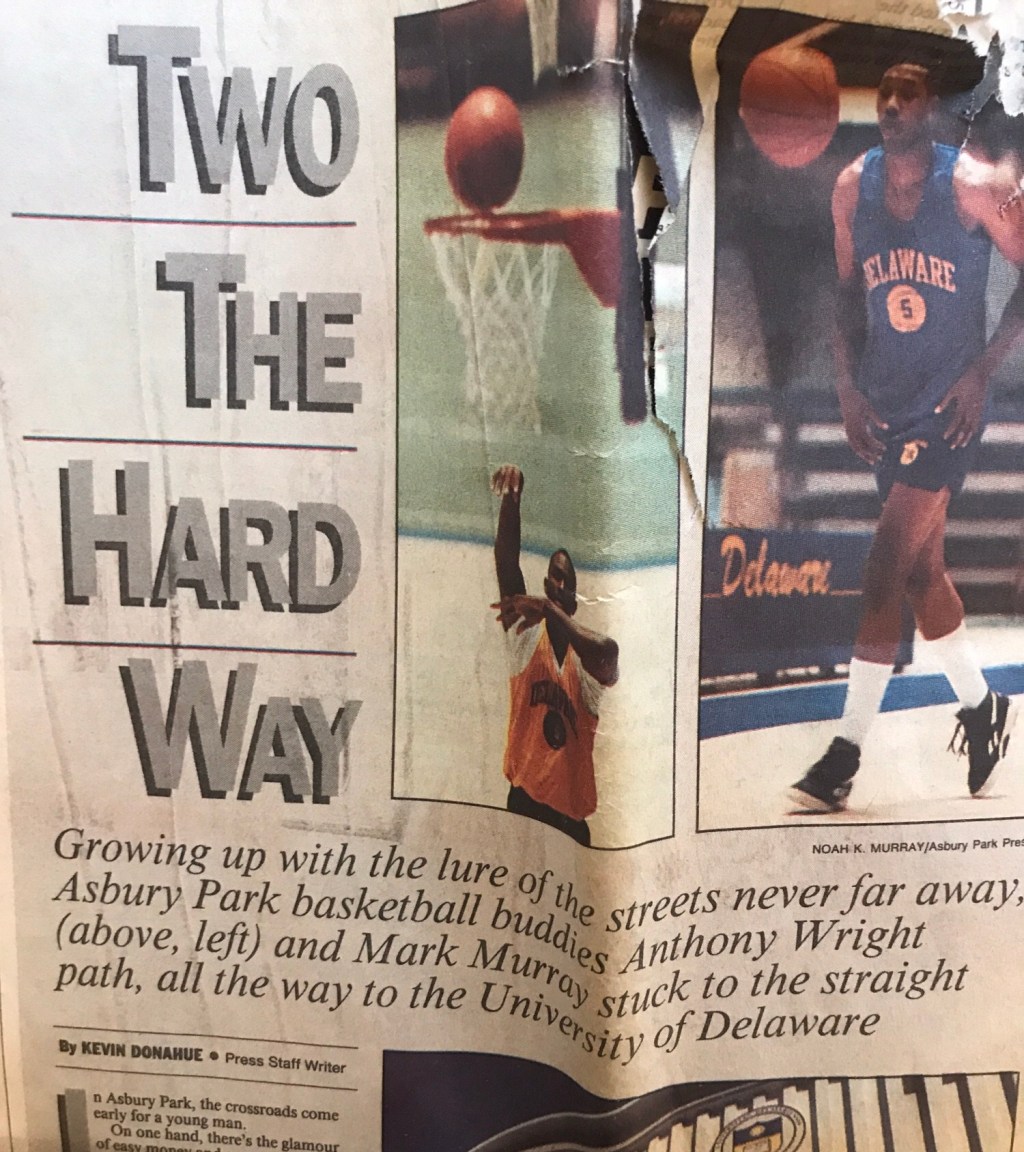
• Two The Hard Way

    (Editor’s note: I wrote this in 1990, as a member of the sports staff at the Asbury Park Press. It was named the Sports Feature of the Year by the New Jersey Associated Press.  I recently found it in my clips and, while it betrays some biases and youthful innocence, I do like how many people I reached out to, and how I got to know the two young men at the heart of it.  It has me wondering where they are now. Also, the article was published on Nov. 18, 1990, the day after my brother’s high school team upset the No. 1 team in the area and he was quoted in the article, which appeared on the sports section’s front page, too. It was a good day for the Donahue boys.)

    In Asbury Park, the crossroads come early for a young man.

    On one hand, there’s the glamour of easy money and acceptance from the majority of your peers—a world of gangs, drugs, alcohol and frequent fights. It’s all around you.

    The other path is less clear, if not less traveled. It isn’t easy and it demands a constant vigil and constant dedication. Bruce Springsteen probably never realized how right he was about how hard it is to be a saint in this city.

    “The streets get them after awhile,” says former Asbury Park basketball coach Nate Bruno. “If they have some direction they can get through high school and go on to college. If not, the streets will get him. It can turn a good kid into a problem.”

    But to Anthony Wright and Mark Murray, former stars at Asbury Park now making their mark at the University of Delaware, the crossroads offered just one road—a road out. Maybe not forever, but a road out now.

    “Asbury’s not the nicest place,” says Wright, a redshirt freshman last season who was the East Coast Conference’s Rookie of the Year. “There’s a lot of streets, street stuff. The drugs. We could have either taken the route to the streets or the route we’re on now. It was around me every day and I had to be strong to not fall into selling drugs, making all this money every week, instead of going to college.

    “It makes you think when you live around it every day, so basically [Mark] helped me out and I helped him out and we stayed away from it.”

    The two meet in 1984. Murray was a sophomore, Wright a freshman. Neither was a native of Asbury Park. Murray had come in seventh grade, from Norfolk, Va., where he and his mother had stayed for two years after his mom’s divorce from dad, Otis, who stayed behind at Sumter, S.C. Wright was a new transfer from Freehold, where he had grown up. “We just built the closeness from that point on,” says Murray. “We didn’t drink, we didn’t do all that other stuff. You know, we partied, but we didn’t overdo it and we fit right in with each other.”

    “[The other students] partied real hard,” he says. “They did everything. They’d go out and stay out all weekend partying. We knew people from the top of the gang to the quiet students―and most of them that fit in right in the middle, they went off that way with the hanging crew, that fighting crew. But not Anthony and I.”

    Sitting in a comfortable office in the sports information office at the Newark, Del., campus, Wright leans in when he talks about the battle.

    “You have the good,” he says, putting his right hand on the desk in front of him, “and the bad,” the left hand comes down, “and you’re right in the middle with the crew, a group of y’all.

    “Everybody’s starting to fall and your friends are in here now,” he says, lifting his left hand. “If you go with your friends, you usually end up there, so you have to stand for something.”

    So the two stood for the future, for working hard and keeping clean. And they stood next to each other, while still choosing their own paths.

    “They had character,” remembers their basketball coach, Bruno, who has since stepped down.

    “Neither hung out with groupies. They were basically loners,” Bruno says. “Today in Asbury Park, it’s all gangs. They were never involved.”

    “They’re probably two of the best kids to come through here in a long time,” says football coach Leroy Hayes, who only coached Wright, but knew both. “If one of them wasn’t at the high school, the other one was.”

    Even their destructive side was constructive. The two broke about a dozen bikes riding each other from basketball court to basketball court, looking for a game or just a chance to practice. Once there, they’d work on their games. The two were virtually inseparable during basketball season, but would tend to go their own ways much of the rest of the year. Since going to college, the friendship has deepened further

    “They complimented each other off the court as well as on,” says Asbury Park basketball coach Bob Gohl, an assistant while the two were at the high school. “Even now, they still stop back and visit me. You wish you had more like that.”

    “People always drilled into our heads that we were two of the different ones in the school and they wanted us to succeed,” Murray says. “I didn’t see it as a letdown for me if I didn’t go to college, but for a lot of other people. My mother’s a schoolteacher and it wouldn’t have helped her a lot if I hadn’t gone to college.”

    A NATURAL

    On the basketball court, Mark Murray is a soft breeze, a natural.

    Fast as the wind, too. Murray is the East Coast Conference 100-meter champ two years running, last time in a searing 10.6 seconds. After redshirting his first year at Delaware, Murray has scored about 12 points a game through the last two years. Barring injuries, he’ll break the 1,000-point barrier sometime late this season.

    “Certain things you just don’t teach,” says Gohl. “Mark was a very smooth players, a great leaper, an all-around athlete.”

    But when Delaware coach Steve Steinwedel talks about Murray, it’s not the athletic package he mentions.

    “He’s just so competitive,” says Steinwedel. “That’s by far his biggest strength. He has a lot of pride and he hates losing—from losing to a teammate in practice to losing to an opponent in a game, and because of that he works very hard and has become a better player.”

    Talk to Murray about losing, and he agrees. “I hate it. I hate it—sometimes too much, to the point where I’ll be arguing with my teammates when they do something bad, or I get frustrated in a game sometimes that I take myself out [of the flow] sometimes.”

    Steinwedel isn’t the only coach to take notice of the two young men from Asbury Park.

    “They’re great,” says Rider College coach Kevin Bannon. “I love guys like that. People say they’re not this and they’re not that. People say, ‘Well, they’re not a forward and they’re not a guard, they’re not this,’ and they overlook them and Delaware just took them.

    “Yeah, they’re not all those things. They’re just great players who play their butts off every single night. They get a rebound, they make a three-point shot and they shut down your best guy. We got a 6-10 guy and that’s great, but I’d just as soon fill my team with 6-4 to 6-6 guys who are tough guys. They’re just what we’re going to look for in our recruiting.”

    Murray has also spent the past two summers in Newark, working at the local Chrysler plant, fine-tuning his game and bulking up for the coming season. With an assist from Tony Decker, the Delaware basketball team’s strength and conditioning coordinator, the 6-foot-4 Murray has gone from a 175-pounder who got pushed around as a freshman to a 192-pound junior who can do the pushing. A post player in high school, he is now a legitimate shooting guard, with three-point range on his jumper.

    “Mark has improved by leaps and bounds every year,” says Steinwedel, a man not prone to faint praise.

    All this intensity is news to Ruth Murray, Mark’s mom. A teacher at Asbury Park Middle School, where she works with emotionally disturbed students, she was a great believer in keeping things in perspective.

    “Maybe being a single mother, I was different,” she says. “But whenever Mark lost, I would say, ‘You can’t win them all,’ or ‘You can always do your best, but you won’t always be the best.’ “

    Around her, Mark was always a laid-back, engaging son.

    “He’s more competitive than he was in high school,” says Bruno, who remembers sitting next to Ruth Murray last year during Delaware’s game against Rutgers, at Piscataway, when Mark blew up over a call. “She was embarrassed by the way he acted and said, ‘I’ve never seen him like that.’ But I had, during games. When I had him, I kind of welcomed it, as long as he didn’t try to prolong it. It helped to motivate him.”

    “Maybe he’s always been that way,” Ruth Murray says now, “and he hid it from me.”

    As a teacher, Ruth never hid her expectations from Mark and his sister, Tiffany, 16. Education has always been the No. 1 priority, as one would expect in a family fairly bursting with teachers. Besides his mom, Marks’ grandmother and two cousins teach. After a short stint as a communications major, Mark is now a physical education major, with thoughts of pursuing a graduate degree as an athletic trainer.

    A HOWLING WIND

    If Murray’s a breeze, Anthony Wright is a driving rainstorm, a howling wind.

    He has careened through life, with great highs followed by great lows, but always his unrelenting determination to succeed has pulled him through.

    Wright’s dad left soon after he was born and his mom, Augustine Brown, was hard-pressed to raise four children by herself. A chronic back injury that has kept her out of work, on and off, for the past decade has only made things tighter. The money has been scarce, but she has given her children all the things that money can’t buy—love, as much attention as she can muster, and her own fierce pride.

    “I told them always to think of themselves as No. 1,” she says. “And when you want something, don’t ever stop. I never gave up because once you stop, you’re finished. No one’s going to help you.”

    And despite his mom’s protests, young Anthony, whom she nicknamed “Sweet Curl” when he was an infant, needed a father figure. He got one as a 9-year-old, playing on the Freehold Pop Warner football team for coach Wayne Holton.

    Holton, a white man, was the coach for five years, coaching about 200 kids, but there was only one Anthony Wright in his life.

    “He’s a kid who has grown on me,” Holton says. “I’ve always felt something special toward him. He always gave me his best and then some.”

    In return, Holton has helped Wright in any way he could. Back then, the coach brought Wright his first pair of football shoes, the occasional ice cream cone. After losing touch for a couple years, Holton, now living in Westfield and running an accounting firm, saw a story in the newspaper about an Asbury Park student named Anthony Wright, who was the first freshman in years to start on the Blue Bishops’ basketball team.

    “I thought, ‘Jesus, could that be Sweet Curl?’ ” Holton remembers. It was. Since then he has helped Wright in high school and with the transition to college. When Wright went off to summer school before his first year at Delaware, Holton and Wright stopped at the mall on the way and bought bedsheets, underwear and a college wardrobe, including jeans, button-down dress shirts and a pair of penny loafers. Holton sends him $25 a week spending money, $5 less than he sends to his own son, a freshman in more-expensive Boston. When the care packages go out around exam time, one goes to Delaware. Wright has eaten over and slept over. He showed up at Holton’s daughter’s high school graduation this summer with teammate Alex Coles. Dressed in suits, the two hit 20 of 25 three-pointers in the backyard. “I used to coach him in football,” says Holton, “now I coach him in life. He’s the third kid in my family. I’m so proud of him. To me, he’s a son.”

    “He’s like my father,” Wright says.

    “He helps me. He makes sure I’m doing well, his children treat me like a brother,” he says. “Thank God for him.”

    And for his help, Holton has attached just one string: Wright must do the same for another minority student some day.

    WHAT IF …

    Imagine if God reached down and took away Picasso’s paintbrush. If He just plucked the music out of Leonard Bernstein’s head. What if you lost the one thing you really loved doing in the world, just watched it disappear in an explosion of white pain, watched a surgeon remove it with a knife.

    Then you’d know what it’s like to be Anthony Wright.

    Wright was the next Ronnie Lott in high school, a strong safety who could do it all.

    Here was Wright in his senior year, an All-State defensive back and quarterback on a 9-2 team his own coach admits shouldn’t have done so well. “He hates to lose at anything,” says Hayes. “He exuded confidence and it rubbed off on the other kids. He got more out of that team than I would have thought possible at the beginning of the season.”

    Hayes remembers the first state playoff game that year, against South River, as one of the coldest days of the year, with a windchill of -10 degrees. Wright played brilliantly that Saturday, but ended up with frostbite on both feet.

    The doctors said he probably shouldn’t play on Thanksgiving against Neptune, but Wright disagreed. He was on the field Monday and wouldn’t go back inside. He stood out there and exhorted his team through practice. Tuesday he practiced, saying, “This is Neptune, I’m playing.” Thursday? Wright scored twice and led the team in tackles. Asbury Park won.

    “I never saw a person with the desire to win as much as Anthony,” says Gohl. “He wouldn’t let you lose.”

    Even today at Delaware, that competitiveness shows through. Ask Wright about the Hens’ poor road record last season and his eyes light up.

    “That has to change … I’m not going through that again,” he says.

    “My mother gave me the will to win,” says Wright. “I hate losing. I hate losing at anything. I’m not a sore loser, but I’d rather win. Besides playing unfair, I’d do anything to win.”

    After the football season ended, it appeared Wright couldn’t lose. He was being chased by Penn State, Syracuse, UCLA and USC, among others, all hoping to land a football player who was projected straight up to a professional defensive back. He was the real thing, a sure deal. The only hurdle was his SATs, and the afternoon before playing Wall High School in January 1988, he found out he was OK there, too. He confided in his mother that Syracuse would be the choice.

    Then the wind began to blow his world around.

    College on his mind, Wright scrambled for a loose ball. He picked it up as a Wall player dove for it. The player’s head hit Wright’s right knee, and three of the four ligaments that secured the joint snapped like dry kindling. Goodbye, Syracuse. Goodbye, football. Goodbye, track, where Wright was high-jumping close to 7 feet as a junior and dreaming of someday competing in the Olympics.

    Dr. Norman Scott, who performed the reconstructive surgery on the knee, told him football and high-jumping were out of the question. The schools retreated, their offers drying up and blowing away like so many tumbleweeds.

    “He was completely down,” says Augustine Brown, Wright’s mom. “He didn’t want to talk. It was completely over, he thought. I told him to don’t feel sorry for yourself … He’s a strong kid. When he’s hurt, he won’t tell you. I could see the tears in his eyes, but he never once shed a tear.”

    Holton had received even more sobering news from the doctor.

    “Dr. Scott told me when the operation was complete that the tear was so bad, only Bernard King had ever come back from an injury so bad,” he says.

    Only one school called the day of the operation—the University of Delaware.

    “They told me the offer [to play basketball] still stands,” says Wright. “And St. John’s called two days later, but I said Delaware’s first, and Murray was there and we were tight. He’s like my best friend.

    “I just thought about it, sitting in my bed one day, thinking. And you know, that can touch a person. They knew I was hurt but they called right then … That was the first positive thing that happened after the operation.”

    From there, Wright turned his crackling intensity on his mangled knee. He went to rehabilitation every day, for up to six hours a day. Holton got him in to the local YMCA on a friend’s membership to swim. Wright lifted, he rode the stationary bike. He fought the world.

    “It was painful,” Wright says. “It was like me against the world. I always did look at it like that and I still do, because once you get hurt everyone looks at you like ‘He’s not going to make it back.’ “

    Working with Decker to rehab the knee, Wright sat out his first year as a redshirt at Delaware, and doubted how long he would be able to take this foreign place. “I felt out of place,” Wright says. But having Murray there, who had also redshirted his first year after suffering a compound dislocation of a finger, made things bearable. Now he feels comfortable.

    “It’s different. Once you meet people, there’s a lot of great people here,” he says. “A lot of good people that go here and make you feel welcome.

    “Now I can react to both [worlds]—up here and at home. I feel more versatile.”

    STRUGGLED EARLY

    Wright struggled early last season, but his game came together in January of this year. He came home for this summer after averaging 7.1 points and 4.6 rebounds for the Blue Hens, who finished 16-13. His knee was finally back, he felt he was peaking—when he hurt the left one, playing in the Jersey Shore Basketball League.

    The injury was not as severe as the first one, and the arthroscopic surgery was performed quickly. Wright is just now rounding back to form. “It was like starting all over again,” he says.

    But the heartache is still there for Wright. He looks at the football team practice, or sits in the stands watching the team play on Saturday afternoon, and he retreats into his own private Field of Dreams.

    “It’s frustrating,” he says. “Sometimes I think, ‘What if I had played football? Why am I playing basketball?’ It’s like dropping your favorite thing to do. Football was the first sport I ever played. Everyone thought I liked basketball better, but it was football. I high-jumped. I miss that too. It’s depressing because I think what I might have really done if I hadn’t gotten hurt. I had goals of going to the Olympic Games because I was high-jumping [nearly] 7-something my junior year.

    “So it was like staring me in the face.”

    So far, Wright has stared back. He has overcome the athletic setbacks and last year overcame an educational one. A drop in his grades led to the diagnosis of a learning disability that had not been spotted before. Working with his academic counselor three times a week, Wright got himself back on track for a degree, carrying a 2.6 grade-point average in his physical education major. He hopes to stick around the university and pursue a graduate degree in accounting, like Holton.

    Wright’s mother looks forward, as does Holton, to the day the young man they have raised by turns receives his degree. For both it will mark the conclusion of a job well done.

    “I have four children and two didn’t finish [high] school. I don’t care if he ever turns pro,” Augustine Brown says. “I just want him to get that piece of paper.”

    “He had friends who got in trouble, ended up in detention centers,” she says. “I don’t believe in drugs. I never felt a need to do it. I work with young kids at Marlboro Hospital and I saw a 16-year-old kid who was into drugs. Sixteen, he could have been my son … I didn’t want to see any of my kids like that. Why do they do that stuff? I never understood it.

    “And I always told [my children], even if I had a million dollars, if they did it and went to jail, I would never get them out. I’d leave them there. I worked, I struggled, I did my best and I never turned to drugs, and you had better not either.”

    FEW REWARDS

    Wright and Murray have yet to win anything of consequence at Delaware. There have been no ECC titles. When they speak of winning a tournament, it was the Shore Conference, not the NCAAs, which Delaware has never made. The high point for both young men was Murray’s senior year, when Asbury Park High School won a state basketball title.

    But time passes. Both Wright and Murray have a sister on the Blue Bishops’ girls basketball team. Nathalie Brown, 17, and Tiffany Murray, 16. Ironically, this pair could end up at Delaware, too. They’ve both received feelers from the university. And if the girls go to Newark, would the boys return to Asbury Park?

    Sometimes Murray thinks about returning to his old school, maybe to teach in the same halls he once roamed as a student. Teaching, and Asbury Park, it seems, are in his blood.

    “I wouldn’t mind going back and trying to raise the school to one of the best from one of the worst,” he says. Maybe he’d even coach track or basketball.

    “It’s a good way to help people,” he says, “taking what I learned and applying it to somebody else.”

    Wright says he’d never live in Asbury Park again, but he’d like to be active in the area. And he still has his pledge to Holton to fulfill. Somehow, it’s easy to see Wright walking away from a football field with a 10-year-old in hand, taking him for an ice cream. Giving him a chance. Showing him the right route to take.

    “There are a lot of kids with talent out there who need the guidance,” says Wright. “I can show them what [Holton] showed me. He let me know that someplace the grass is greener.”


  • What’s On My iPhone’s Home Screen

    I’m always curious how others use their phones and what they value enough to have it available on the home screen. With that in mind, I’ll show you mine, along with some brief explanation. I’m curious to see yours.

    I have an iPhone 7 Plus. The top row is about 3 miles from the bottom of the phone. So I use the top row to hold a TON of apps that I use every once in a while, organized by two differing criteria: a) app authors (Google and Apple) and b) purpose (news, money). It ends up creating a lot of space for me below.

    Next row is all listening apps. I place them high because I interact with them mostly when driving and I’m usually pecking with my index finger toward the windshield. Hoopla is the most-recent arrival on this row. It’s basically Audible integrated to your local library. You enter your library credentials and can “check out” audiobooks. Nice! I’m currently listening to The Reformation: A History, by Diarmaid Macculloch.

    (The Hoopla spot used to belong to Anchor. The app is pretty amazing, and I want to create a podcast someday, but that’s the problem, too—almost everything on there sounds like it’s been created by a curious newbie.)

    Next row. The Camera app used to sit in the tray on the bottom, but I realized that I didn’t use it that often and when I did, it didn’t matter if it was in the tray. Fitbit makes it out here when I am in a Quantified Living phase, which I am right now. Waze has been my navigation app of choice; I think it has the best interface while driving, though I get frustrated with its compunction to make me take three left turns and drive through a neighbor’s back yard (or bedroom) to arrive 2 minutes later than a route with a single right-hand turn.

    Linked In is a late arrival, mostly because I am looking for a job and paying more attention to this business networking app than I ever have before. It’s a weird place, but there are a lot of people there, I’ll admit. Sleep Cycle I love because I’m too far gone on this Quantified Self crap to NOT rate my sleep. The nutty thing is Fitbit also gives me a report on what happened when I wasn’t awake. I look at both of them each morning. Why do I do that? I don’t know. They usually tell very similar stories. I should drop Sleep Cycle—except I’ve used it enough that it has 423 nights’ worth of data (average sleep time: 7 hours, 26 minutes) and I get smug every time my sleep crawls above an 80% rating.

    Next row, I’ve recently dropped Facebook for Instagram. Will it stay that way? I doubt it. I will keep Twitter. Too much of a news junkie and I love the pithy comments around sports and other big events. I use Buffer to schedule a fair portion of my social posts, as it gives me plausible deniability about not looking at Twitter in the middle of the workday. Dark Sky is the best weather app, period, and I have evangelized it to many friends and colleagues.

    The bottom row is work space, with one exception. I use Evernote to gather up so many of my work and non-work loose ends. Todoist is my latest to-do favorite, though I I think Asana is really good too. Slack is a work staple.  Last on the row is YouTube TV. We dropped Fios as our TV provider and so far, YTV has been more than adequate as a replacement, and saved us nearly $100 a month to boot. It also made clear that we don’t need to pay HBO and Showtime every month of the year. In fact, with “Games of Thrones” scheduled to return in 2019, neither premium channel might see a penny from us this year. The one hole in YTV: No Turner TV stations. I don’t need CNN, but TNT and the other stations are crucial for March Madness and the NBA playoffs, which are essentials. Hulu haas those stations, and “The Handmaid’s Tale,” but the interface is crap.

    The persistent placements at the bottom of the screen (does this placement have an actual name? I call it “The Tray”) has been given an Artificial Intelligence-refresh recently: Google Assistant is on a trial run, as we have three Google Home devices in the house now, they have slowly become integrated in how we behave there, and I am intrigued to see how I will use it on my phone if I have easy access to it. Astro is an AI-powered email app that recently added calendaring, which led me to bump my old email/calendaring favorite, Outlook. Messages and Phone are there because, yeah, texting and phone calls.

    FacebookMessengerRunkeeperMedium and WordPress all might work their way back to Page 1 as the Winter turns to Spring. Or sooner. We’ll see.

    That’s it. Feel free to drop a screen grab of your homescreen and explain your own choices below.

  • What I Know About Haiti

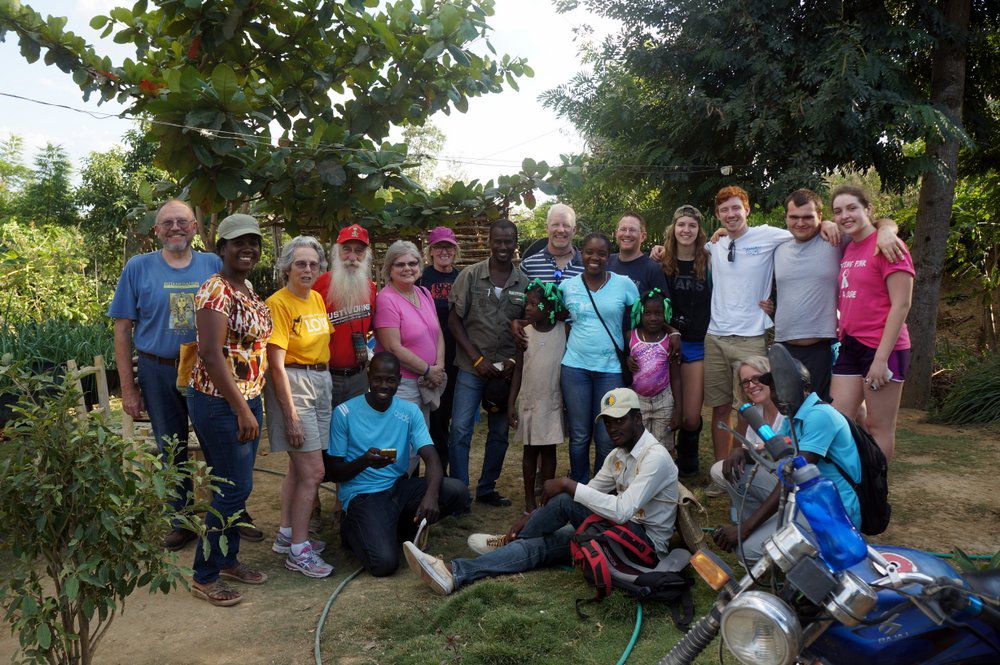
    I’m no expert on Haiti. I’ve been there twice in the past four years, for a total of two weeks. But two weeks is more than most folks, and it’s enough to form an impression.

    And enough to refute our president. Because when President Trump reportedly called Haiti, El Salvador and most of Africa “shithole countries,” he intimated that Haitians, Salvadorans and Africans are “shithole people.” It is awful, racist, repugnant stuff. It is divorced from my lived experience.

    So let me tell you a little about the Haiti I have experienced, and point you to some better reference materials if you are interested in the place and its people.

    The joyful and the troubling mingle in Haiti in ways outside the usual frame of my experience. I loved my time there. That’s not to say the place is easy. It’s hard, and I lived the most privileged existence possible in Haiti—the white visitor. I was treated like royalty, which, if you know anything about the history between our two countries, is unexpected and undeserved.

    Everyone knows that Haiti’s standard of living is the lowest in the Western Hemisphere, and I have driven through the slums around Port Au Prince. I’ve looked up long roads strewn with trash and lined by shanty town shacks. I’ve looked and looked, because I could not take my eyes away. I’ve driven on dusty roads past three-room homes where I could not discern what the people who lived there could possibly do to scratch out a living.

    There is something elemental in the struggle it takes to get even simple things done in the country. It appears tiresome. And yet people manage, because a lot actually gets done there.

    My minister today was saying that the key to resilience is not learning to tough out a miserable situation. Instead, the key to resilience is discovering how to retreat and recharge after facing up to a difficult and heartless world. As he said that today, I remembered being gathered in silence with a small circle of fellow travelers in a compound outside Hinche, in Haiti’s Central Plateau, reflecting on a difficult day … and listening to the sounds coming from a modest home nearby. I don’t understand enough Creole to catch more than the occasional word or phrase. What I did make out was the unmistakable sounds of a family working through its daily routines with compassion, frustration, dignity and humor. Those overheard moments told me Haitian people, like so many Americans, find strength in their families that feed their dreams and help them cope with a world that so often appears arrayed against them.

    As much as I appreciated my time there, I was glad to come home. I remember saying to a colleague on my second trip, “I’d be less excited if we were staying another week, let alone another month.”

    Which is one way of saying that I remain in awe of the resilience of the people I met. Their ability to enjoy their lives, to be aware of the problems and not be defeated by them, amazed me.

    Haitians aren’t saints. They’re people. I’ve been the recipient of their generosity. I’ve witnessed them argue violently over an unconscious boy about who was responsible when the boy was hit by a motorbike on a dusty street, without attending to the boy. I’ve worked with them and laughed with them.

    I hope to be among them again.

    I’ve written a bit about my time, including this poem, called 17 Pilgrims, about my first service trip there. From it:

    “Haiti, you trudge to the end of a long day. I expect you to wake tired in the morning. Instead, you are bright smiles.”

    I offer these resources as a way to connect with a challenging, beautiful place and its beautiful, worthy people.

    2014 Visit
    My Favorite 17 Photos
    17 Pilgrims, a Poem

    2016 Visit
    A Whirlwind Start
    A Harrowing Day on the Roads
    Homecoming
    Why Haitians Reject industrial Farming
    A Different Take on Education
    The Boy on the Road, a Poem
    The Amazing Way Power Is Coming to Rural Haiti
    59 Photos from My Trip to Haiti

    Reference

    If you’re looking for some starting points on understanding the place:

  • The Next Next Thing

    A lot of people I knew were aware that Rodale was being acquired by Hearst and were curious how I’d be impacted.

    Short version, I’ll be departing, with an end date of March 10. I wasn’t alone—more than one-third of the company’s employees received similar news, and that had the effect of muting a lot of the internal talk in my own head about what I could or couldn’t have done.

    It also spurred a certain esprit de corps that I hadn’t expected. The mood was down, definitely, but people also looked after each other and held each other up. It made me think that whoever coined the term “misery loves company” doesn’t know much about good company.

    Also, as I’ve gotten older, I’ve become a much more intentional mentor, and I was touched by how many colleagues, current and former, reached out to check on me with their kindness and attention. I’ll tell you what I told them:

    Please save the notes of condolence for people suffering more deeply in this world. I had 10 fulfilling years with a company whose mission I really valued. I was treated more than fairly. I had some great bosses. I did work of consequence. I even managed to turn my own heart troubles into a story for Men’s Health that led several men to write me later that it alerted them to address unknown issues.

    Those years, for me, encompassed a second act in my professional life. I made some great friends, got to feed my inner do-gooder by working for a company explicitly dedicated to human thriving (and abs), and continued to learn about—and at times be mystified by—modern media.

    I imagine myself turning toward a third act professionally and I am excited and curious where it will take me. I don’t know exactly what that is, especially if it will continue to be in journalism and digital media. I am open to it … AND I have a nagging sense that there are possibilities beyond my previous definitions.

    This fall I received an out-of-the-blue inquiry from a non-media company that made me assess what do I know, what am I good at, and what are my gifts beyond my talents and my knowledge. (It also made me clean up my LinkedIn profile.)

    I realized that my best assets are I keep my head up and value respect and accountability between people and service to them. I am curious and I pay attention. I care. And I am nowhere near done.

    If you know me and are reading this, I hope that sounds right to you. And I’d ask that if you know of a job that you think might be a good match for me, let me know. If it seems a little out there, even better. Tell me about it.

    This week was an ending, but certainly not the ending–even though all endings carry some of that feeling in them. I look forward to the next beginning. And maybe even getting smaller.

    Sincerely,

    Kevin

  • My Favorite Audible Books of 2017

    The last few years my Audible listening had been dominated by big book series—J.K. Rowlings’ Harry Potter and George R.R. Martin’s A Song of Ice and Fire (Game of Thrones). I didn’t have any such book series this year, but the year was dominated by two things:

    • Our trip to Italy, which spurred an interest in Michaelangelo (and I didn’t include it here, but I listened to two books in the Pimsleur Italian Lessons series, worrying fellow drivers as I fumbled and gestured in frustration as I learned some rudimentary Italian for the trip).
    • A desire to better understand where we are politically, by reading two books (Hillbilly Elegy, Strangers in Their Own Land) that offered insight into disaffected Trump voters and two (Notes of a Native Son, We Were Eight Years in Power) from African-American authors that explored what it means to be Black in America.

    In the second half of the year, I listened to more fiction, which I find to be a better genre for Audible than non-fiction. The flow of being told a story—even a modern, disjointed timeline like that in A Visit from the Goon Squad—is easier to follow than plowing through a historical list of places, names and dates in non-fiction. Though I keep doing regardless—right now, I’m listening to a long book on The Reformation.

    Anyway, here’s my list, pretty much in order it was listened to:

    hillbilly-elegy

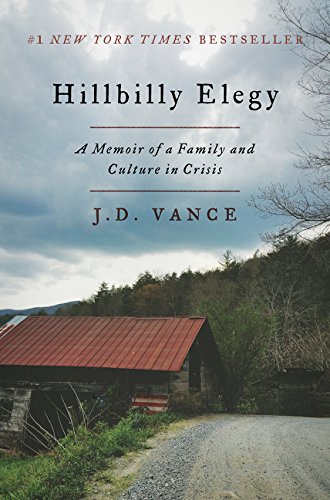
    Hillbilly Elegy: A Memoir of a Family and Culture in Crisis, by J.D. Vance

    After the election, J.D. Vance became the designated spokesperson for Appalachian America, which is funny, because he did most of his interviews from California, where he worked for a Silicon Valley VC firm (he recently moved to Cincinnati, close to his southern Ohio hometown). The most resonant part for me was the description of his Mamaw (grandma), whose fierce determination that he find a good life sat at odds with her own embrace of outrageous behavior and suspicious worldview that made such a life almost impossible. The lesson I took from the book is that, in these circumstances, it takes a person as formidably disciplined, smart, and well-intentioned as Vance to manage the leap to a better life—and that this truth is awful news for the vast majority of folks without these gifts. Also, that the Information Economy runs on education and educated people, and these were, and are, in short supply in Vance’s hometown and the region. Until that changes, and until resentment isn’t the first order of business for people there, things aren’t going to change much in Appalachia.

    agony-and-ecstasy

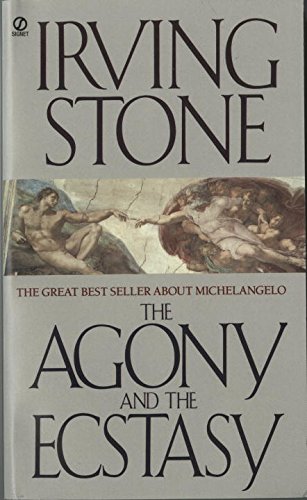
    The Agony And the Ecstasy: A Biographical Novel of Michelangelo, by Irving Stone

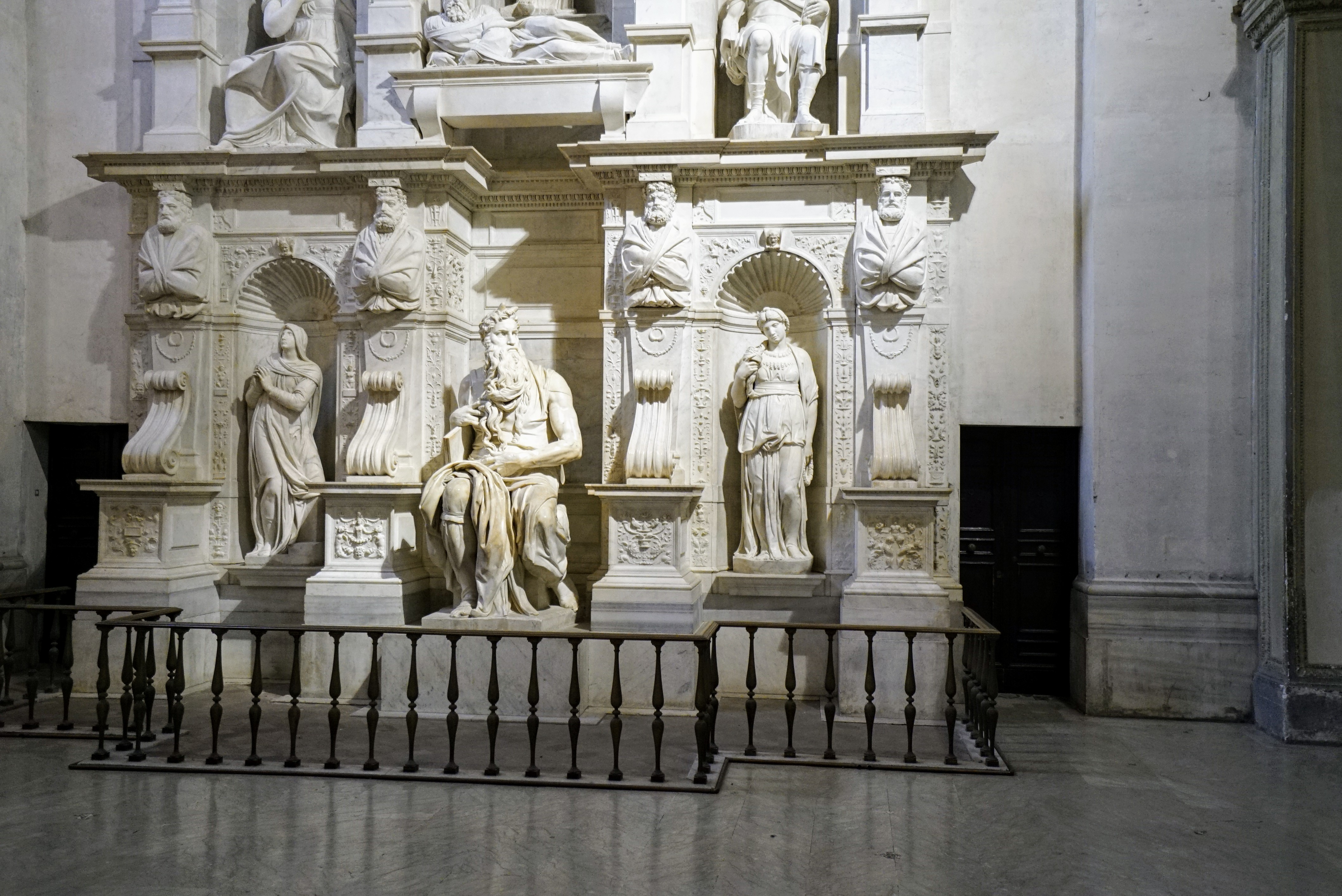
    I know that more recent scholarship paints a picture of a more difficult, and more sexually fluid, person, but I really enjoyed this (long) book nonetheless. I remain in awe of his life and work. The work is, in a word, amazing. The scale of, say, The Last Judgement in the Sistine Chapel (or heck, the chapel in whole) boggles my mind. His Moses sculpture in the Church of San Pietro in Rome looks as if it could stand up and immediately kick ass in a WWE event.

    _DSC1892
    Moses, in Church of San Pietro, Rome. Check out those guns and the James Harden beard!

    Astrophysics For People In a Hurry, by Neil deGrasse Tyson

    You’d have to be in a very big hurry to find this book useful. The author narrates his book (as does Vance, above) and sometimes I felt like he must have spent more time on he narration than the actual writing. Find a little more time and read something like Bill Bryson’s A Short History of Nearly Everything instead; you’ll be better for it.

    handmaids-tale

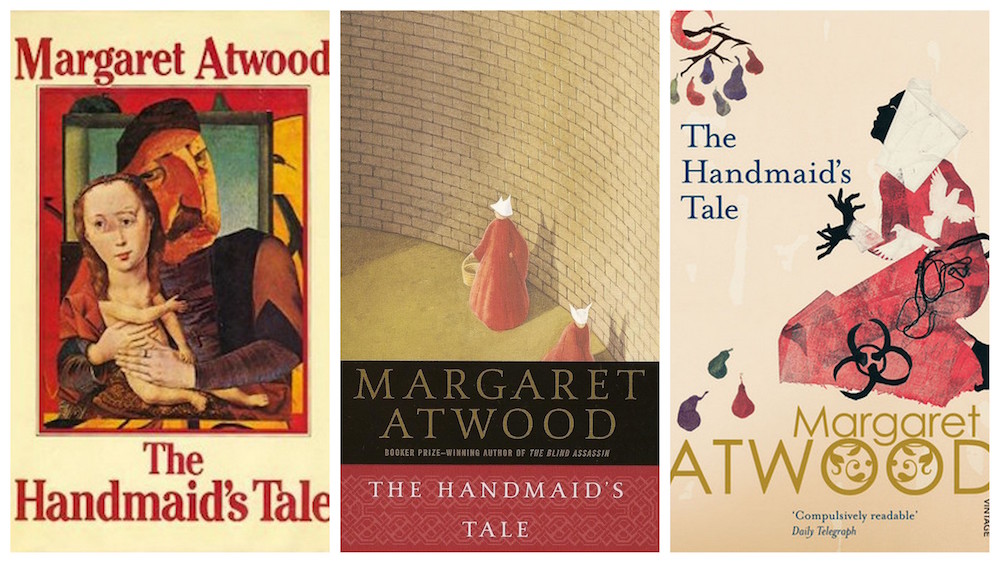
    The Handmaid’s Tale, by Margaret Atwood

    The anti-women rhetoric of the election and the power of the Women’s March served as a bracing tonic before listening to Atwood’s story, and I read it with the sense that, while not close to this world, we’re closer than we have been in a long time, that the forces that could make such a thing possible are on the ascent. The attempts to negate coverage of women’s health procedures in the debate over the ACA is just one of many data points that this didn’t change as the year progressed. The story feels so relevant. Plus, Atwood is an excellent writer/storyteller. And no, I haven’t watched the Hulu series yet (no Hulu).

    strangers-in-own-land

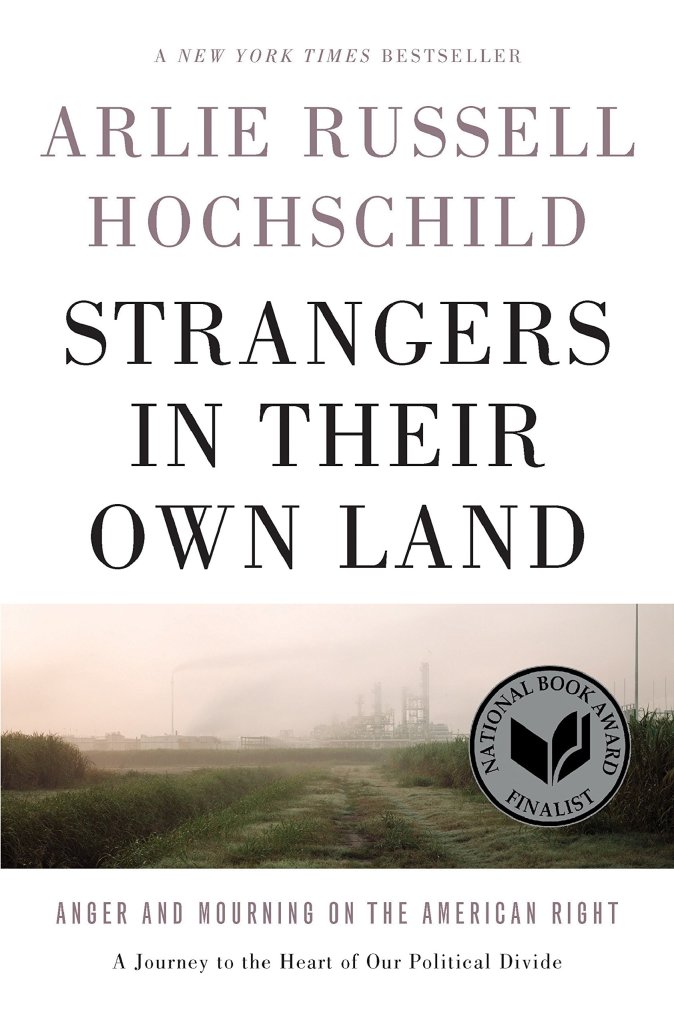
    Strangers in Their Own Land: Anger and Mourning on the American Right, by Arlie Russell Hochschild

    This was an illuminating book that helped me to understand why people vote so directly against their interests. The short answer seemed to be: Fox News. The longer one involves a metaphor the author, a UC-Berkeley prof who spent several years in a Louisiana bayou parish, developed from many interviews with the people there—one in which people feel as if they are standing in a long line awaiting the American dream and can see (less worthy) others cutting in front of them while their relative position isn’t improving. It also was very explicit about the environmental compromises the subjects were willing to make for jobs—even as it poisons them, their families, and the places they love. It was a bit of a slog, but glad I listened.

    Notes Of a Native Son, by James Baldwin

    Listening isn’t the best way to digest Baldwin’s rich, meaty essays—I often felt like I could spend 15 minutes trying to understand all the veins of thought captured in a single phrase or sentence. Even so, Baldwin is so smart and his observations of America so spot-on (even 63 years later) that I’d keep hitting the 30-seconds-rewind button on my phone.

    8-years-in-power

    We Were Eight Years in Power: An American Tragedy, by Ta-Nehisi Coates

    This compilation of Coates’ articles from The Atlantic would be OK if it was only that, but what makes it really good is the essays he wrote that fill in the spaces between the already-published pieces—Coates looks back at the years of the Obama Presidency and offers some fresh insight into the strengths and weaknesses he now sees in his pieces and their arguments. That was really good. And even if you don’t read or listen to this book, you need to read The Case for Reparations. I bridled at the term, but Coates is persuasive that there is an obligation to right this monstrous, so-big-it’s-almost-incomprehensible wrong. As a white person, the historical record makes me feel a bit like writing a check and then jumping off a cliff.

    On the lighter side, Coates recently spoke to Bill Simmons on this podcast, and dropped the nugget that he thinks he might be up for a change to writing fiction—as well as arguing with Simmon about the best season of “The Wire.” Mostly I walked away from the podcast with the sense of just how wearying it must be to be the public voice for any cause. And that’s a shame, because Coates is intelligent with a mastery of his facts and style. He is a worthy successor to Baldwin, and Coates’ fatigue points to how special Baldwin was. (Of note, Baldwin was 31 when he wrote Notes of a Native Son in 1955, and he died in 1987, at age 63. Coates in 42.)

    A Visit From the Goon Squad, by Jennifer Egan

    Where to even start. Egan’s breakthrough novel loops and winds the lives of aging recording exec Bennie Salazar and his assistant Sasha, going backward and forward and through all the feelings—satire, tragedy, there’s even a chapter in Powerpoint. Super-enjoyable, it made me want to read Egan’s newest book, Manhattan Beach, which was thoroughly enjoyable. Both tapped into this deep mystery about the glory and folly and will and accident that transforms people’s lives.

    Artemis, by Andy Weir

    By the author of The Martian (which I haven’t read but really enjoyed the movie), this story happens on Artemis, the first and only city on the moon, where a young woman smuggler gets caught up in industrial espionage scheme that leads to murder and unexpected repercussions. It’s geeky and snarky and I can’t quite say I liked Jazz Bashara, which was OK.

    manhattan-beach

    Manhattan Beach, by Jennifer Egan

    Set in wartime New York City, this novel is about a young woman who wants to be a diver, her disappeared dad, and the gangster that connects the two. Egan is the real deal and this was a super read.

  • Boxers, A Poem

    I.

    The truth, it’s said, is that boxers
    Don’t know when to quit.

    That they refuse to leave the ring
    until they are hollow shells

    Of themselves, shuffling ghosts
    Chasing ghosts chasing them—

    Except there’s a deeper truth,
    that you and I are boxers, too,
    called from our short stool by a bell:

    That we all hang in there
    For all manner of reasons;

    That we all take too many punches
    Before we look to our corner;

    That we all think we can
    Wiggle our way out of trouble
    And make it to that next bell.

    Before we hold the boxer’s
    Tenacity against him,

    Can we agree that next time
    We’re staggered, hanging on the ropes,

    That we’ll drop our hands,
    Find the referee’s eyes and beg,

    “Stop this fight right now.
    I’ve had enough. Please,
    Protect me from myself”?

    II.

    Or can we understand the instinct
    To ball one’s hands and swing again
    Until our strength ebbs or awareness dawns?

    Looking back, I see so many times
    I swung when, at the the least,

    I might have peered between raised hands
    To get a read on what was across from me.

    And more times when stepping back I might
    Have transformed this square
    Into a circle, eliminating the sides.

    Other times I might have closed the distance
    And arrived on shared ground, sacred space.

    There are ways to quit, ignobly or not, in this world,
    As there are many ways to break—open or apart.

    The truth, they say, is that boxers
    Don’t know when to quit.
    They are not alone.

  • Roots, Wings, Bridges, and Abs

    This week, Rev. Lee Paczulla at my church was talking about a popular development metaphor: that people need roots and wings. It refers to our need to be both grounded and aflight.

    “A wise woman once said to me that there are only two lasting bequests we can hope to give our children. One of these she said is roots, the other, wings.” – Hodding Carter, journalist, in his book Where Main Street Meets The River, 1953

    A lot of times it gets used in reference to children. That we want our children to grow up with roots and wings—with a sense of grounding and connectedness AND with a sense of adventure and freedom. Me, I think it sounds like something for all of us, not just kids.

    But, there’s an issue. As Rev. Lee correctly points out, this is a metaphor at odds with itself.

    It’s also at odds with a world in which safety has been fetishized, where people wish to accept no risk—the expectation that all dangers can be screened from our lives. At the same time there is a lot of anger in the country that individuals’ wings are being clipped.

    In short, this request for both total liberty (wings) AND total safety (root) is at odds with itself.

    I felt this tension most recently on a Wednesday several weeks back when the family-owned company for which I’ve worked the past nine years announced it would entertain offers for sale.

    I had two reactions at the same time:

    • One that was essentially defensive. I have enjoyed my time here and I believe in the mission of the company, to help people to live fuller lives. I am 51, appreciate and like my employer, and know that it could be tough to find a similar one. How dare anyone consider anything that would threaten that mission (and me)?
    • One that was more considered, that accepted the possibility that the family might be ready to separate from the company—that it might, indeed, be exhausted from the rapid changes in the publishing industry that have driven down the value of all publishing properties in the past two decades and, personally, recognizing something inside me, a yearning that it was time for something new.

    I was struck by the duality and a deeper truth—it led me to realize that the tension between all these things does not play out in our extremes, not in our roots nor our wings. It hit me in my gut. Literally.

    It made me appreciate that what an engaged person needs to resolve the tension between roots and wings, between liberty and safety, is a strong core. We need spiritual pilates, people! We need some holy abs.

    And that got me to thinking about how the gut is not where reconciliation happens, and that perhaps it is more useful to think of the way we reconcile between roots and wings as a bridge, connecting two shores. The bridge metaphor is helpful in that a bridge cannot pull the sides together, it doesn’t make the two banks one. Instead, it can allow transport between them—of thoughts, of energy, of salves. A bridge enables flow,  across it and underneath it.

    That’s helpful when thinking of many things, including this country, with two shores that are so far apart right now that there will be no resolution in the near term. The best we can hope for is a bridge to facilitate flow.

    Closer to home, I need that personally, as I consider an uncertain future. With a son still in college and a family to tend to, I have a ravenous appetite for roots, for security. And I know that this world, ultimately and despite my deepest desires, is an uncertain place. As someone who recently renewed my wedding vows (after 25 years operating under the original ones) with a commitment to adventure, I yearn for wings, for what comes next.

    How to reconcile the tension in these two desires?

    I don’t know, and I don’t feel alone. I see this tension being played out among my friends (guys especially) who are, like me, well into the second act of their work careers and find that the benefits of having “made it” co-exist with the reality that you can quickly become a target, too, in any cost-savings plan. That your skills are expensive. Some, to use the HR language, have been “separated” or they have stepped out of their careers voluntarily. Some have re-created themselves; others are still trying to figure out how to proceed. I see it play out 300 million strong, in the coarse barking of our national conversation. The yearning for rootedness and flight—for safety and liberty, the politicized expression of this—is a tension that seems as if it is going to get worse before it resolves itself. And the resolution will not be the joining of the far shores, but an understanding that these two shores hold a fluid truth between them. We are not a nation but a vessel, holding the fates of these millions and millions of people, and many more, in its shores and beyond. These shores can be kind or cruel, informed or ignorant. But there is no movement without banks, within which the water flows.

    And … back to the need for a resilient core. What are these spiritual pilates? What work can I do to contain these opposing desires at once, to span the river between two distant shores?

    For me, that work revolves around compassion, self-awareness, and connection. With recognizing my abilities and my limitations, both formidable. With realizing that the path forward is a softening, not a hardening. And it is a connecting—that ultimately, strangely, the bridge is flow, too.

    It is both listening and speaking. It is following a call and stepping up when needed. It is the new and the familiar. It is knowing that every day dawns a fresh creation and I have a curious place in it.

    This image of standing on the bridge, and being of the flow, this fills me with light.

    I hope you sense the light, too.

    For the country, I know even less. And still—still I feel that until we wrestle this dual fetish for uncompromising safety and unquestioned liberty to the ground, we’ll be circling this same angry, frustrated, fruitless round as a nation. The answer, I think, is trust in and accountability to each other. We need to be able to manage the tension between stubborn rootedness and selfish flight. We need a center—again, a core. Or maybe it works to think of it as a Commons. With a reality we can agree on. Without that, it seems all discussion goes nowhere. So, yes, to roots and wings, but also to a strong stomach, a civil Commons, and a supple bridge.

  • Our Trip to Italy in Pictures

    We decided on our family trip to Italy more than a year, and have been actively planning it for 6 months, so it was kinda surprising just how surprising the trip was. We weren’t prepared for just how much we’d find in Rome, the Cinque Terra, Venice, Tuscany and Florence. Here’s what we saw, with tons of photos.

    IMG_0444

    Rome

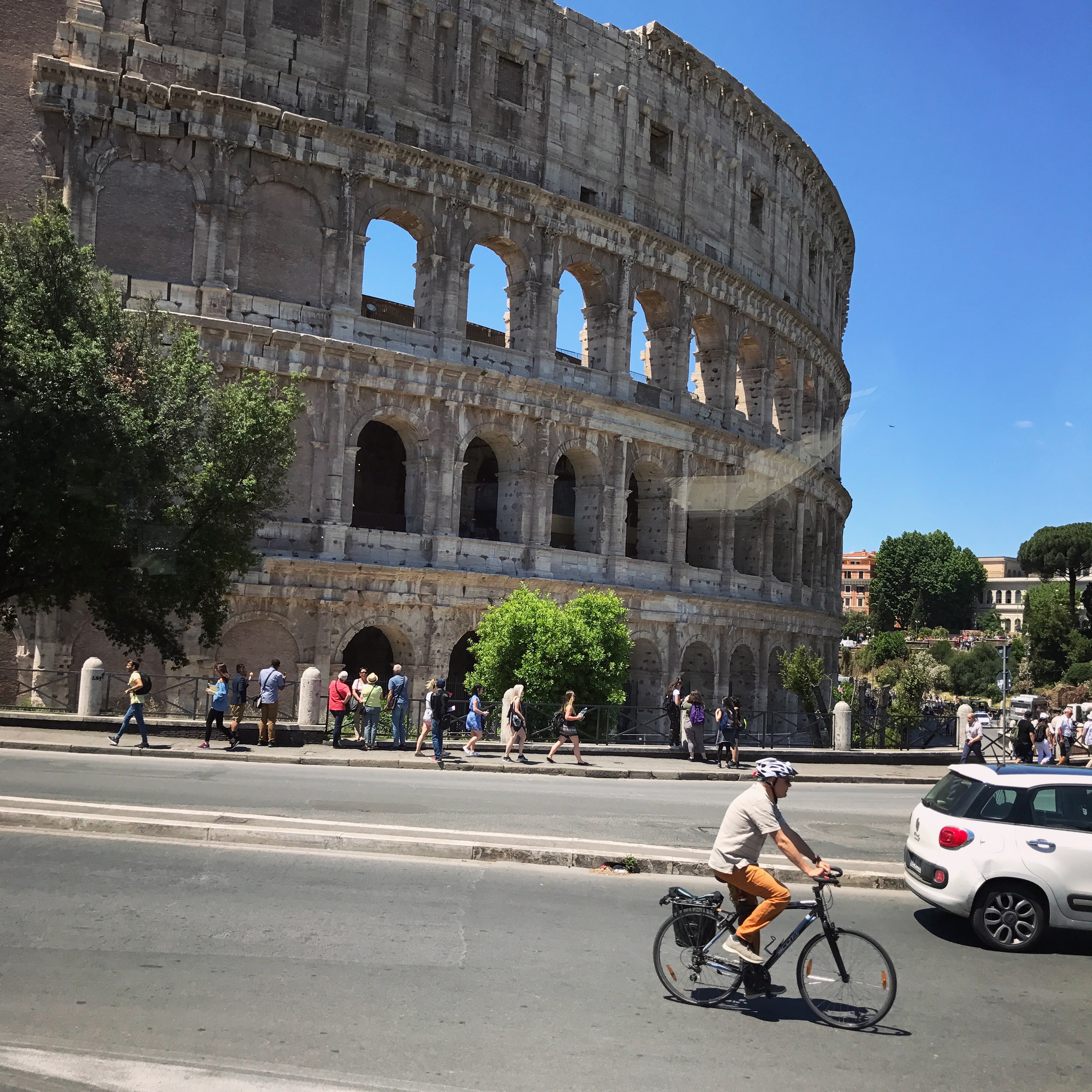
    We landed in Rome on Friday morning and took a bus into Termini station, and eventually found our way to the AirBnB apartment, on the west side of town, at Valle Aurelia, near the Vatican—but first, the bus just happened past the Roman Coliseum (above).

    After that, we napped—then we started to work through Rome: Forum, Vatican, Palatine Hill, Capitoline Hill, the biggest, baddest equestrian statue of emperor Marcus Aurelius that made me want to watch Gladiator in the Capitoline museum, the Diocletian baths, the Trevi Fountain and Pantheon.


    _DSC1689

    Pompeii

    I knew Pompeii’s story but the thing I had to see to understand is just how much of Mount Vesuvius is missing—how much higher it must have been until it blew its top in 79 AD and dropped 10 meters of ash across the countryside, burying this city for a millennium and moving the Bay of Naples back half a mile. Virginia really enjoyed our tour, and wished she had a lot more time there.

    Positano

    This “vertical city” literally falls down the mountain to the Mediterranean Sea. It was gorgeous and one of Virginia’s few regrets on the trip was not buying any clothing there.

    Cinque Terra

    These “five towns” are a couple hours north of Rome, past Pisa, and totally picturesque. We stayed in Vernazza, which is a one-street town that sorta pours down a mountain to the sea, with an adorable, tiny harbor. Our AirBnB was on the second floor and our bedroom was extremely pink (you’ll know it immediately below). We ate by the harbor on the first night and in a restaurant perched 100 feet up on the second. We also hiked from Vernazza to Monterossa, which is one of the most glorious, beautiful walks you could ever take in your life.

    Venice

    One of those places where East and West meet. St. Mark’s Basilica was strange and beautiful. I loved how different it was than St. Peter’s in Rome. No gondola ride for us.

    Tuscany (Artimino)

    This was our “time off,” aided by our friend Kris, who directed us here. We relaxed by the pool, hiked around the town of Artimino, checked out the Medici family hunting lodge, ate like kings (and queen), and were treated to a great wine tasting by Cristina.

    Florence

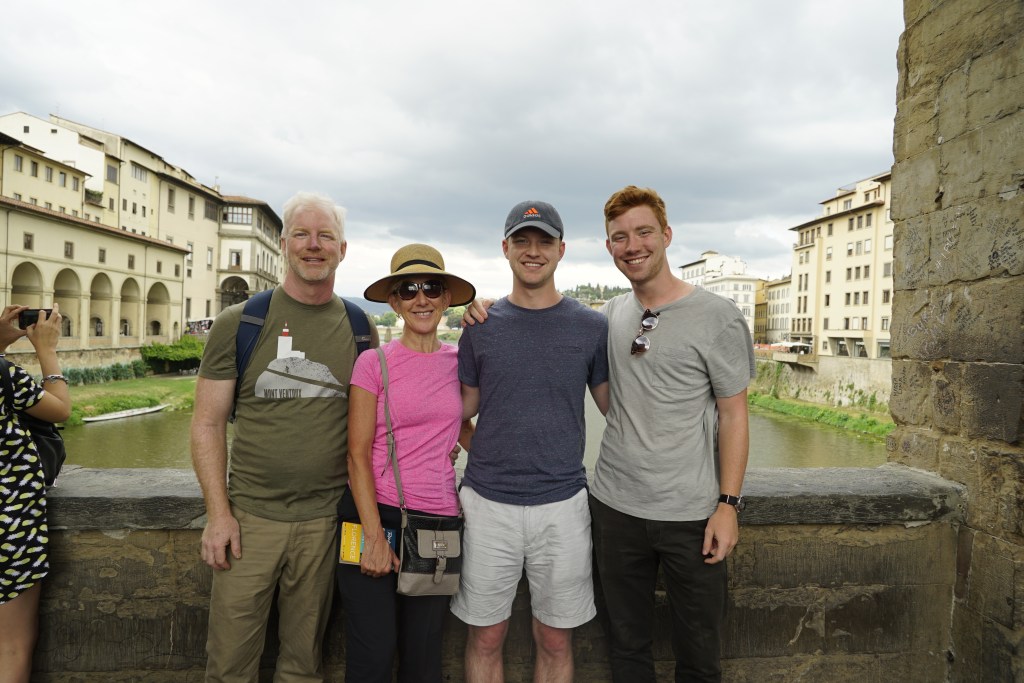
    Florence was our final stop and, in some ways, I wish it had been our first. It had so much to offer, but we were starting to get fatigued. One of my favorite times in our trip was a late afternoon stop at the Piazelle Michaelangelo (it’s his hometown), enjoying a refreshment and looking over the city.

    From Florence, we caught the train to Rome and the airport and headed home—well, Pete, Virginia and I did. Kelly booked a flight to Paris and went there on the way to Amsterdam. He comes home Wednesday.

    It was great to visit Italy. Even better was the chance to spend uninterrupted time with the boys, which is difficult now that Pete works and Kelly has school and his job as a counselor at summer camp in upstate New York.

    Some thoughts

    • We did AirBnB everywhere but Artimino and it was for the most very good. Locations were good, and most of the master bedroom beds were good. The boys’ beds, not so much, though they were good sports. The best place we had was in Rome, with a great terrace. The worst was Florence—centrally located, but right on a small, but busy, road and apparently sitting directly in front of a sewage tank that needs to be pumped out on Wednesday mornings. Yuck! We’d do it again.
    • Speaking of “gig economy” companies, we used Uber, once, in Rome, to get back home from a dinner in Trastaverte. Guy pulled up in a very sweet Mercedes sedan. Uber wasn’t available outside Rome.
    • One bit of curiosity fallout: I am completely intrigued by Michaelangelo. He is simply a transcendent genius. Listening to The Agony and the Ecstasy but I’m thinking there’s a better book to read. What is it, people?
    • Time with the boys was great—and when Kelly left us at 3:30 am on the last day, to catch a flight to Paris, I felt both sad he was leaving and buoyant that he was brave enough to strike out on his own. That he texted us later in the day that he’d befriended his hostel roommate (a 20-something copper miner from the Yukon Territory—you can’t make this stuff up) and was rapturous about the city was icing on the cake. Virginia and I have always wanted to hold our sons close and launch them as adults. This trip felt like confirmation that we could do both. And that was a great feeling for the trip home.


  • Gratitude For My Dad’s Life

    My dad died 7 years ago today. What I wrote three years ago still stands — gosh, he would have enjoyed the hell out of his grandkids, who they are and who they’re becoming. I imagine he’d sit around the kitchen table with Pete, talking about the ins and outs of the casino business, and Kelly pulling him out on politics and the past.

    And, at the same time, life moves on. The grief ages and distills and, strangely enough, it brings forth life. Eventually, the pain recedes into an ache and an appreciation for how precious and fragile our lives are.

    What I’ve found is, loss deepens. I can drown in its depths. But when I stand with it and in it, I can — like a submarine, lights on in the Marianas Trench — see things I never would have on life’s sunnier surface.

    I am so grateful for my dad’s life and, this is the harder part, for his death. His passing and the past 7 years have taught me things about the world and myself that I never would have learned any other way. These are not all happy lessons.

    It has taught me that time has its limits, and called me to attend to the moment. It has schooled me in loving through differences, and how those differences recede with absence. It has made me nostalgic. It has driven home to me, like a punch in the gut, that we are sharks, that we need to move to live, and my dad’s ghost flushes me out of the house and on to the bike or the court when my spirit says relax. My dad’s life and death remind me that we live in our shared stories.

    At his funeral, I walked around and spoke to his friends and our family and kept asking, “Tell me a story about my dad.”

    I heard so many. The one that made me laugh the hardest was one from his work colleagues. They had all been at a conference in Puerto Rico and were at a celebratory dinner. The appetizers were awful and slow in coming. As they were sitting in mild dread about what would arrive next and when, there was a small commotion.

    “These guys came into the dining room,” one old friend told me, “carrying several bags. And Tommy called them over. It was Chinese food! Tommy had gotten up earlier, I thought he went to the bar, but he ordered Chinese for the table! Oh, he was the best!”

    Finally, I learned that suffering and loss are a price we pay for living. My dad was the best — and a thousand other things. Every year for six years now, I’ve stopped on this day and tried to hold all 1,001 things close to my heart, and sink in those waters, knowing I could drown but I will not, buoyed by the stories and love and lessons of his life, of my life, of this great living chorus.


  • A Letter to Gov. Wolf
    I heard this evening that the stay has been lifted on deporting the families who have been held at the Berks County Residential Center for the past year and a half. This is the letter I sent to Gov. Wolf, who apparently has the power to close the facility and free the families. If you want to, you can email the Governor directly or use this form provided by the Pennsylvania Immigration and Citizenship Coalition (PICC).
    Governor Tom Wolf,
    I am calling on you to work with Secretary Ted Dallas and the PA DHS to immediately issue an Emergency Removal Order (ERO), which would ensure that the families at the Berks Family Detention Center are released to the care of their families and communities, and work to ensure that the Center is shut down permanently.
    As you surely know, Pennsylvania is home to the Berks County Family Detention Center (BCRC), one of several detention centers for immigrant families, where children as young as two-weeks-old have been incarcerated and some families have been held for almost two years.
    I have attended several vigils there and spoken to the lawyers  as well as members of the local faith community who have been involved with these families. My heart breaks for these families who have been treated so badly for the “crime” of wanting to escape violence in their home countries. I was further saddened last week when the Supreme Court chose to not hear these families’ cases. I wrote about it here.
    As I understand it, Gov. Wolf, you have the power to shut the doors of BCRC and pressure ICE to release these families. If you can, you should, because this place and what has happened here is a stain on our commonwealth and on your stewardship of the people living within it—including the most vulnerable, which these families most certainly are. I am sure it would require great courage—political and otherwise—to do this. And that, sir, is exactly why I voted for you—in the hope that you would have the courage to do the right thing for those who are most vulnerable. That is exactly the crucible of political office. I implore you, Gov. Wolf, to hold up values of compassion and justice.
    You did not create this situation, but if you can end it, you should. Period. End of sentence. And be heartened to know that if you do, I and many others will stand with you. More importantly, you’ll be standing with justice and compassion.
    With respect,
  • Home and the High Road

    Jason Isbell is one of my bellwethers. He sings the things I’m feeling before I can put them in words.

    Take, for instance, his new single “Hope the High Road.” It’s my new theme song. And not just because I enjoy just about everything the former Drive-By Trucker has done the past four years. No, he has tapped into the rich vein of my hopefulness.

    The most important lyric to me (heck, it’s the title of the song):

    Wherever you are, I hope the high road leads you home again.

    Because where I am is, I have reached an accommodation with the election and its inevitable consequences—that there is and likely will continue for some time to be a President Trump. And he is going to be able to do some things I disapprove of—denigrate science, facts, and many people, especially vulnerable people. But he can be opposed. He can be held accountable. He can be constrained by values of compassion and hope. And maybe, maybe, as his governing faction splinters and fights among itself, he can be lured to less-pain-filled policy (if policy is even the right word for the product of his actions).

    Personally, I can protect my sanity and my sense of humor. These last few weeks I have been silly more than I can remember in months. I count this a huge victory, as I think that part of the political strategy of these first 100 days was to overwhelm dissent with a barrage of mean-tempered executive actions and make people like me despair.

    Well, I am not despairing. I am called to engage with and protect those who are most vulnerable AND engage with those who thought Trump was their only option, especially my friends, as they’re easier to grab a beer with than people in Kentucky. I don’t want to argue, because I don’t think arguing accomplishes anything. I don’t want to present an ideological alternative, because ideology is apparently at low ebb. What I want is to ask all people what home means to them, and invite them to consider how to make home a reality for everyone.

    For me, home is:

    • safe
    • sustaining
    • warm
    • where I’m known
    • forgiving
    • accountable
    • a refuge

    What is home to you? I’d love to read others’ replies below.

    I think it’s possible we can walk this high road home together, at least those who choose to. And I have a glimmer of hope that our president can see that following this high road might give him the broader-based approval he so obviously wants. I wouldn’t go to Vegas and put money down on it, but hope isn’t a calculation.

    And if we continue on the current track, I will grind it out and fight like heck for the values of liberty, compassion, and truth that are foundational to my home and to the motivators of our country’s best moments.

    Which brings me back to Isbell and his song, which gave voice to my intentions:

    So if you’re looking for some bad news
    You can find it somewhere else

    Last year was a son of a bitch
    For nearly everyone we know
    But I ain’t fighting with you down in a ditch
    I’ll meet you up here on the road

  • Justice Delayed, Delayed, Delayed Some More … and Finally Denied

    I am sad and frustrated to hear today that the Supreme Court of the United States chose not to hear a case involving women and children who came to this country in late 2015 from violence-plagued Central America seeking asylum.

    Some of these women and their children have been detained for more than 400 days at the Berks County (Pa.) Residential Center, awaiting their day in court, which now will never come. Instead, it appears they will be deported shortly.

    (This is a pretty good summation of the court decision today (CNN). And this, from the NBC affiliate in Philadelphia, is a good catchup if you want to some background.)

    I’m not a lawyer, so I can’t argue the constitutionality of their case or the ruling. But I am a person, and my heart goes out to these women and their children, who:

    1. Came here from El Salvador, Honduras and Guatemala, which these days all have huge problems with poverty and violence.
    2. Announced their intention to apply for asylum as soon as they encountered U.S. border agents. They said they had been targeted, by gangs, as single women with children in their home countries. There is no law against seeking asylum in this country. They didn’t do anything wrong.
    3. Sat in a low-security prison for the next year and a half—even though there were sponsors in the U.S. willing to house them until their cases could be sorted out.
      Raised children and battled despair for more than 400 days while being detained without charges.
    4. I’ve been to vigils several times at the Berks facility over the past year. It usually looked a lot like the photo above—some of the 40 moms lined up along the fence, even when it was a lot colder than this nice November day. As you can see, we’re not talking bad hombres. They look like … moms with kids.

    We had to stay across the street, off the detention center’s property, but there was always a speaker system. Musicians would play Latino pop and folk songs, we would wave to each other across the street as we both sang without hearing the other. When the music stopped, local religious leaders and people dedicated to immigration justice would take to the microphone. There were many words, in English and Spanish.

    Words of encouragement. Words that they would not be forgotten. Words that they would one day be free.

    I hope that at the time they were sustaining words, that they helped these moms to buoy their children’s and their own spirits. In the end, tonight, they feel like cruel words. Empty words. Untrue words.

    Not untrue because they were ill-intentioned. No, crueler because the speakers meant them. They were just wrong. Like these words, once a point of pride for Americans, are increasingly untrue.

    Give me your tired, your poor, your huddled masses yearning to breathe free, the wretched refuse of your teeming shore. Send these, the homeless, tempest-tossed to me, I lift my lamp beside the golden door!
    That door is shut. That way is closed.

    Some of the most vulnerable people in the world packed up and made a run for it. They didn’t do it because America is cushy or so they could suck comfortably at the government teat. That isn’t why people leave everything behind and make a run for it. They did it because they feared for their safety and their children’s safety. As the Somali-British poet Warsan Shire says in her poem “Home”:

    You only leave home
    when home won’t let you stay.

    So they ran looking for a new home. And rather than find a home, they were detained and made vulnerable in a whole new way. Languishing in a prison, many became depressed. One of the women was raped by a guard, who was convicted and sentenced to 23 month in a different prison.

    Some of these kids have now spent half their life in a prison, living on prison food. When local community leaders were able to meet with the moms, they didn’t ask for much, but they did ask that people send them some sugary cereal, as a treat for the kids. Oh, and underwear for themselves, because that isn’t provided when you are detained indefinitely by our government. Shampoo, too, because, yeah, the same.

    Tonight I’m thinking of those women and their kids, lined up along the fence on a Sunday afternoon. And about how powerless this moment feels. And what more could be done—for them, by me, by us, for us.

    I’m thinking about all the people running for their lives, and Shire’s unblinking truth.

    no one would choose to crawl under fences,
    be beaten until your shadow leaves you,
    raped, then drowned, forced to the bottom of
    the boat because you are darker, be sold,
    starved, shot at the border like a sick animal,
    be pitied, lose your name, lose your family,
    make a refugee camp a home for a year or two or ten,
    stripped and searched, find prison everywhere
    and if you survive and you are greeted on the other side
    with go home blacks, refugees
    dirty immigrants, asylum seekers
    sucking our country dry of milk,
    dark, with their hands out
    smell strange, savage –
    look what they’ve done to their own countries,
    what will they do to ours?

    I grieve for these audacious, brave women and their children and what awaits them back in El Salvador and Honduras and Guatemala.

    And alongside that, because I expect I’ll be here after they are long gone, I grieve for my country and its collective heart.

    I get that not everyone in the world can come to the United States. I get that there need to be rules. I get why people think walls are solutions.

    But I’ve been to Haiti and I’ve seen long, high walls along the main road outside Port au Prince, and I remember wondering, What could be so valuable in Haiti that someone built this wall to protect it, only to come around a corner and see a rubble-strewn yard and a goat munching on the weeds.

    Walls are not creative things. Walls are about scarcity, about keeping, about making a fetish of what is mine in this world. And they’re not very effective. The Mongols simply took their horses around the Great Wall to conquer China. Democracy skipped over the one in Berlin. The Roman Emperor Hadrian had one built almost 2,000 years ago to keep the Scots at bay. It’s easier to find a Scotsman almost anywhere in the world than to find a remnant of that wall.

    There has been much talk of building a wall along the U.S.-Mexico border over the past year. Some people cheered for it. Others derided the idea as laughable, that America would never put up such a wall.

    But what if the wall need not be 30 feet tall, with anti-climbing technology baked in, and cost $16 million a mile? What if the wall need not run along the Rio Grande and through the desserts of New Mexico and Arizona?

    Truth is, there already is a wall. Part of it is just 3 1/2 feet tall, made of wooden posts mostly, in Leesport, Pennsylvania. It is backed by prison guards with rifles who depend on that small wall for their employment, and a court system that supports it, that encourages it. And this small wall, the facts show, it is enough to keep out people so at risk that they dropped everything but their children and made a run for it.

    And still, amidst this despair—which, I must admit, surprised me with how hard it fell today—I remind myself that walls need not hold people back. Walls can support a roof. Walls can be shelter. And borders should not be walls. Borders should be thresholds. Borders should be opportunities. Borders—my edges, our edges, the nation’s edges, the world’s edges—should be where the growth is.

    And still, tonight, the border is blocked. The border is stuck. It is closed.

    Today, after freezing 40 families’ lives in an uncomfortable, unaccommodating and uncertain limbo for more than 400 days, the keepers of the wall turned them away.

    I will go to Leesport soon, and I will not see these women and children along this short wall. As I imagine that, I think about the first lines of Shire’s poem, the ones you might have seen:

    no one leaves home
    unless home is the mouth of a shark.

    And I grieve for these families—and for those who almost certainly will come after. I invite you to do the same.